foire de chatou
Since moving to Paris, I have discovered that I don't particularly want to decorate my apartment. I want to collect it. There is a difference.
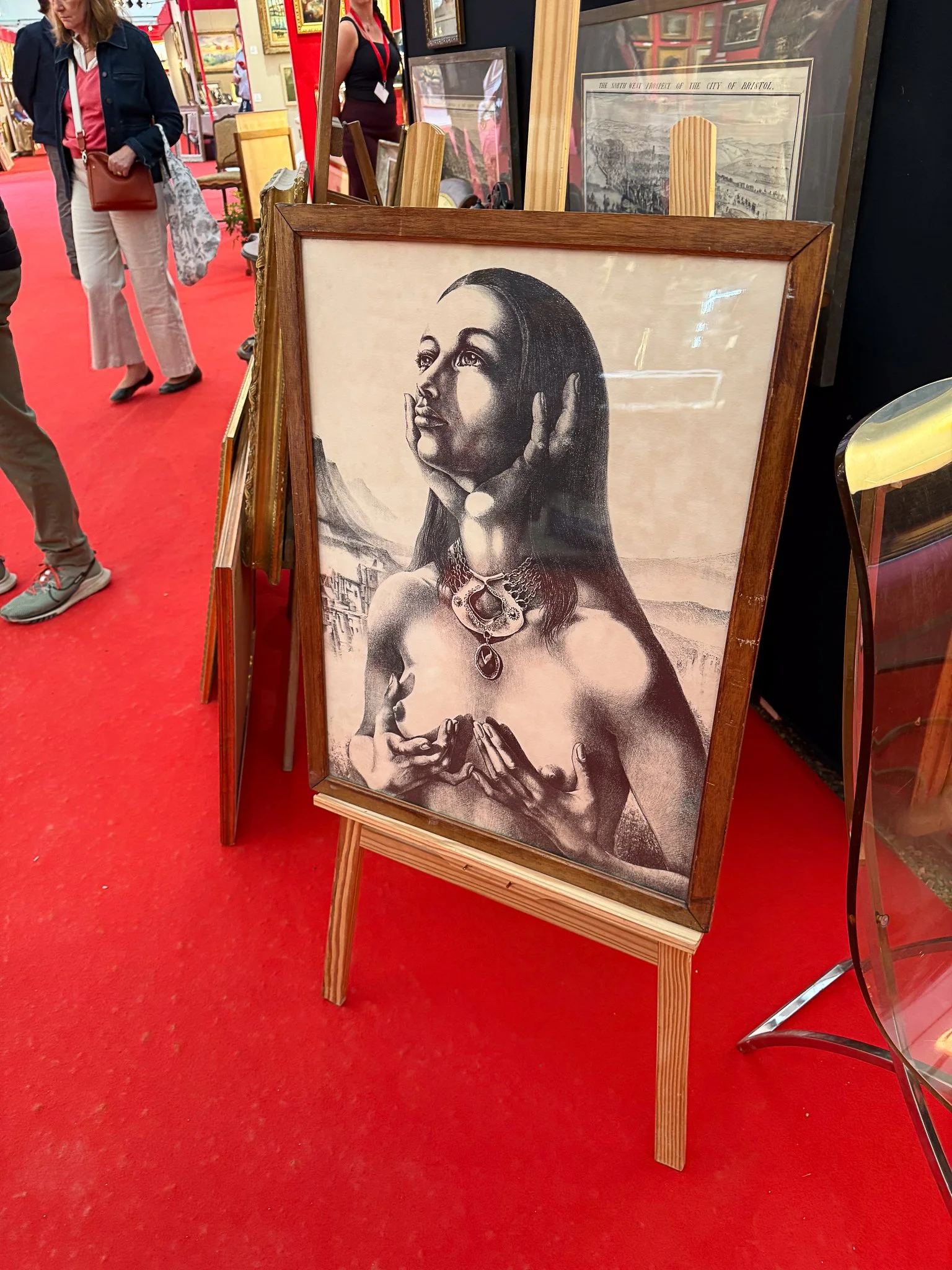
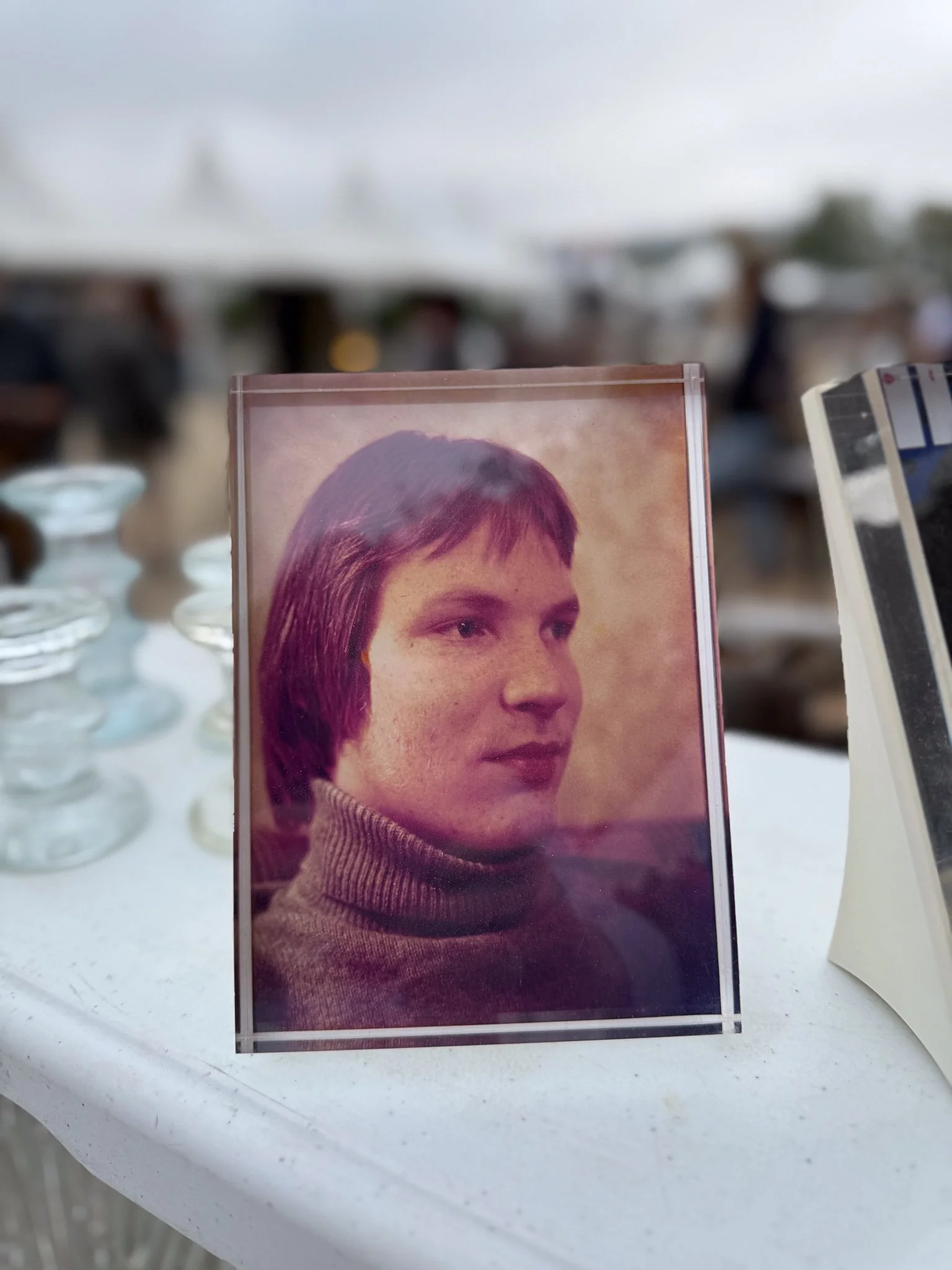
Claude Serre, 1938-1998.
To me, decorating feels like arranging a set scene—a coordinated ensemble brought together all at once, each item chosen to fit a plan. Collecting, on the other hand, is accidental and ongoing. Instead of buying things because they match, I find myself drawn to individual objects because they remind me of a place, a person or simply make me feel something. Over time, these found objects gather, each carrying its own story, and the apartment becomes a reflection of their combined histories rather than a completed design.
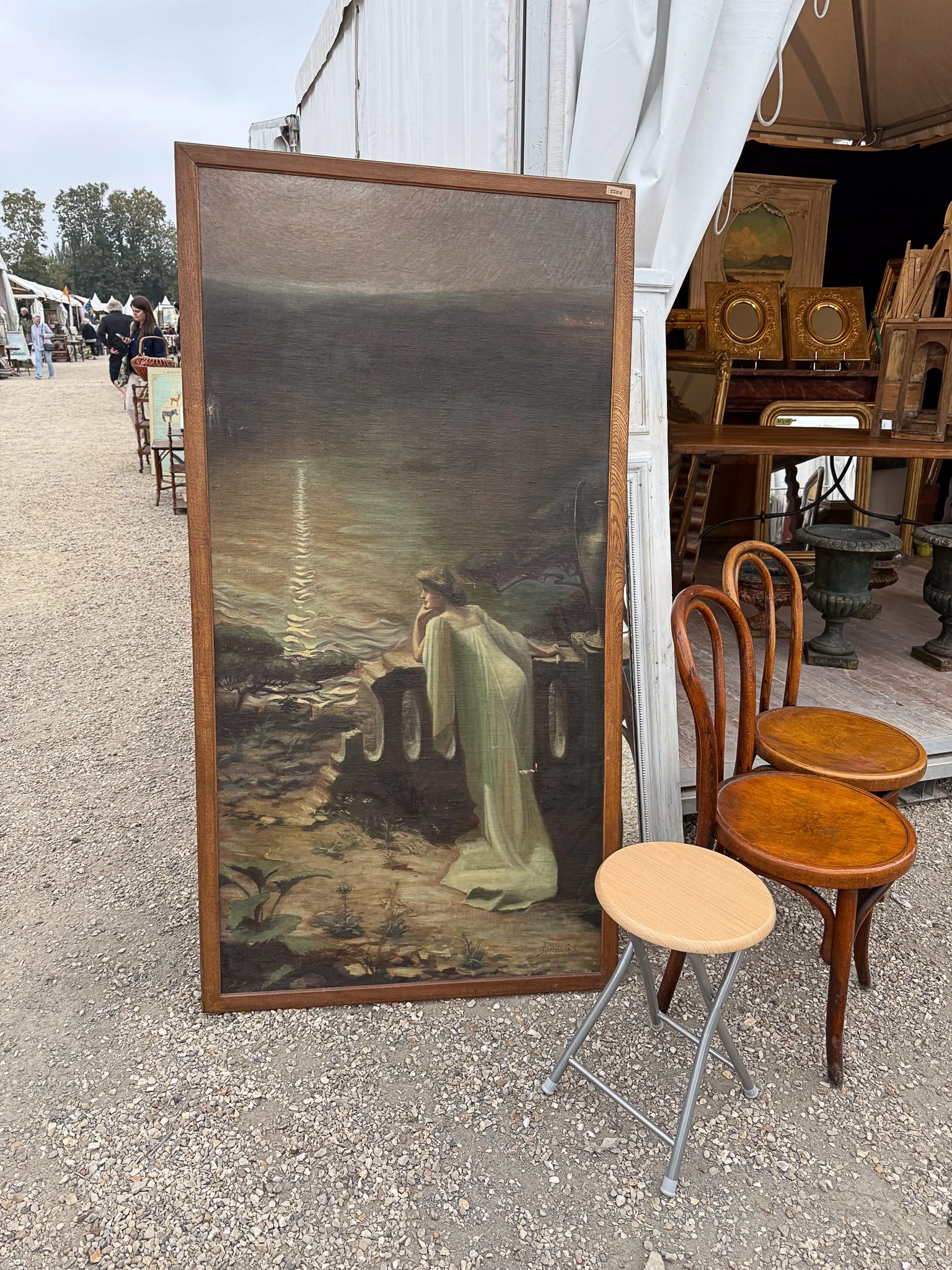
Decoration suggests a finished picture: a colour palette selected, furniture ordered, cushions coordinated, the requisite objects placed artfully on shelves. Collecting is slower and considerably less obedient. It allows a home to develop through encounters—with an artwork, an old chair, a strange lamp, a piece of glassware, a photograph, something discovered at a market that you had absolutely no intention of buying until you saw it. My apartment is beginning to teach me how I want to live.
Perhaps more surprisingly, I have also realised that I don't particularly want my French apartment to look like a French apartment. Or, more accurately, I don't want it to resemble the particular fantasy of the Parisian apartment that seems so seductive to those of us who arrive here from somewhere else. Herringbone parquet. Ornate plasterwork. Marble fireplaces. Gilded mirrors. Linen sofas. Antique chandeliers. A carefully distressed piece of furniture beneath a contemporary artwork. Something vaguely Louis-something sitting elegantly in the corner.
It can be extraordinarily beautiful. I don't particularly want to reproduce it. There is something slightly strange about moving to another country and immediately attempting to reconstruct its most recognisable aesthetic, as though living in France requires me to perform an idea of Frenchness.
My apartment already is French. It doesn't need me to dress it up as one.
Its architecture can tell that part of the story. I want everything I bring into it to tell mine.
When I first began thinking about the apartment, I thought in terms of colour. At one point there was pink, green and gold. I imagined a palette and tried to understand the apartment through it. But the more things I have found since moving to Paris, the more I have realised that my taste isn't really governed by colour. It is governed by objects.
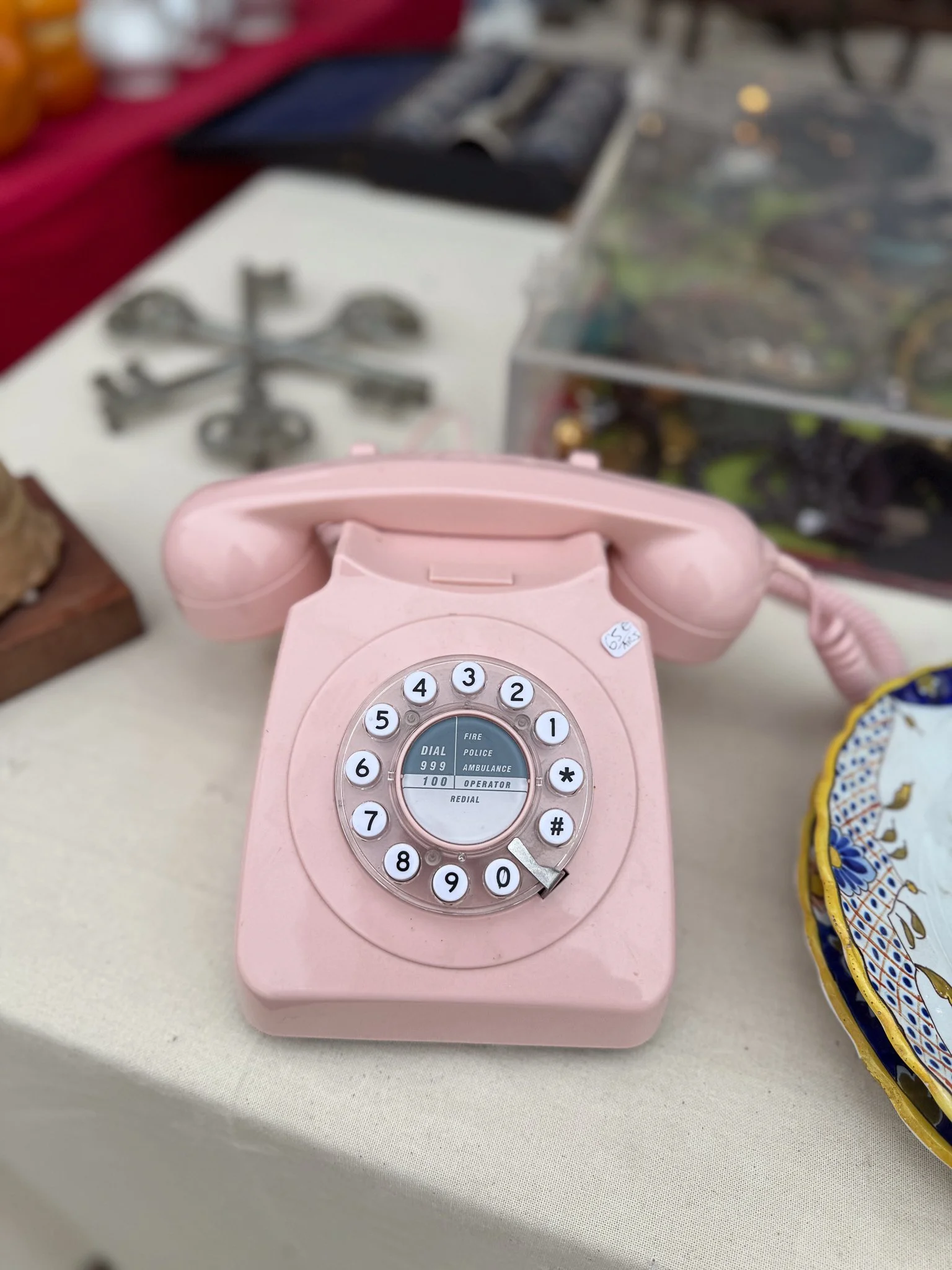
Old things. Art. Photography. Books. Wood. Glass. Metal. Beautiful things that are slightly odd. Things with histories I don't entirely know. Things that make me stop. I like objects with a little strangeness. I like old things against contemporary things. Wood against metal. Something refined sitting beside something slightly battered. I like objects that don't immediately explain themselves.
Apparently, I like beautiful things that don't behave themselves.
And this should probably not have surprised me. I have always had a strong visual relationship with the world. I don't simply remember events; I remember their atmosphere. Heat. Eucalyptus. The almost absurd flatness of the Australian landscape where I grew up. A classroom. A darkroom. The particular colour of lipstick. The quality of light in a photograph. The objects that happened to be sitting in a room when something important occurred.
Places and objects carry meaning for me. They become attached to people, memory, desire and particular periods of my life. Perhaps that is why photography and writing have always made sense to me. Both are ways of taking atmosphere and attempting to give it form. And perhaps that is why conventional interior decoration doesn't quite satisfy me either. I don't particularly want things because they go together. I want them because they make me feel something.
Which is perhaps why taking myself to the Foire de Chatou was always going to be dangerous.
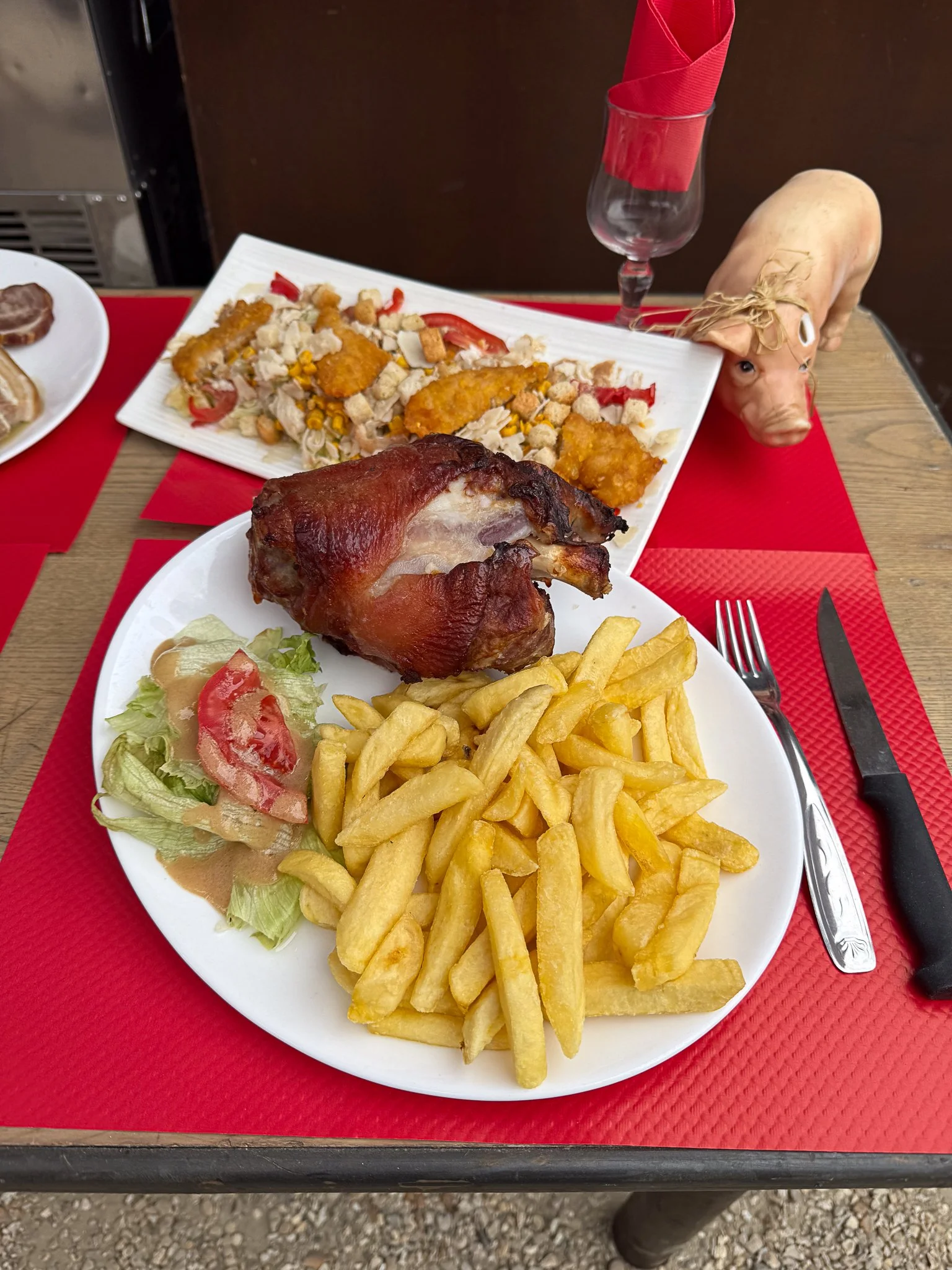
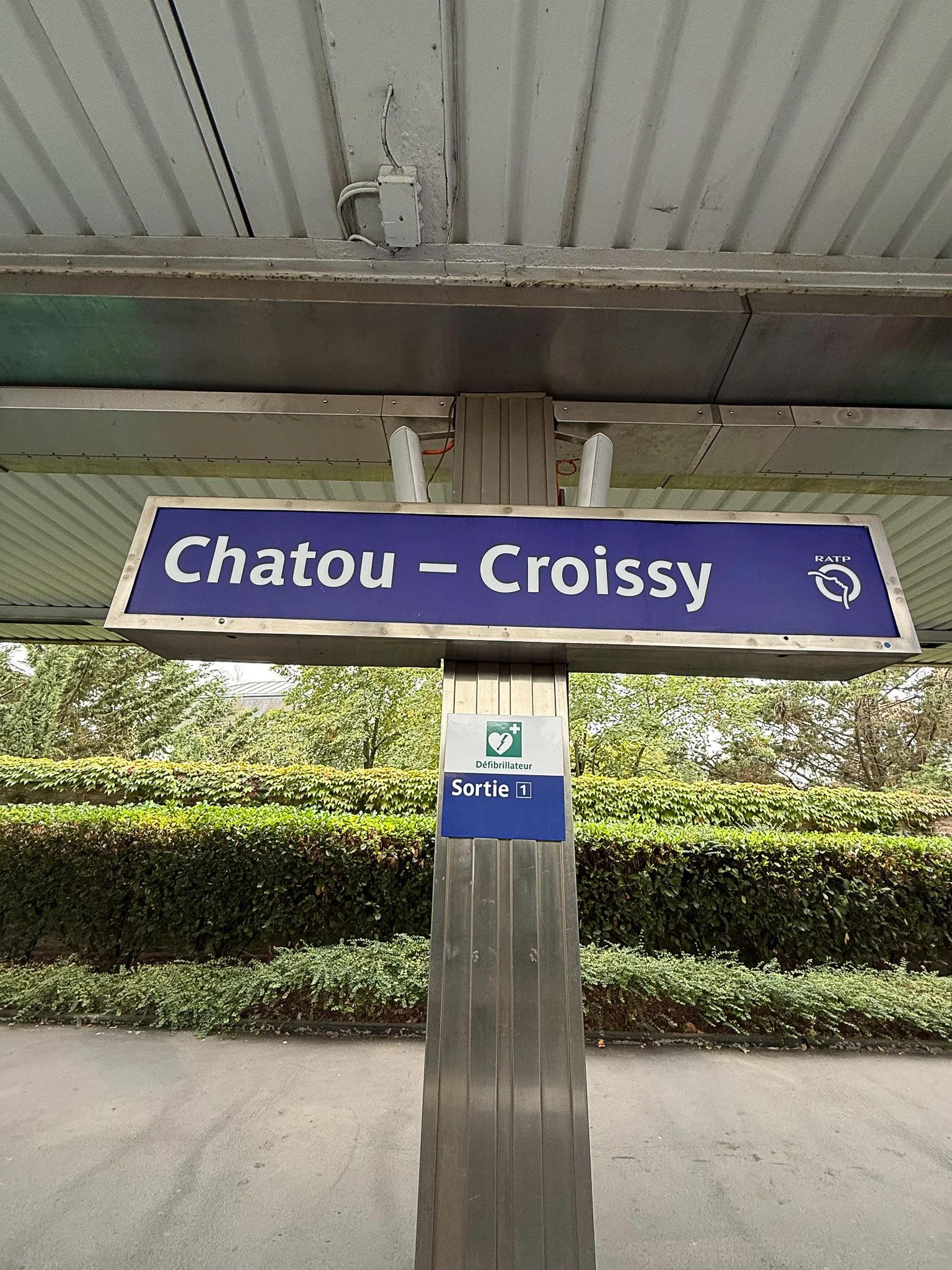
Held on the Île des Impressionnistes at Chatou, west of Paris, the fair has a history almost as eccentric as the objects now found in its aisles. Its ancestry lies in the old Parisian Foire aux Jambons—literally, the Ham Fair—with origins reaching back to the Middle Ages. A charter of 1222 authorised merchants selling salted meats to offer their products in the days before Easter, allowing Parisians to prepare for the end of the Lenten fast.[1]
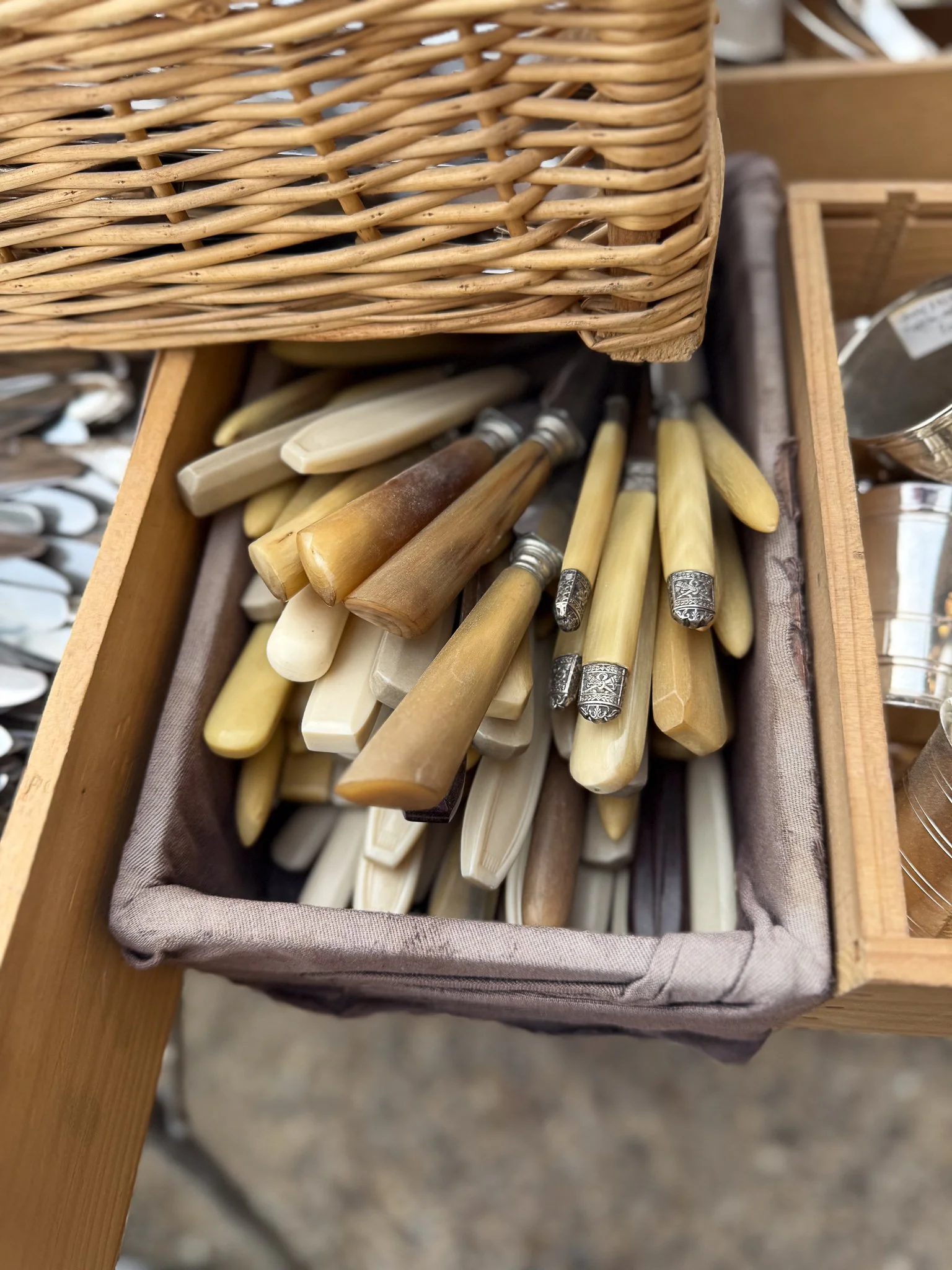
Over the centuries, the fair moved around Paris, disappeared during the Revolution and was revived in 1804. By the time it settled on Boulevard Bourdon in 1840, dealers in scrap metal, old clothes, second-hand goods and assorted objects had begun appearing alongside the food sellers. The Ham Fair became intertwined with the Foire à la Ferraille. Somewhere between the charcuterie and scrap metal, antiques entered the story.[2]
In 1869, the fairs moved to Boulevard Richard-Lenoir, where they remained for almost a century. After another period of upheaval and relocation, the fair finally left Paris, finding its present home at Chatou in 1970.[3]
One of the country's great antiques and brocante fairs descends from medieval ham merchants.
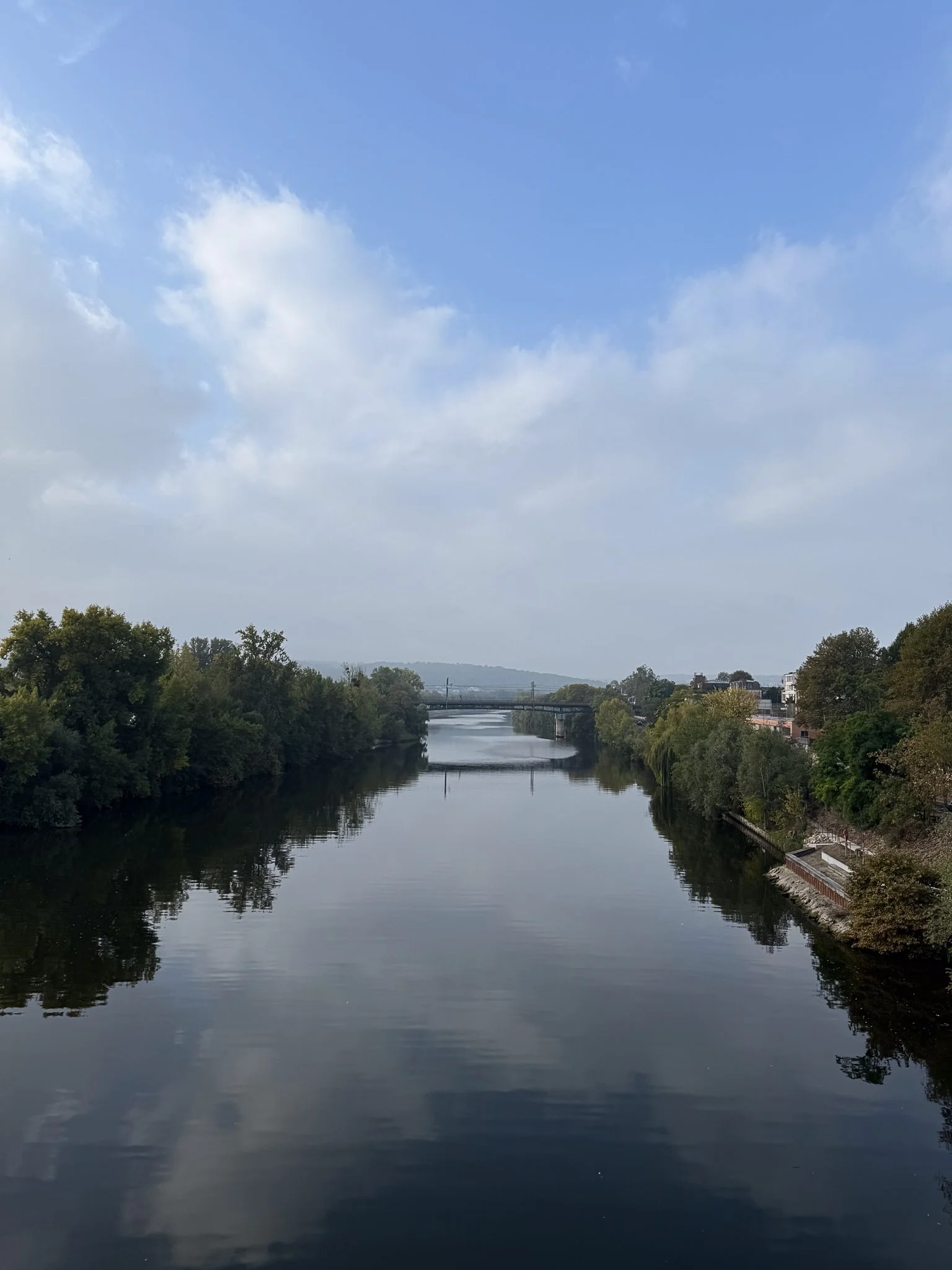
Its present location feels equally appropriate. During the nineteenth century, the arrival of the railway helped turn the banks of the Seine west of Paris into a destination for artists, writers and day-trippers. Around Chatou and the island, Renoir, Manet, Monet and Caillebotte were drawn to the changing light, water, boating, bathing and guinguettes that became so closely associated with Impressionism.[4]
The Maison Fournaise became particularly entwined with this artistic history. Renoir was a regular visitor, painting the Seine, its bridges and boating culture around Chatou; his Luncheon of the Boating Party was created at the Maison Fournaise in 1880–81. Guy de Maupassant was another habitué of the place and wrote about the culture of boating and leisure along this stretch of the Seine.[5]
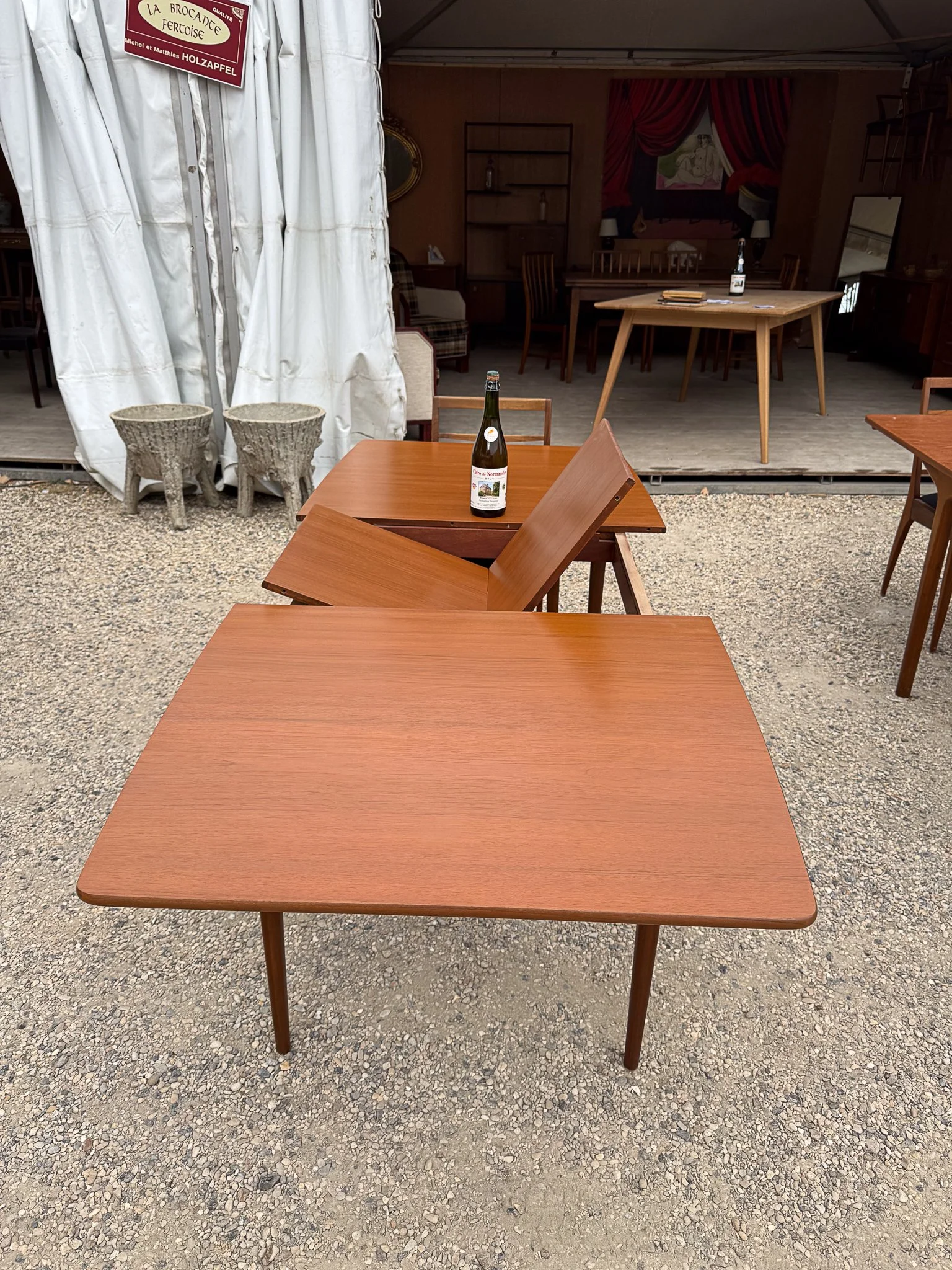
Now people travel there to look at different kinds of images and objects: furniture, paintings, ceramics, jewellery, textiles, photographs and lighting. Objects whose original owners have disappeared but which somehow continue travelling through the world.
I went looking.
Markets are useful because they circumvent the rational part of decorating. You don't walk through an antiques market asking whether every object complies with your interior-design scheme. Or at least I don't.
You either feel something or you don't.
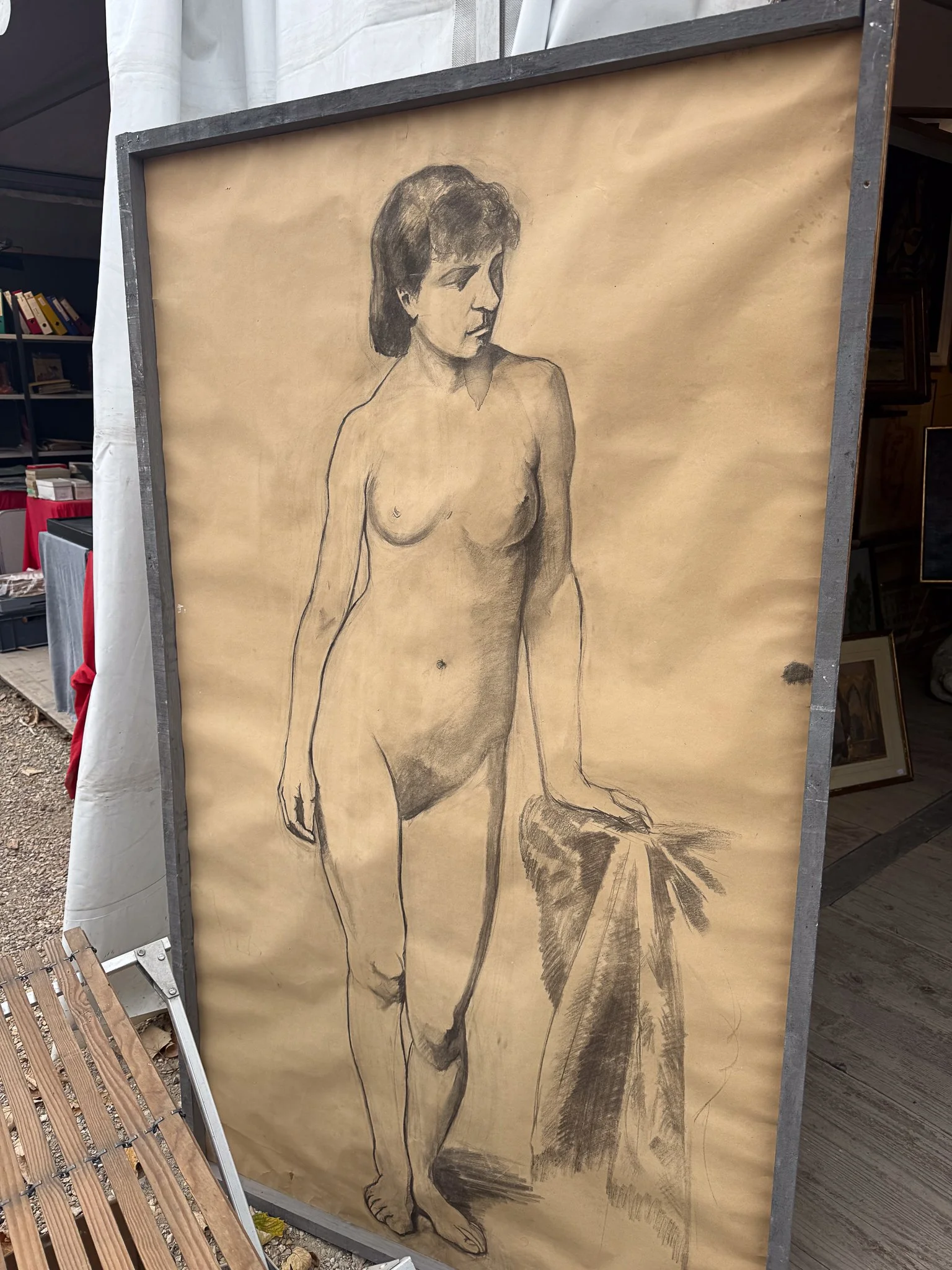
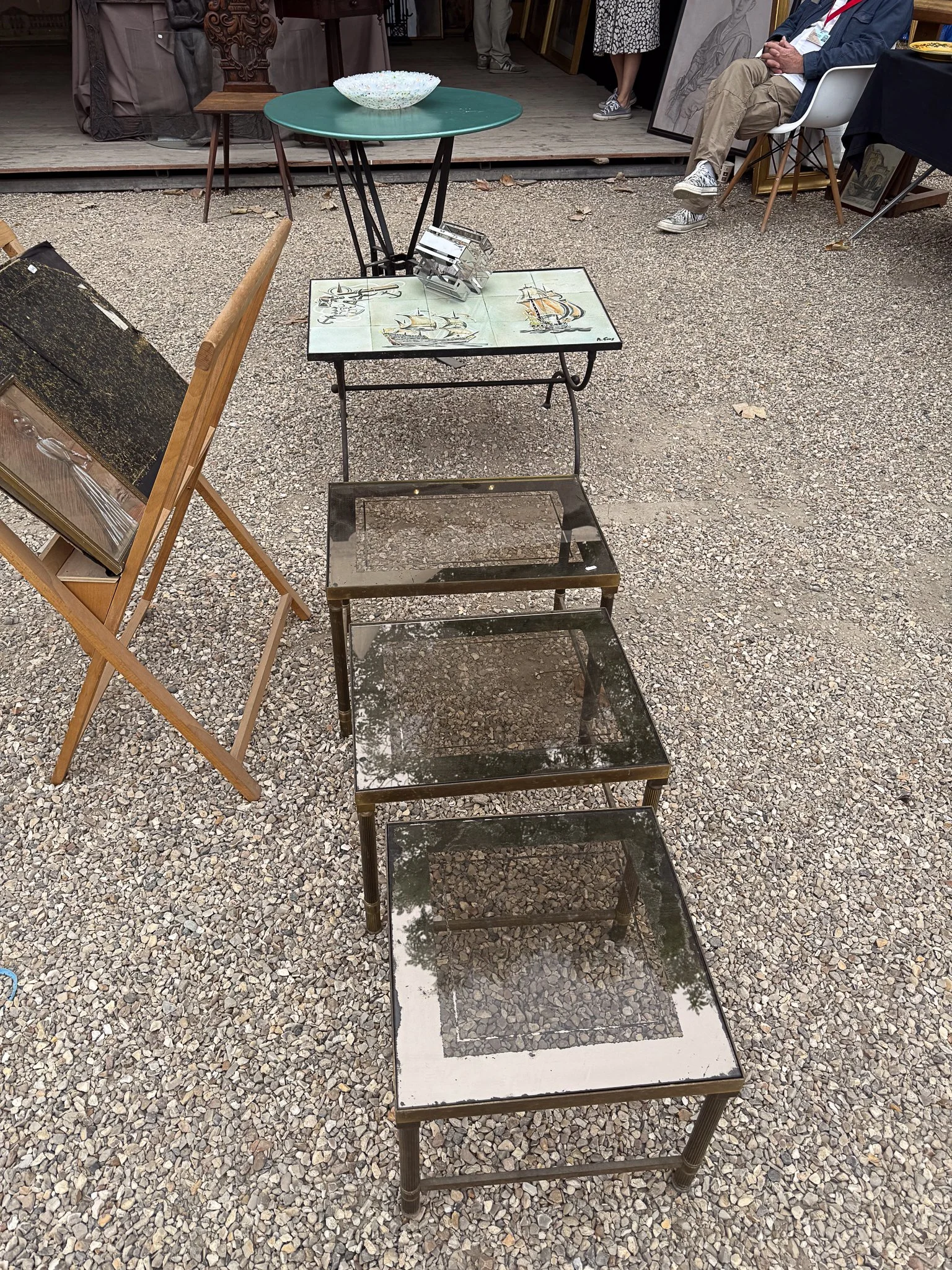
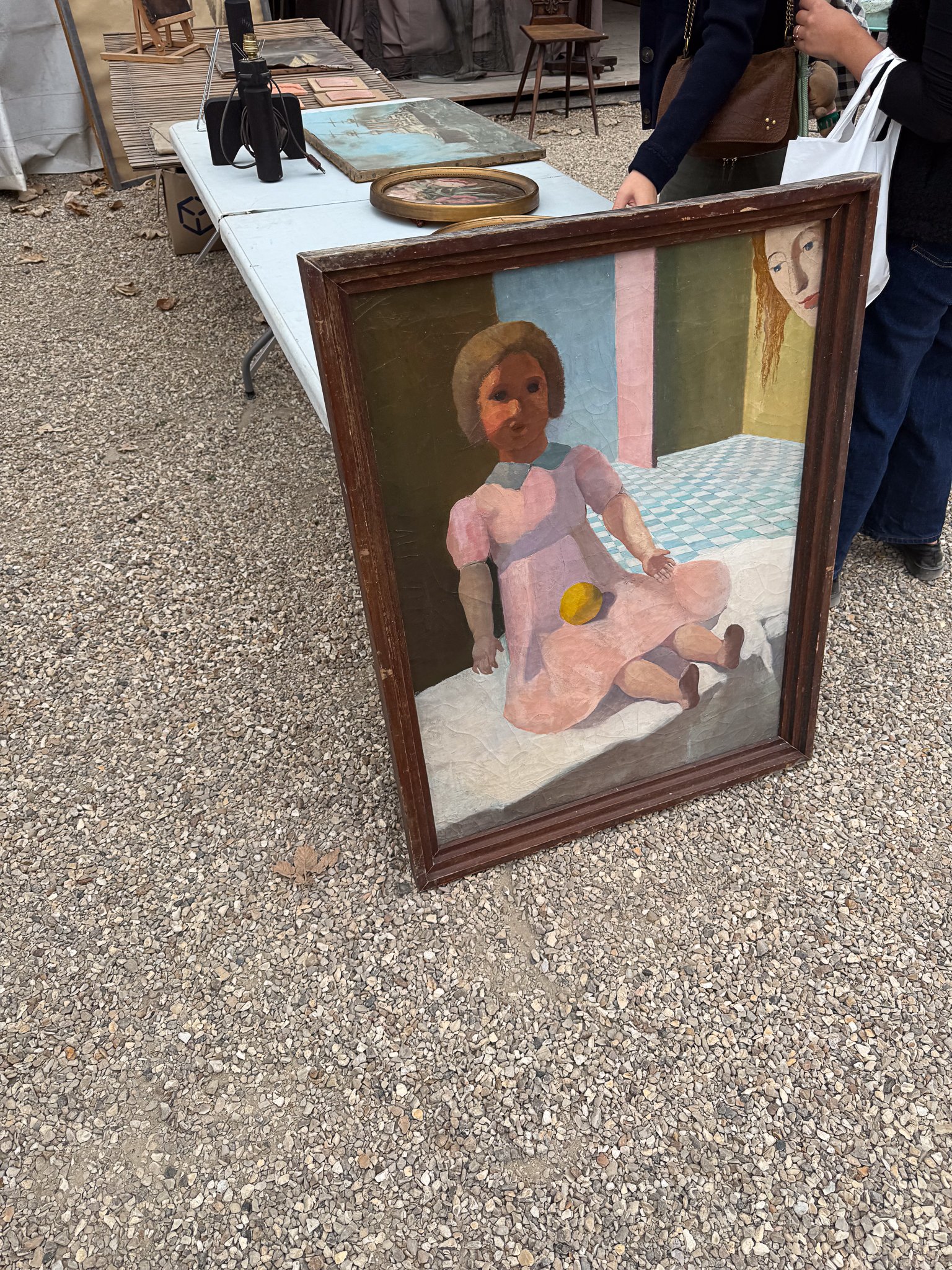
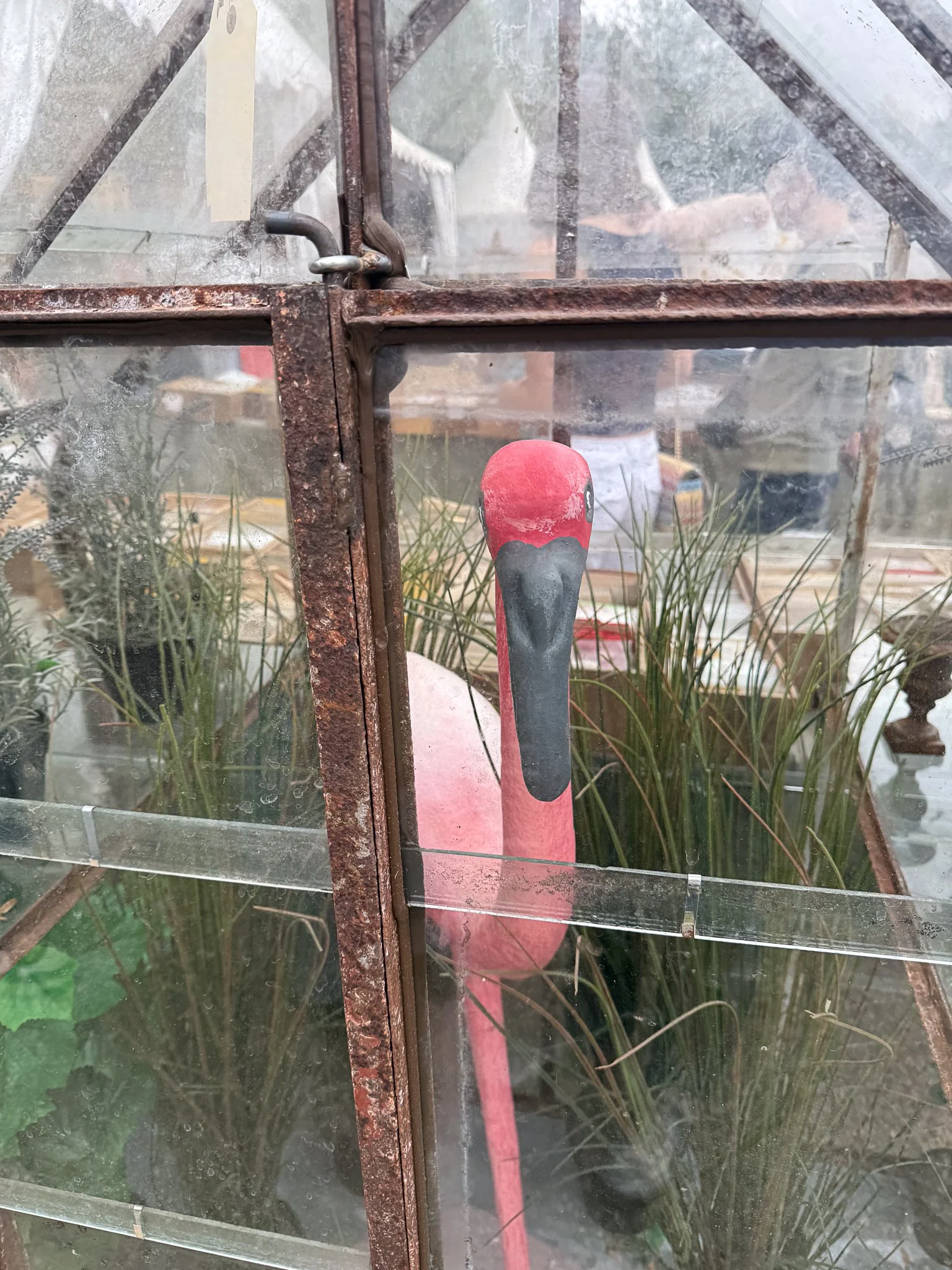
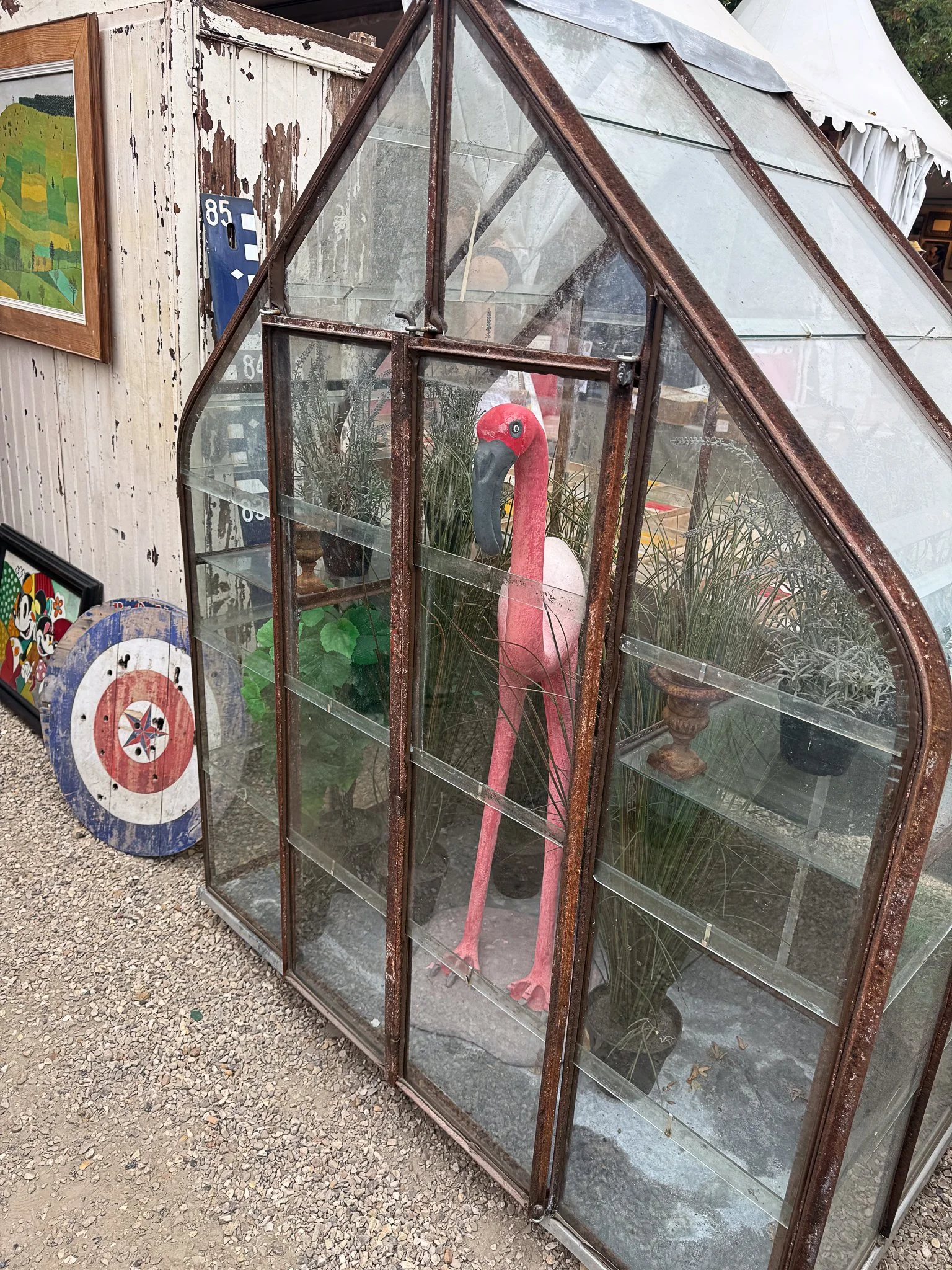
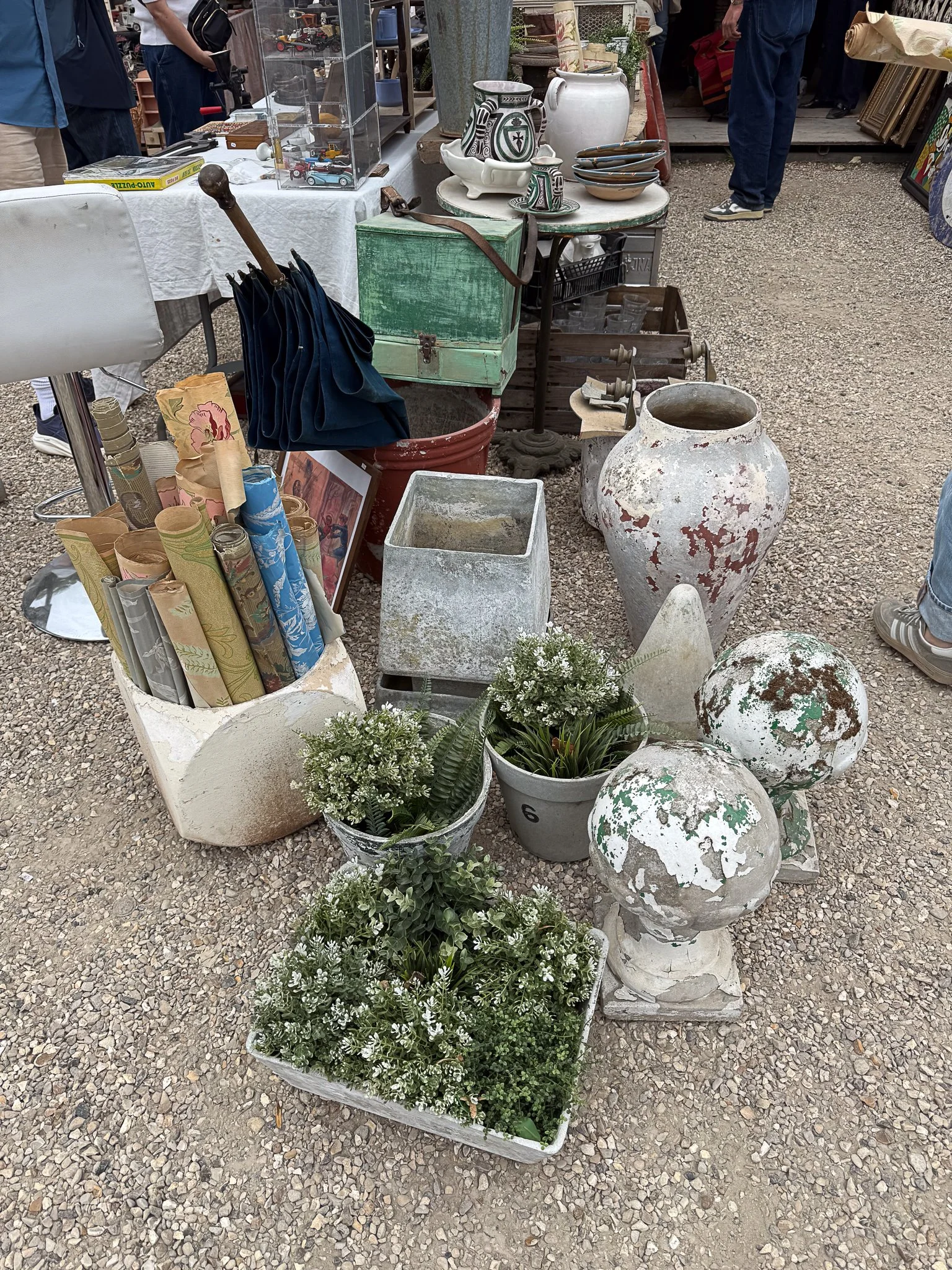
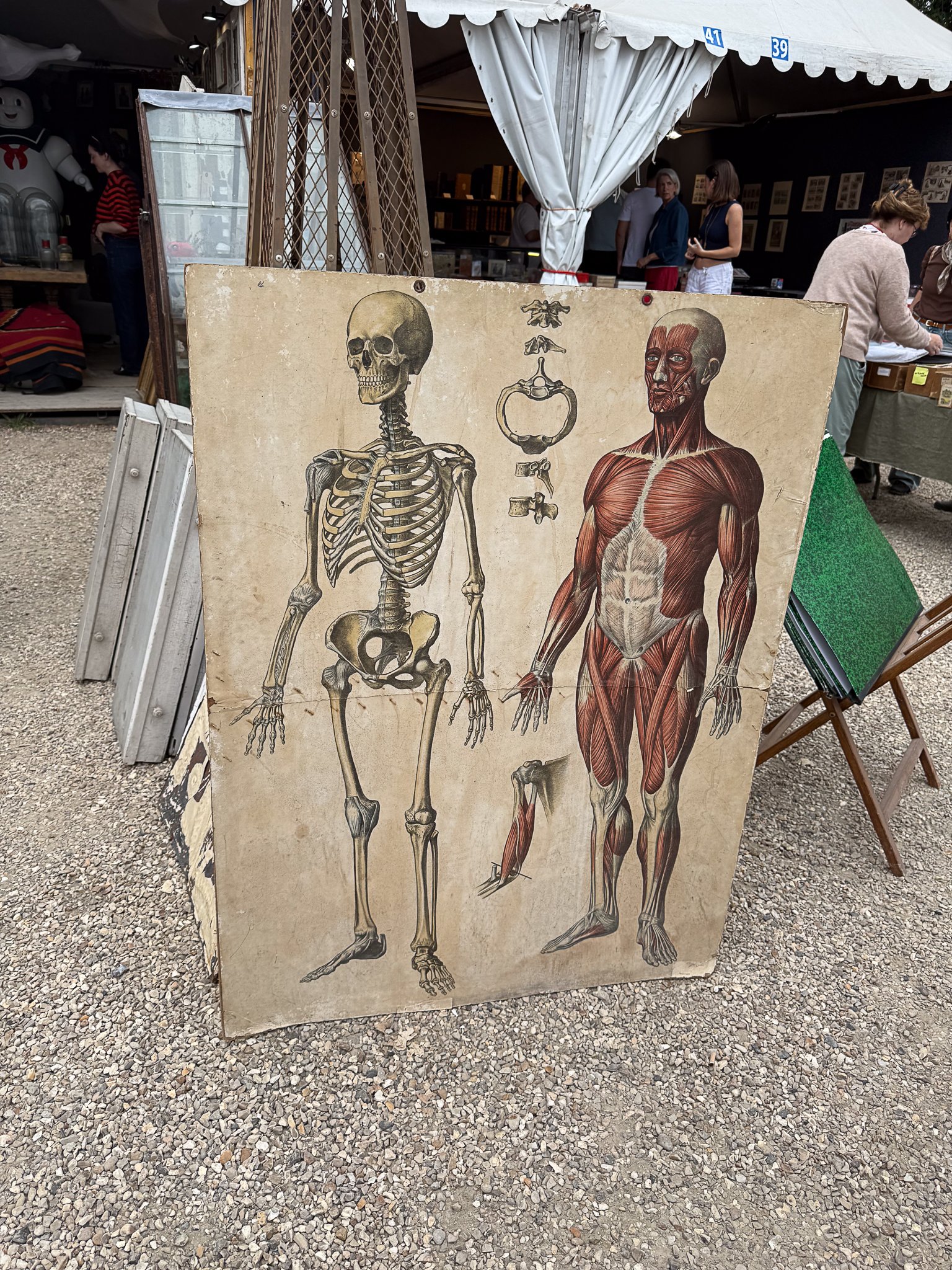
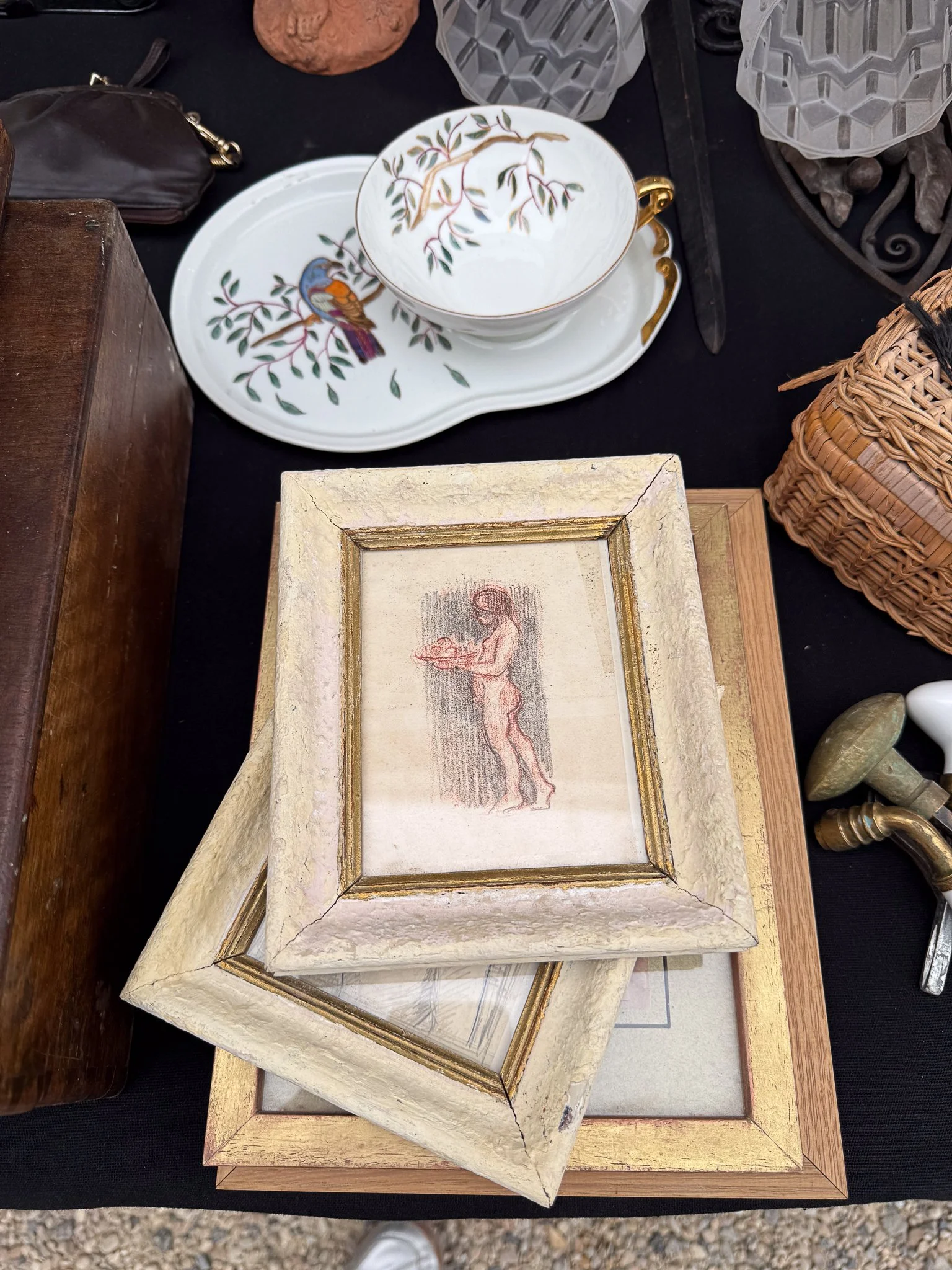
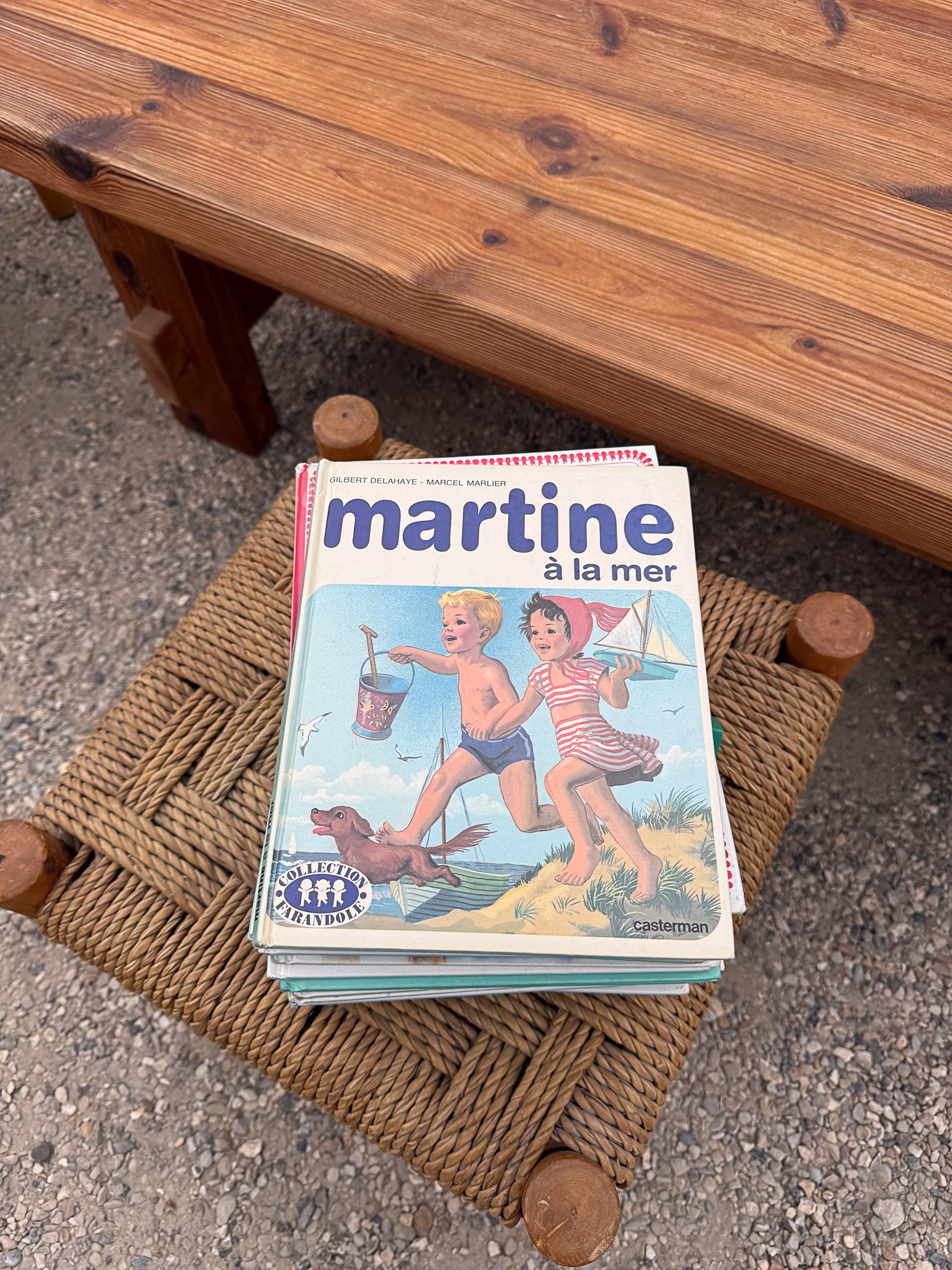
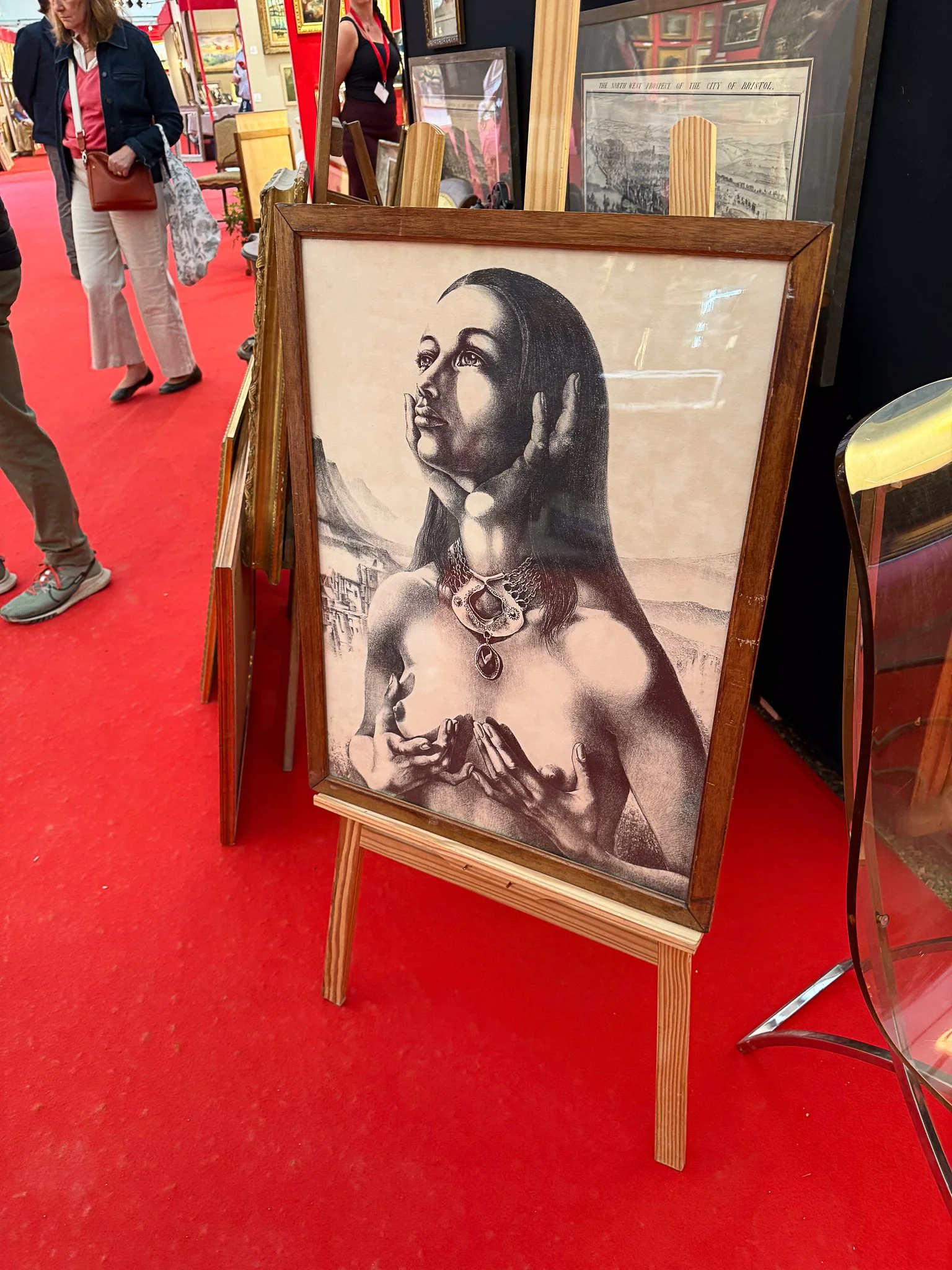
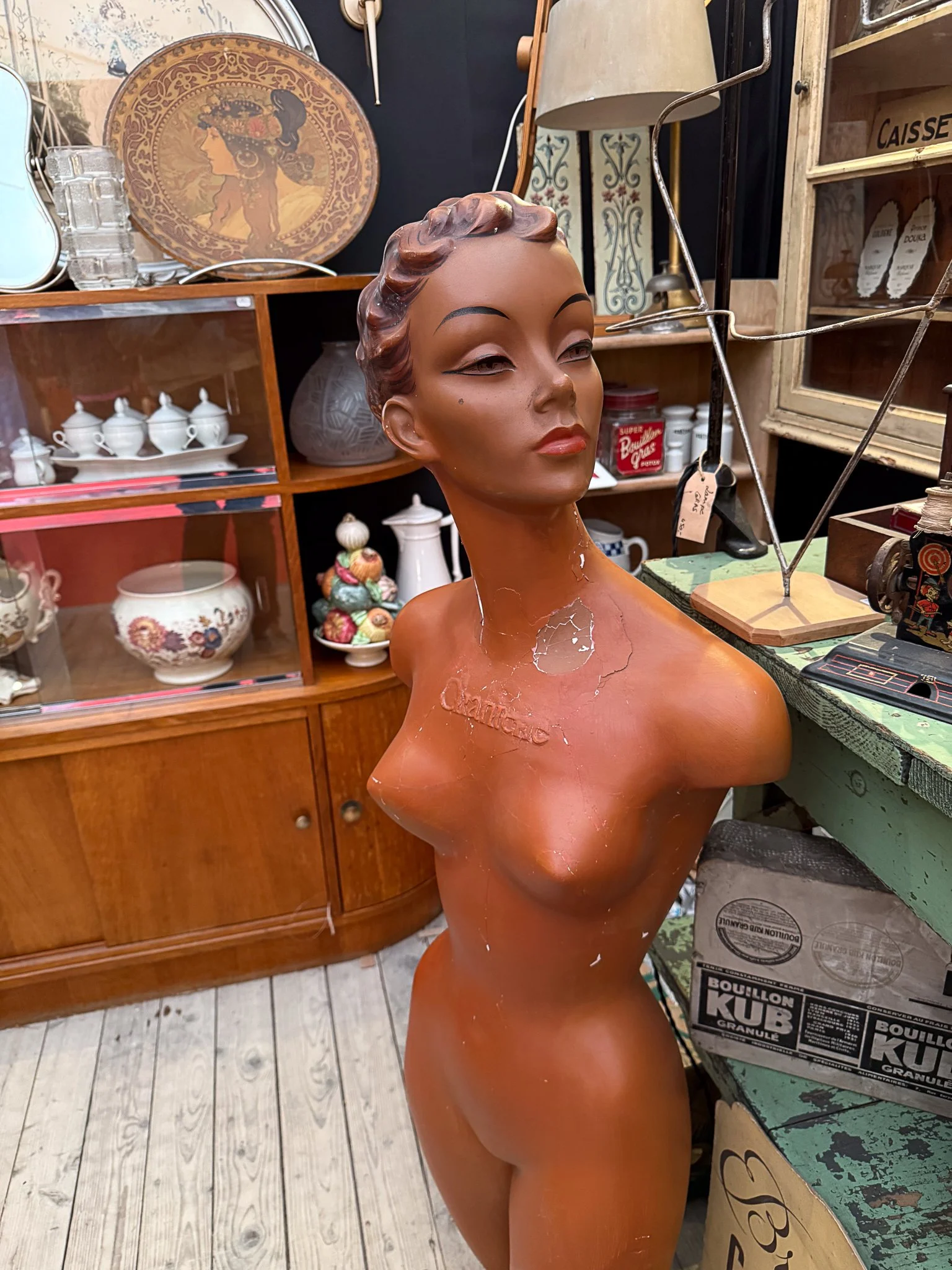
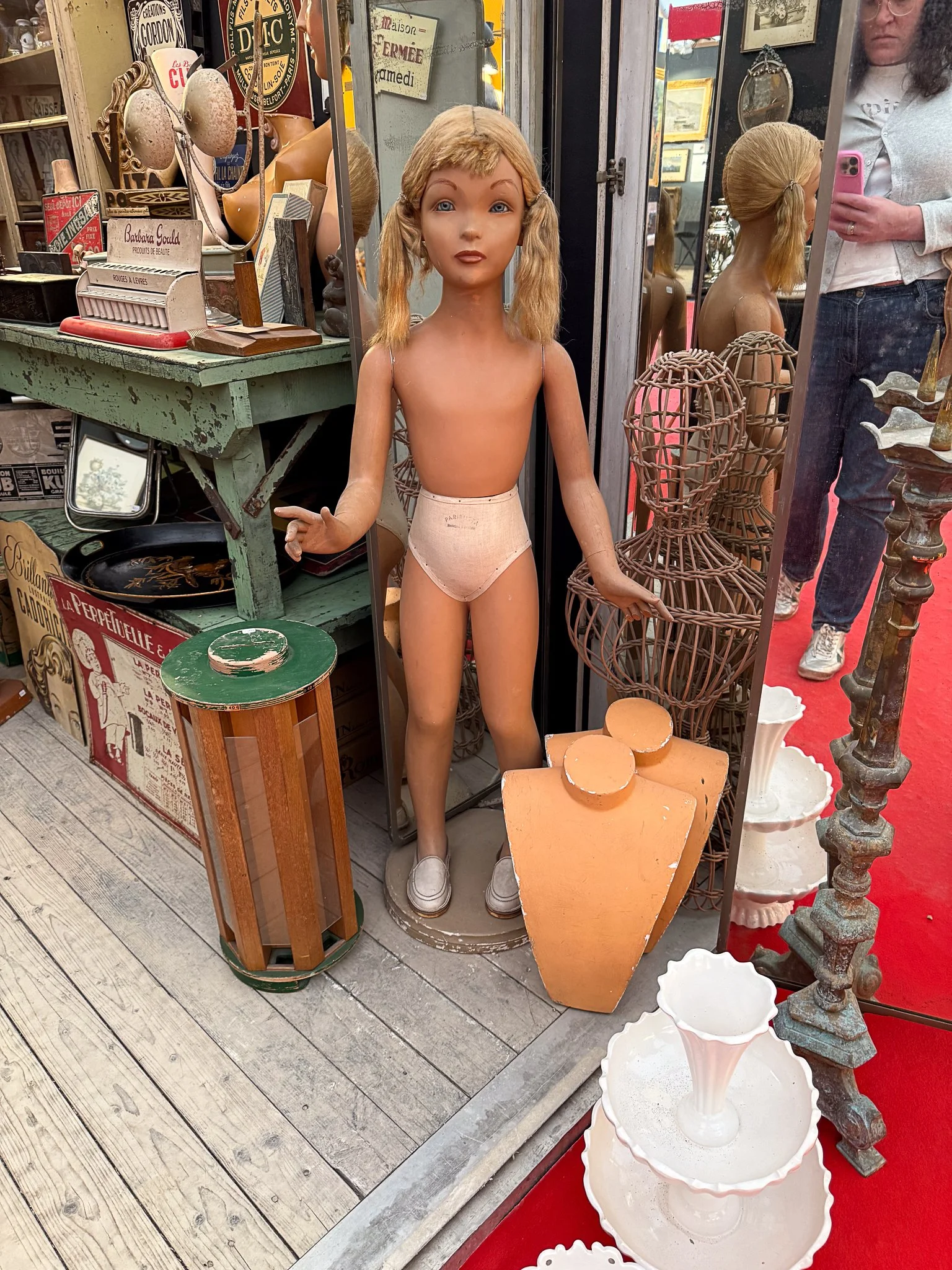
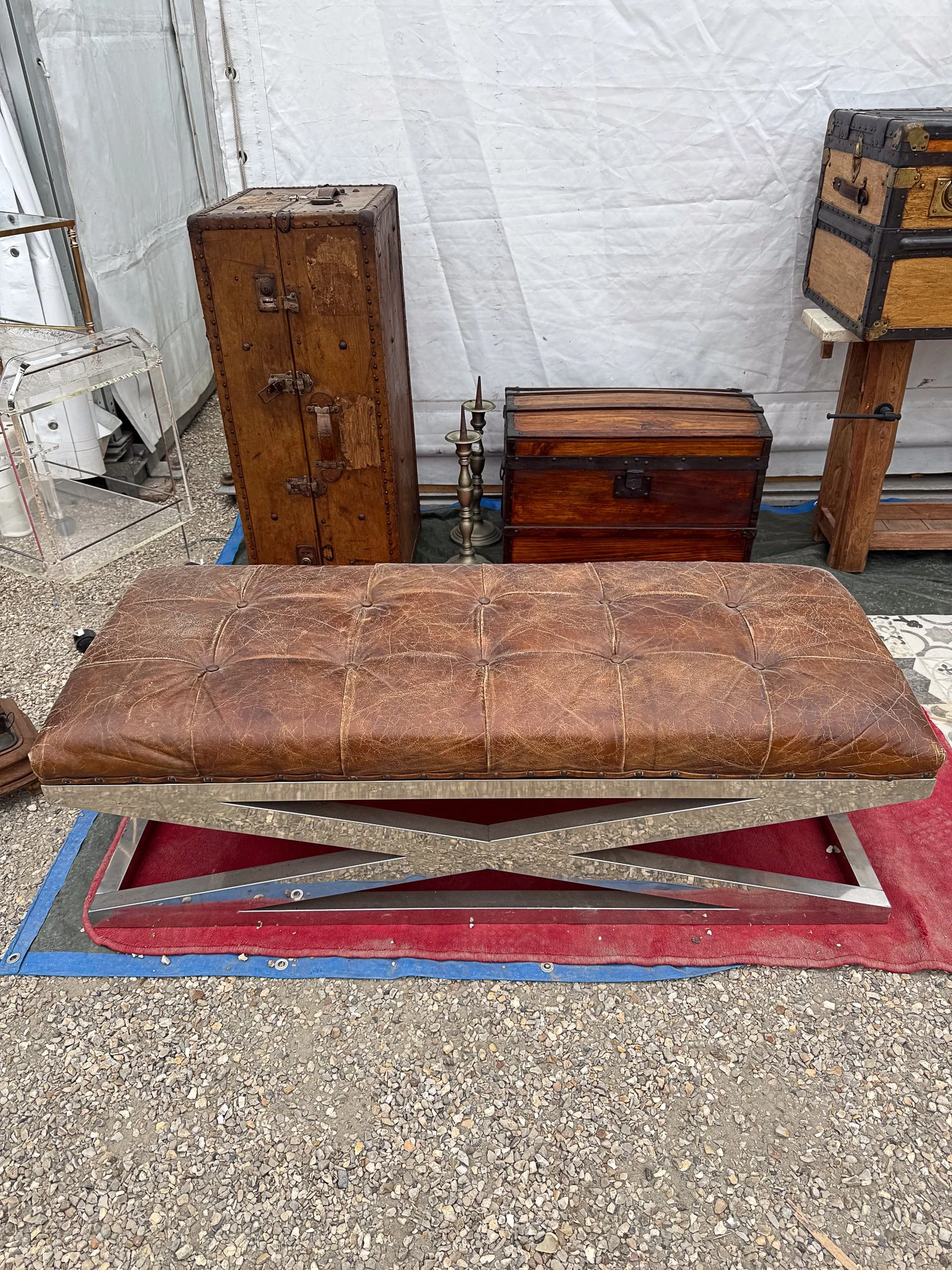
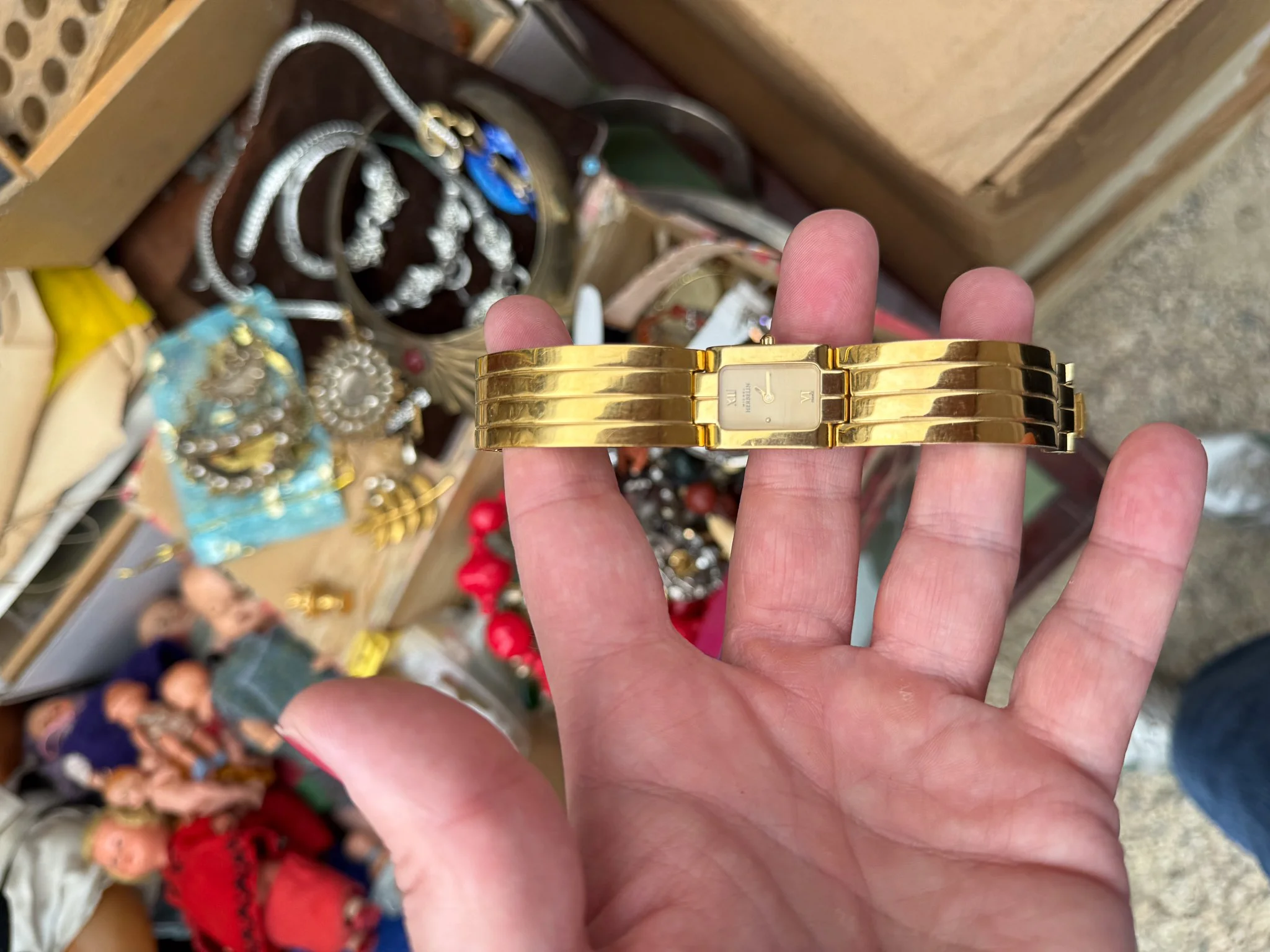
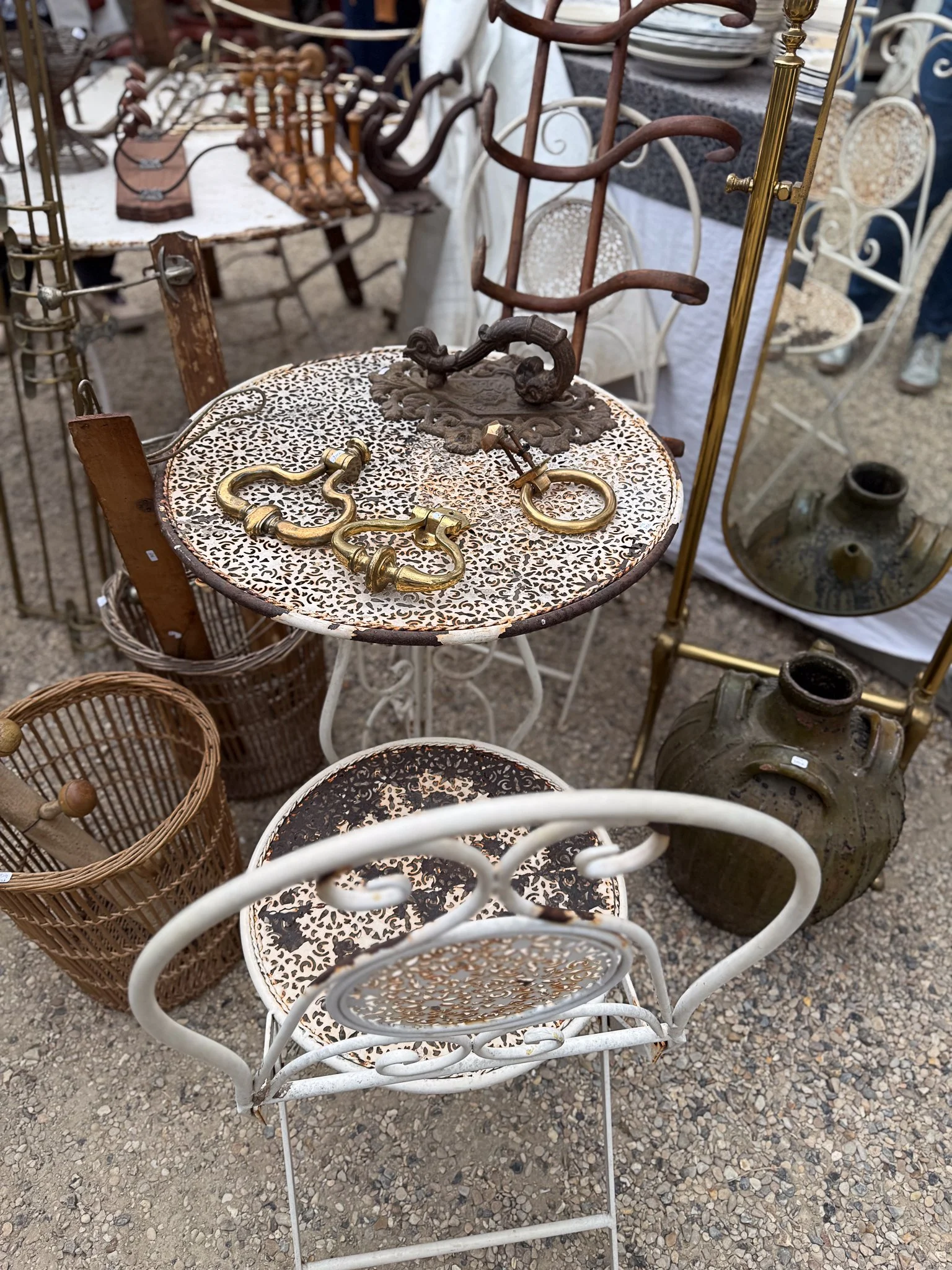
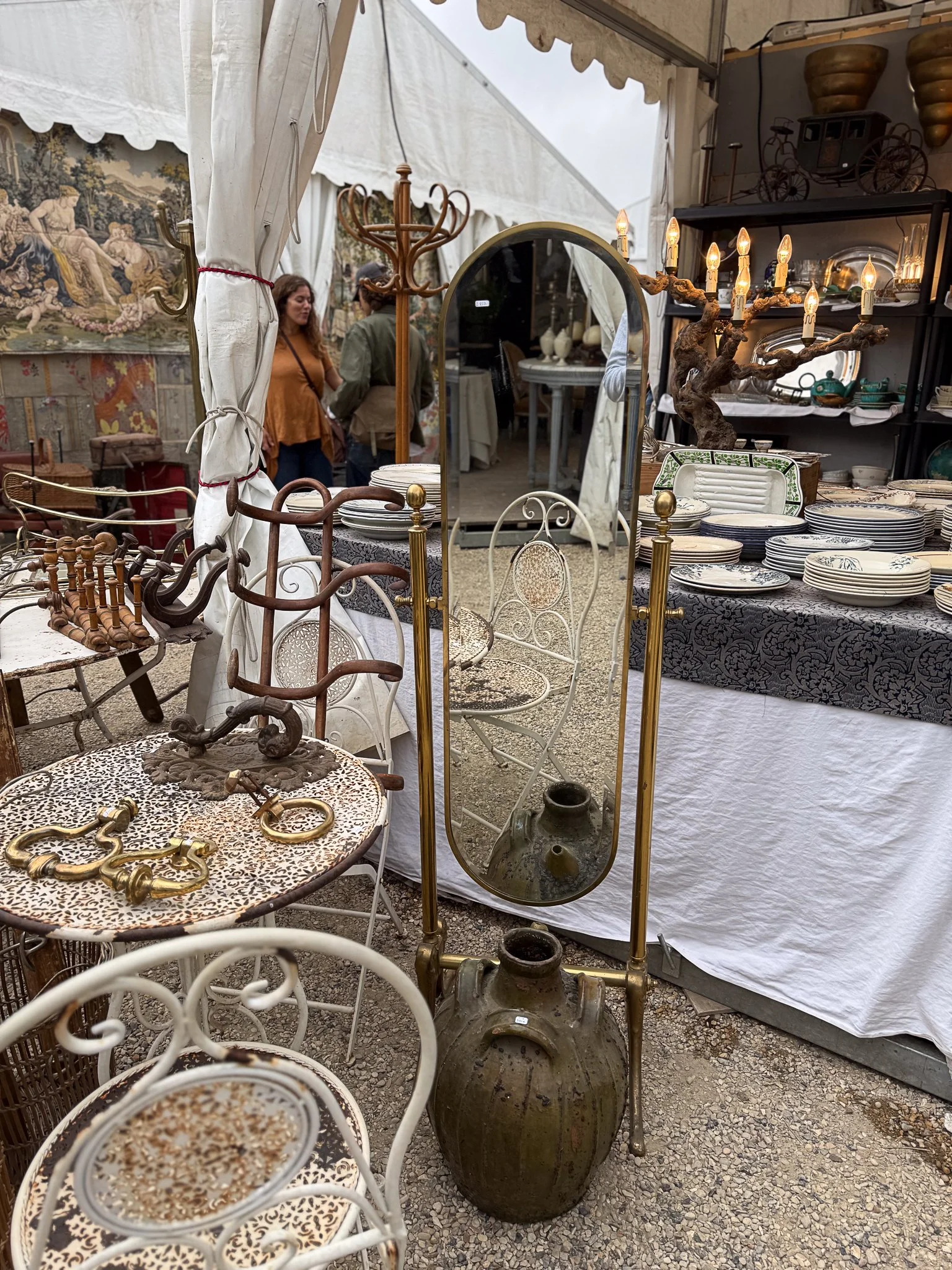
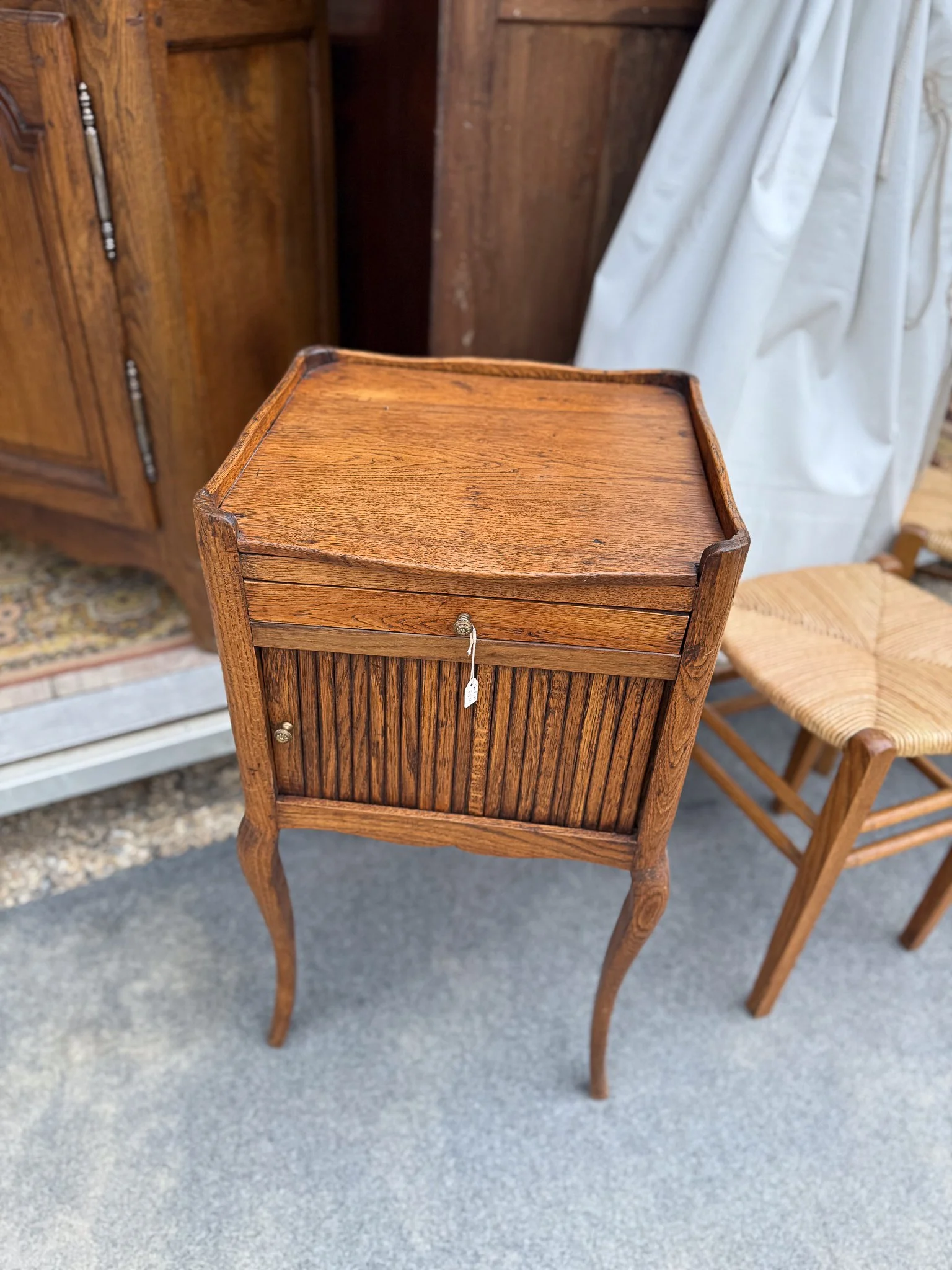
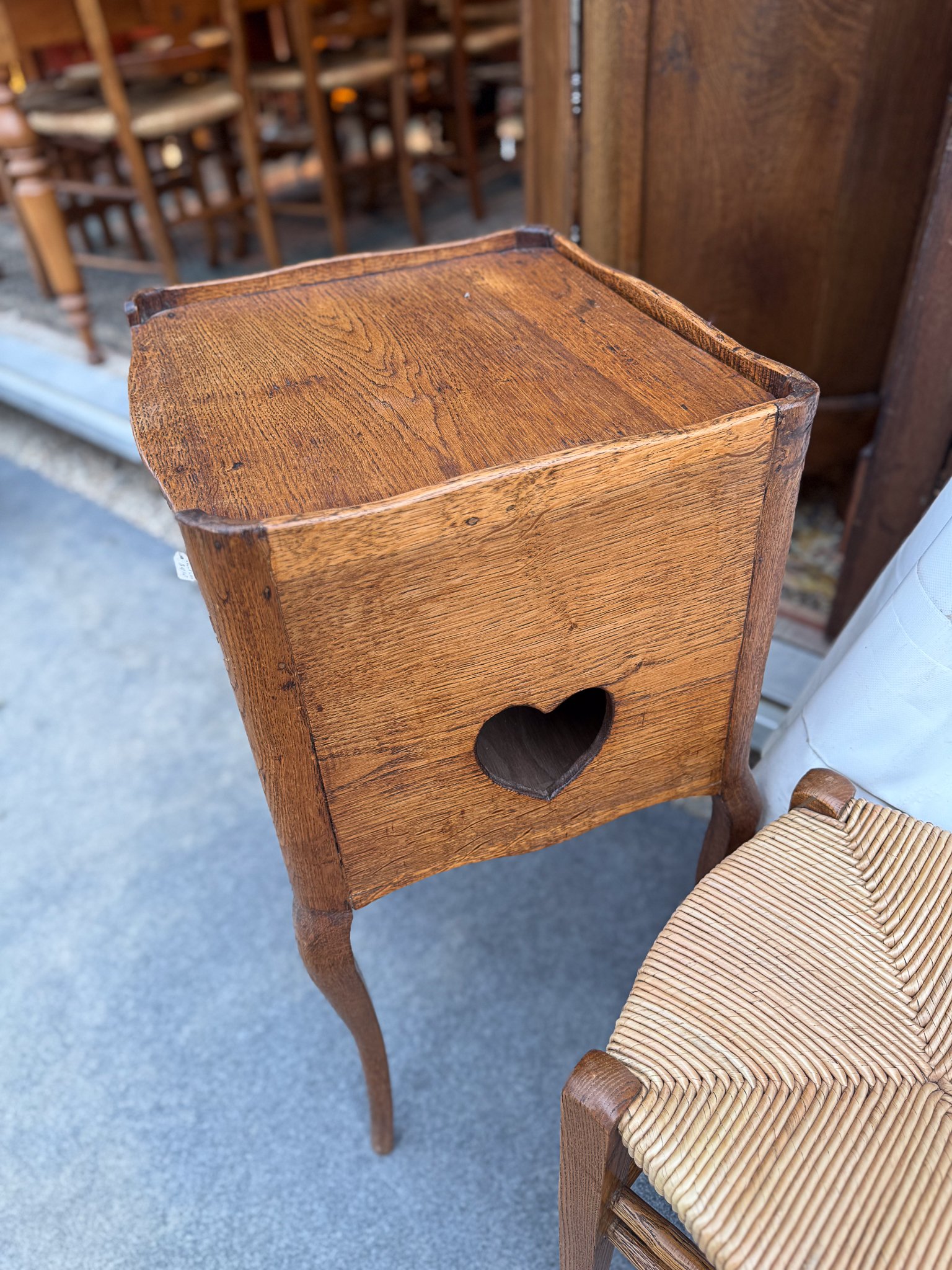
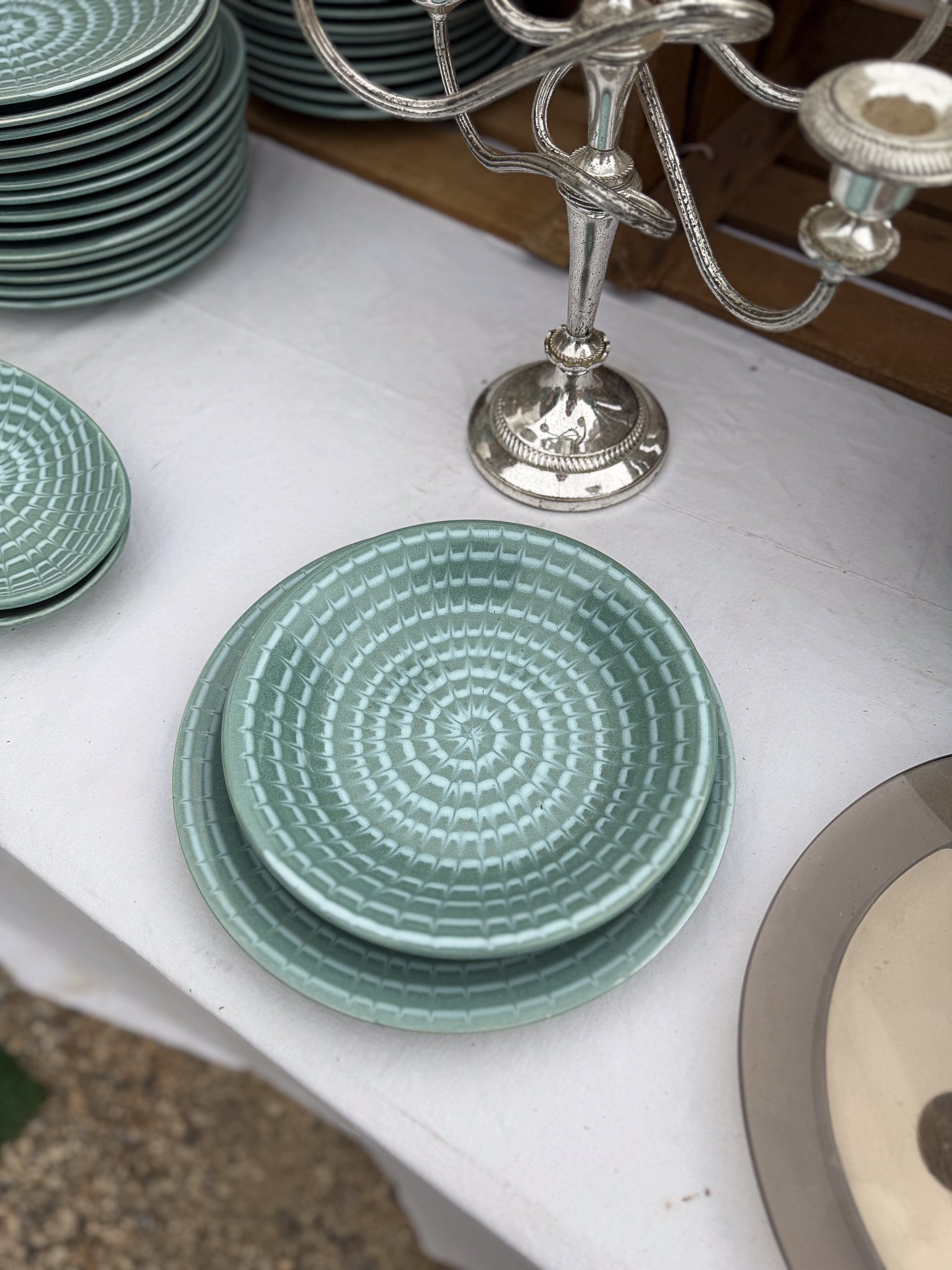
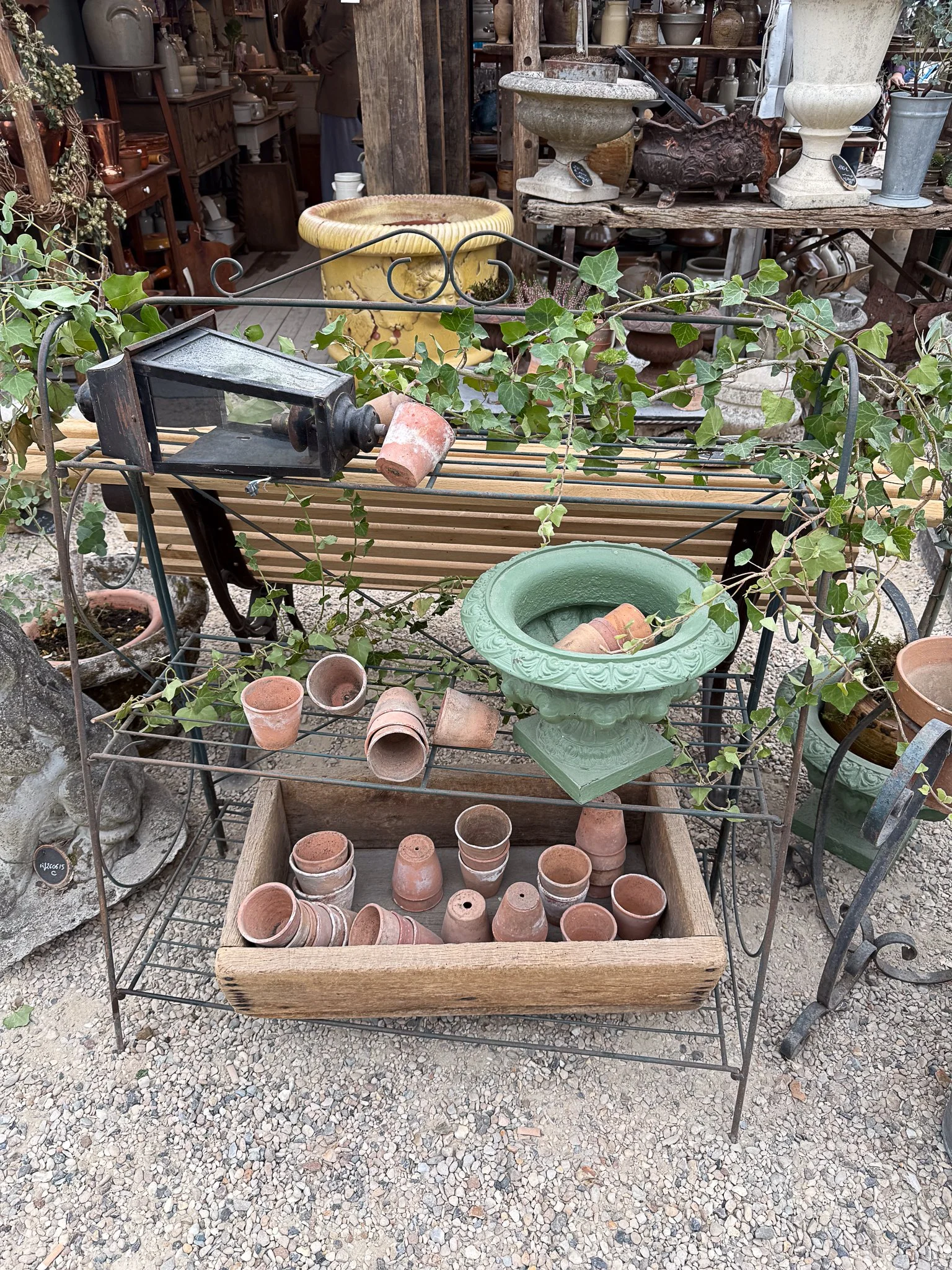
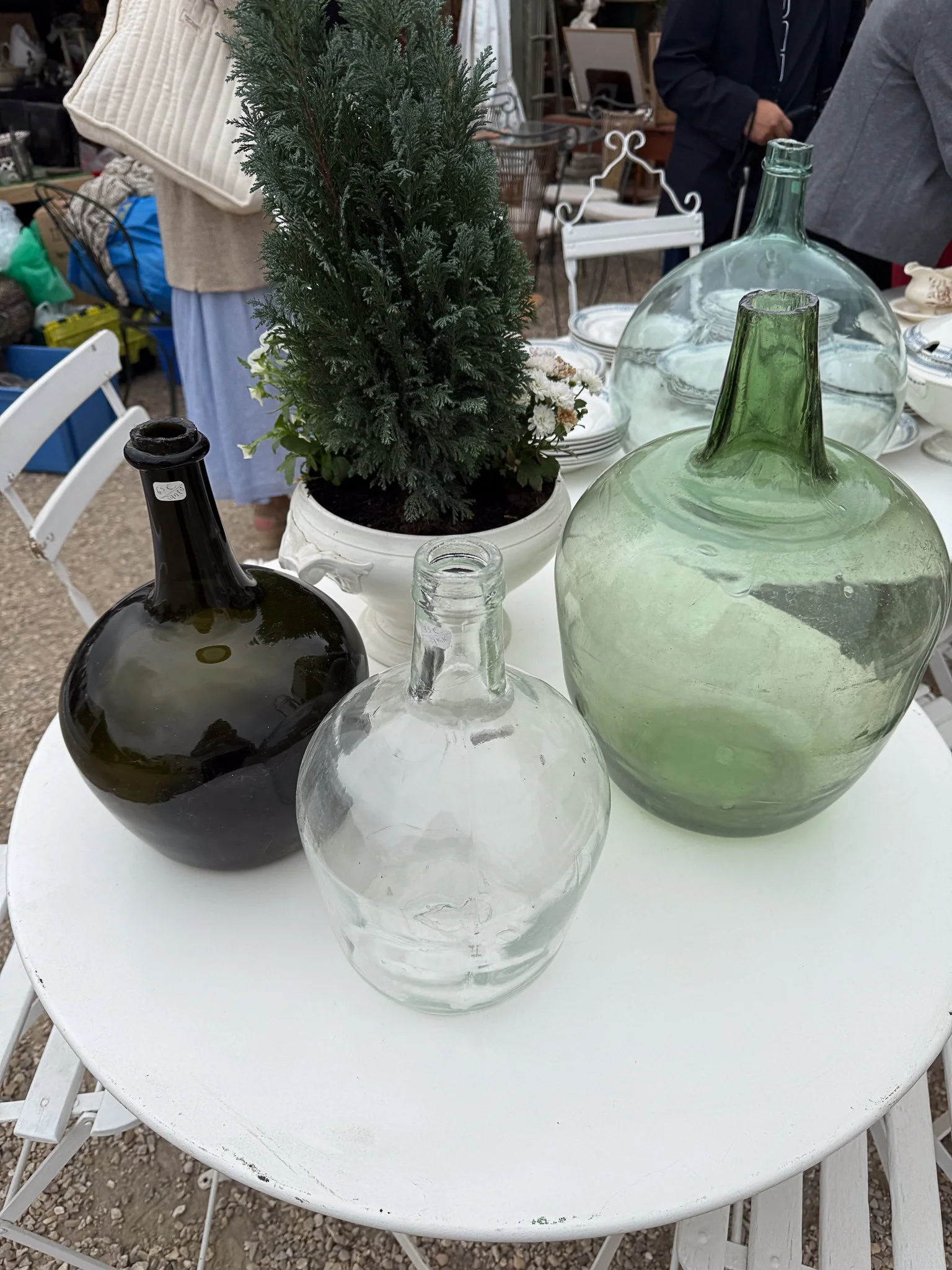
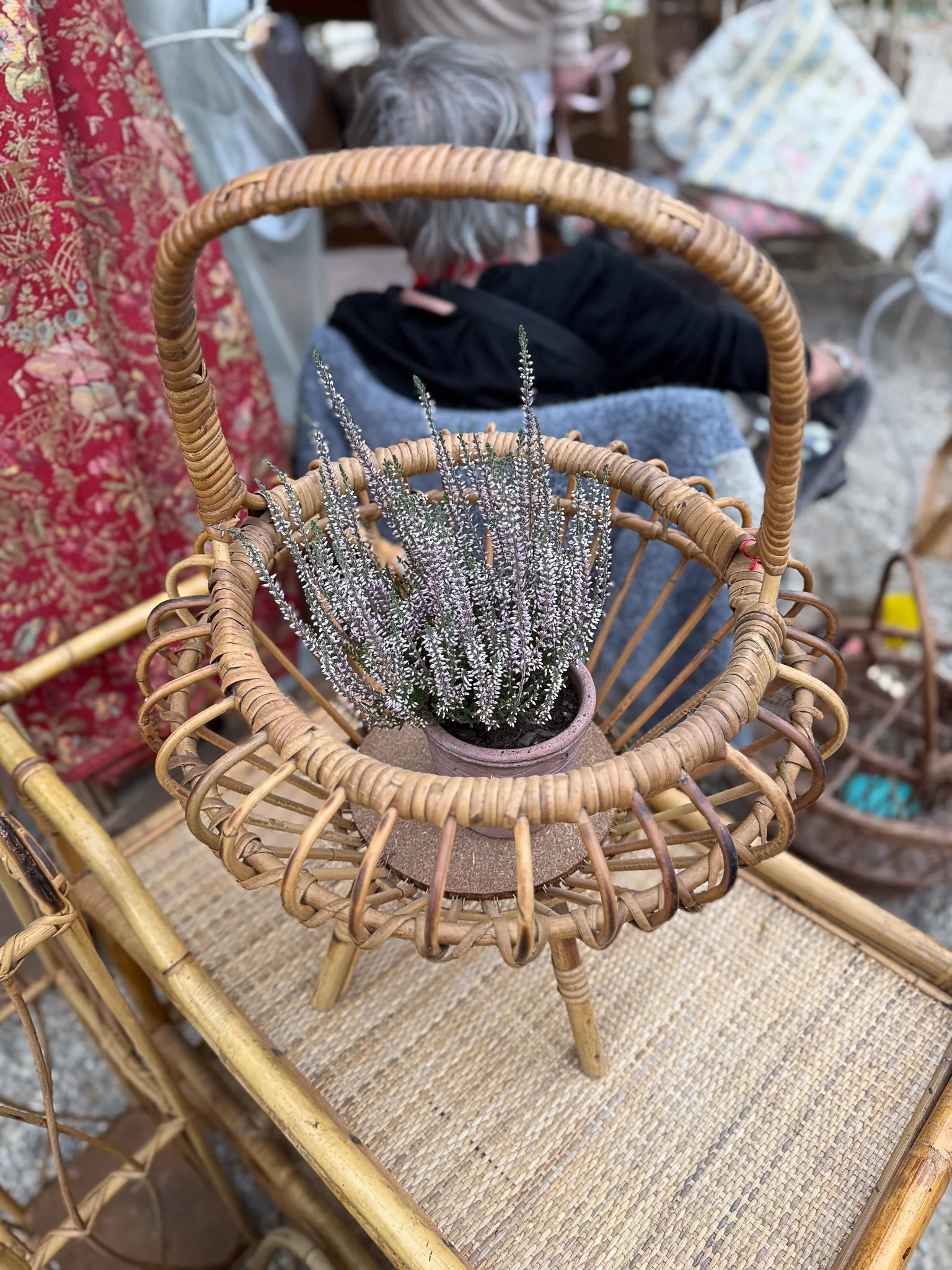
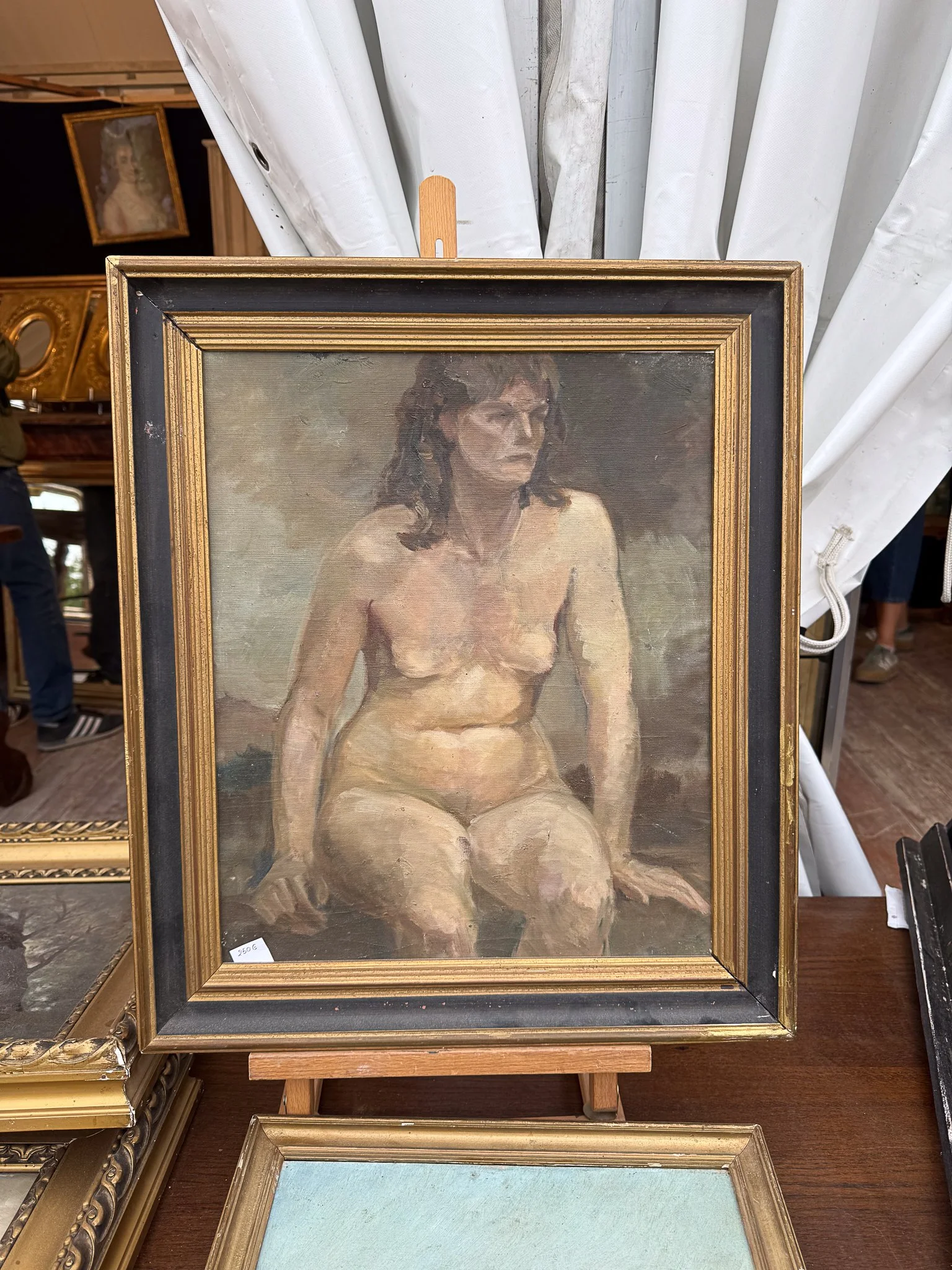
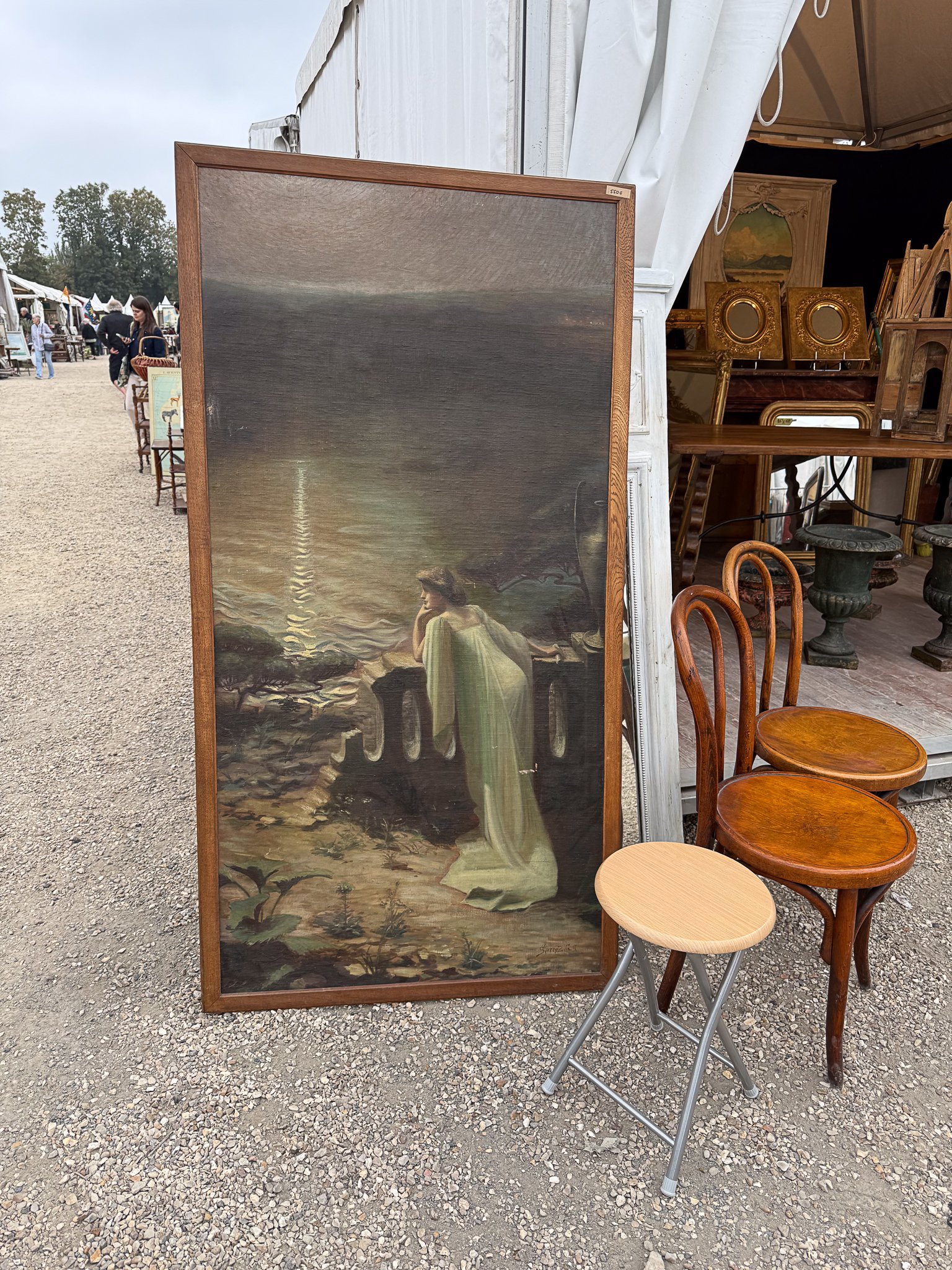
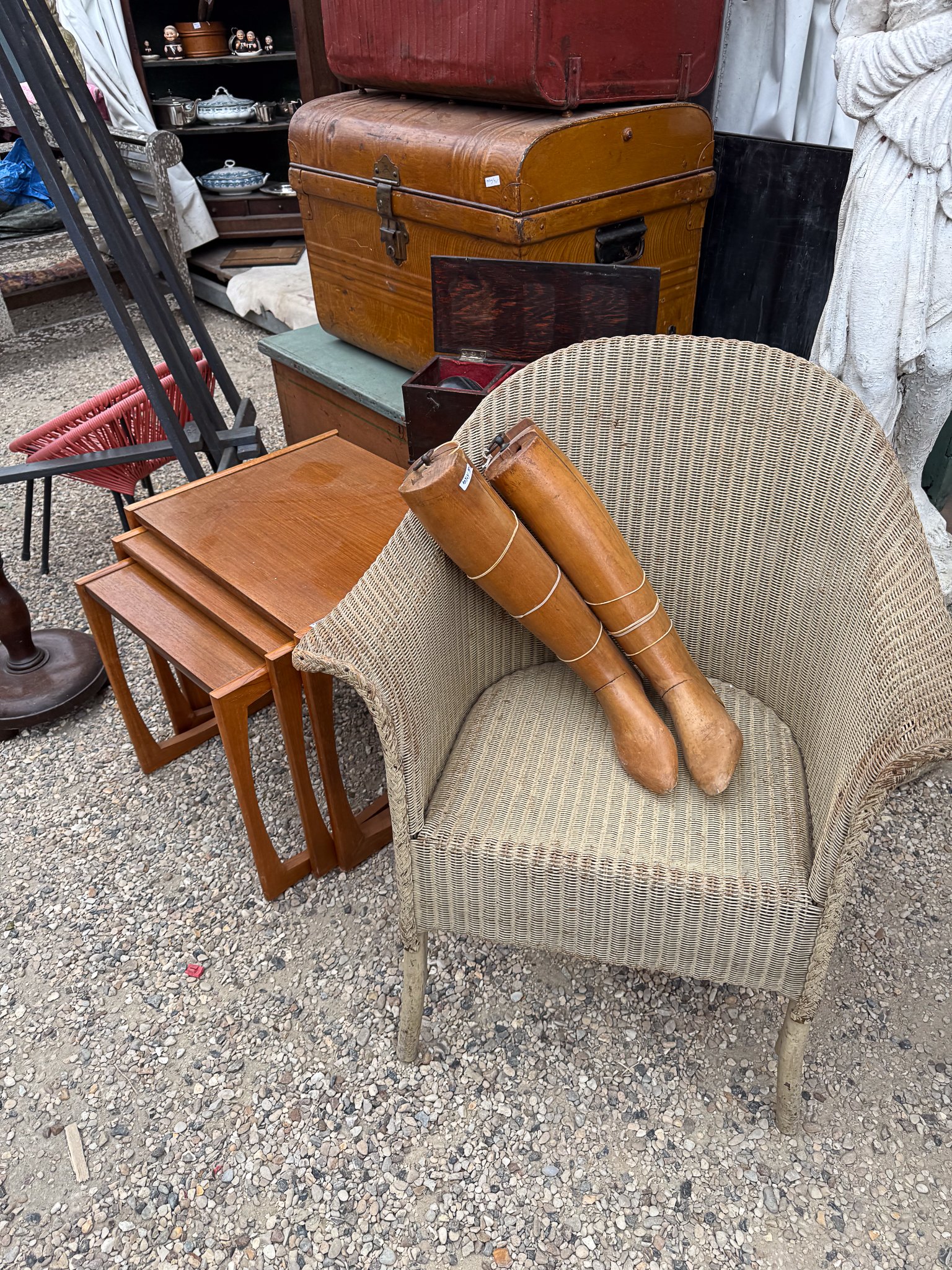
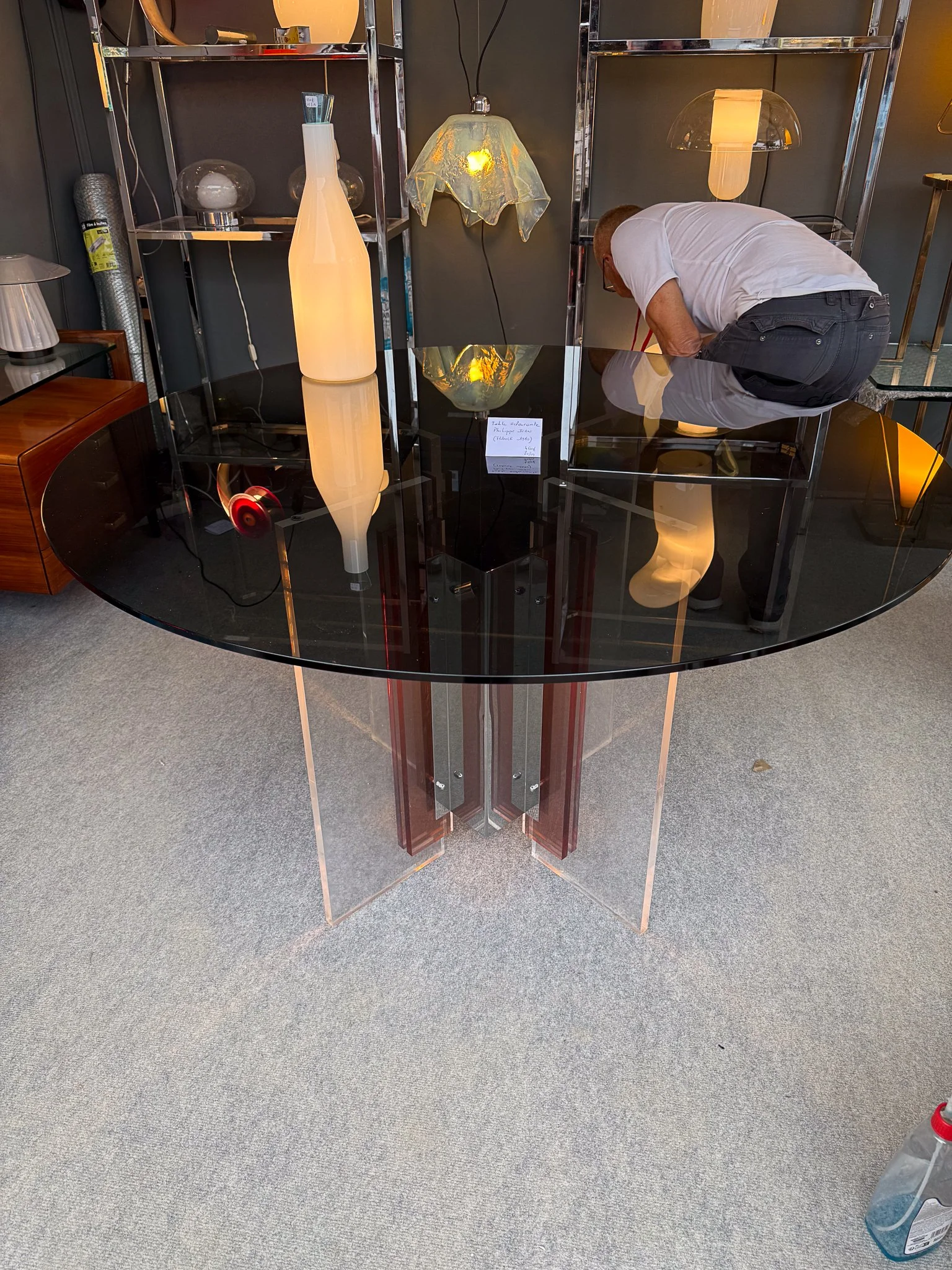
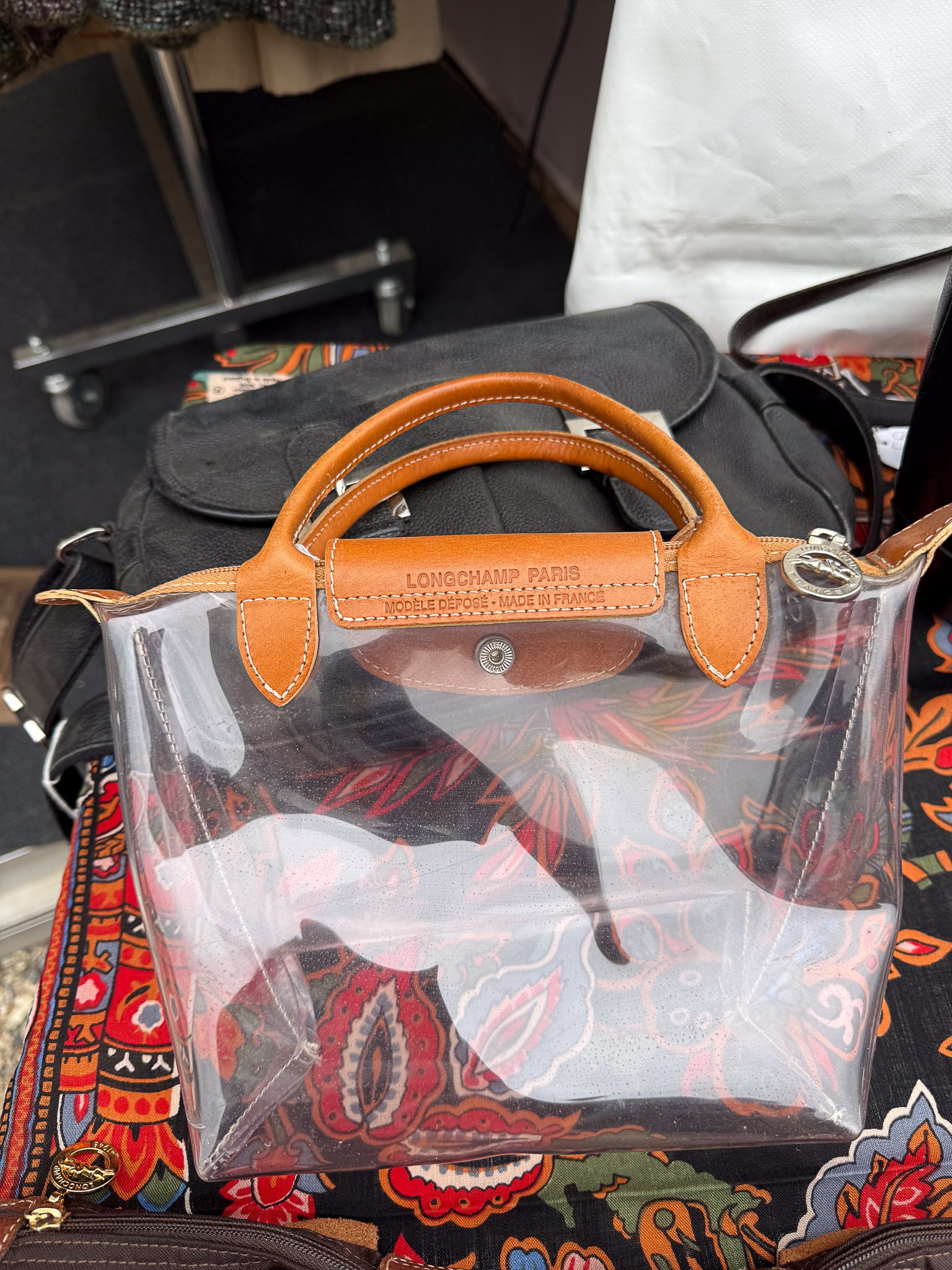
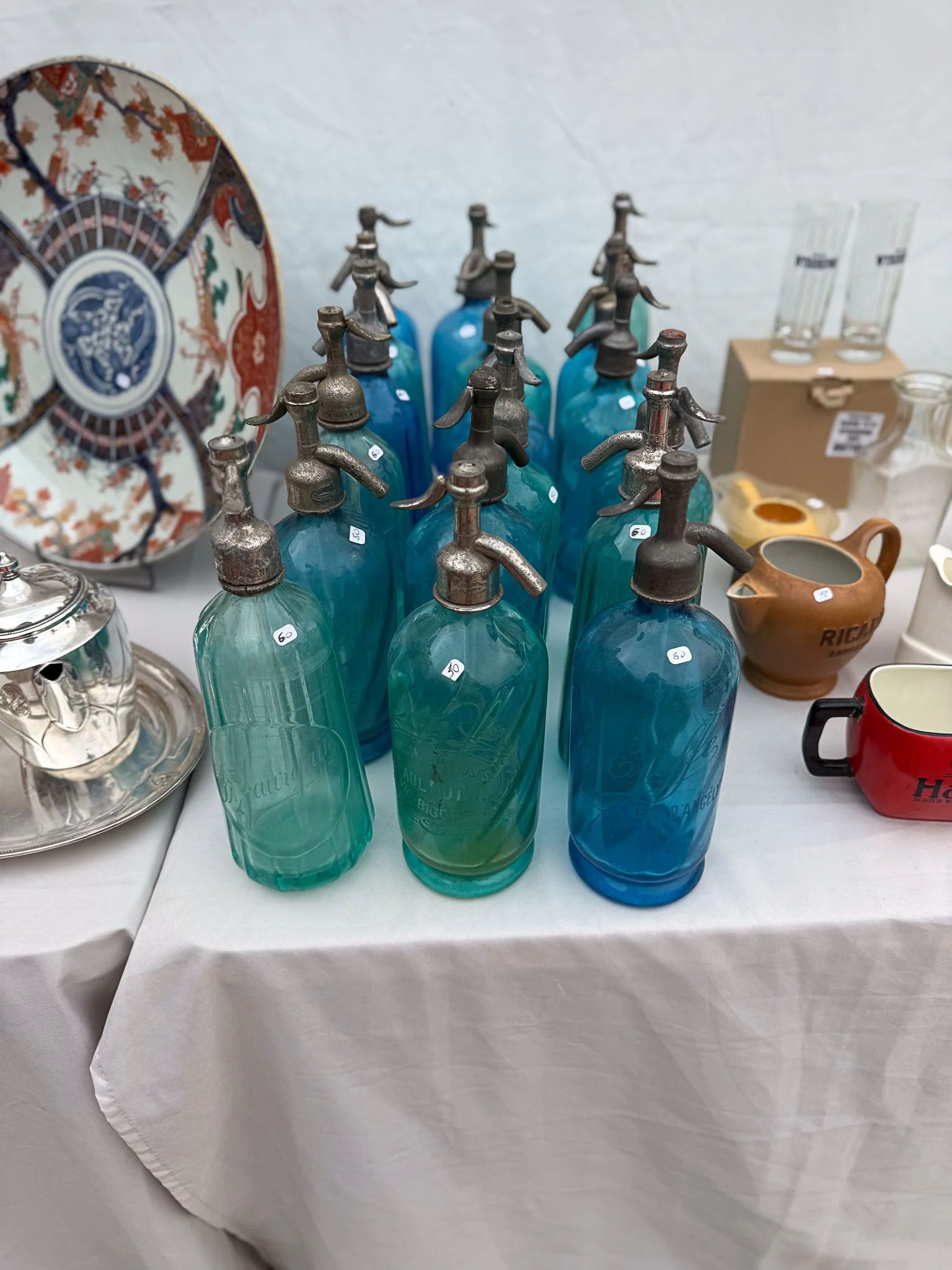
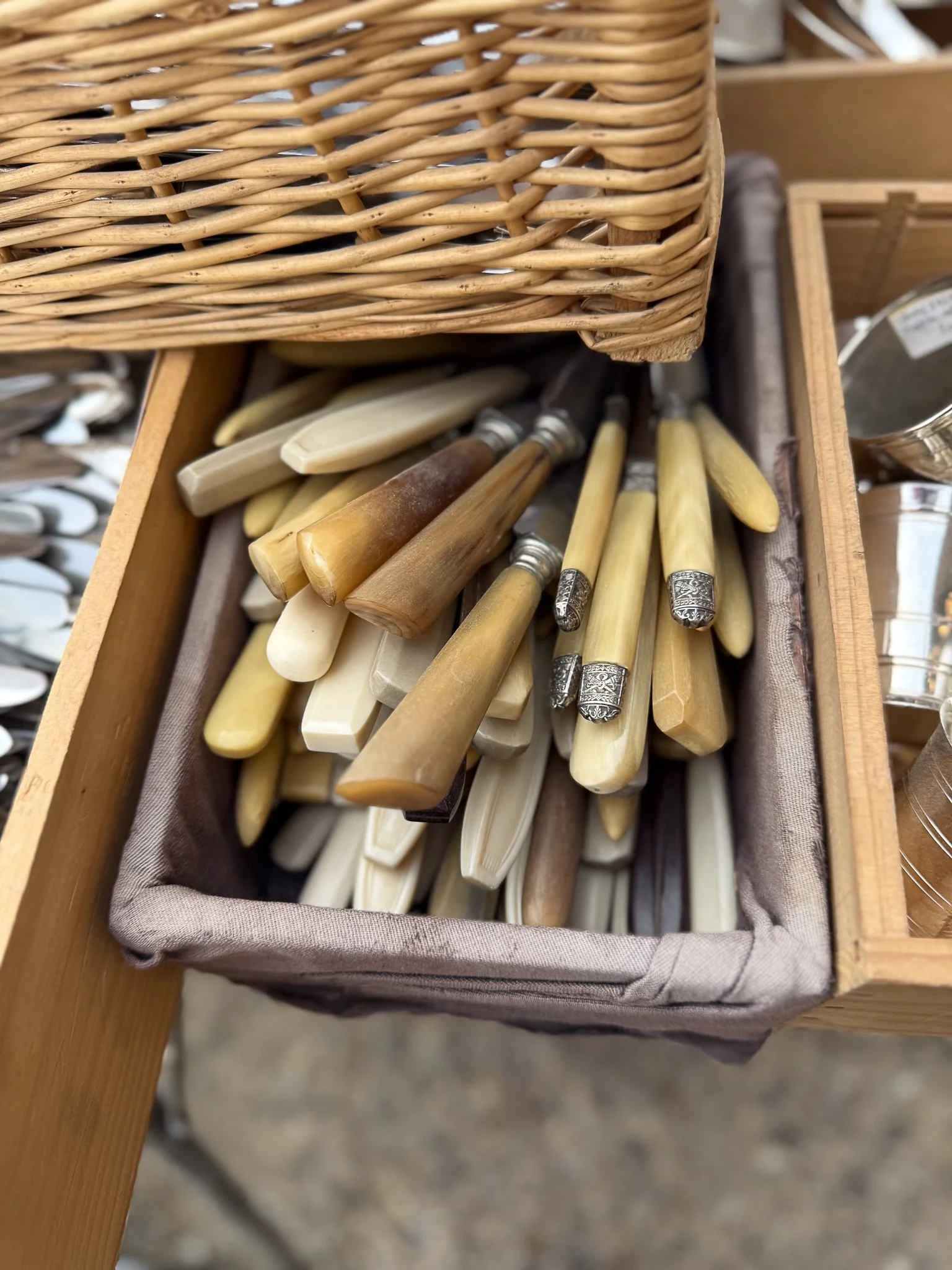
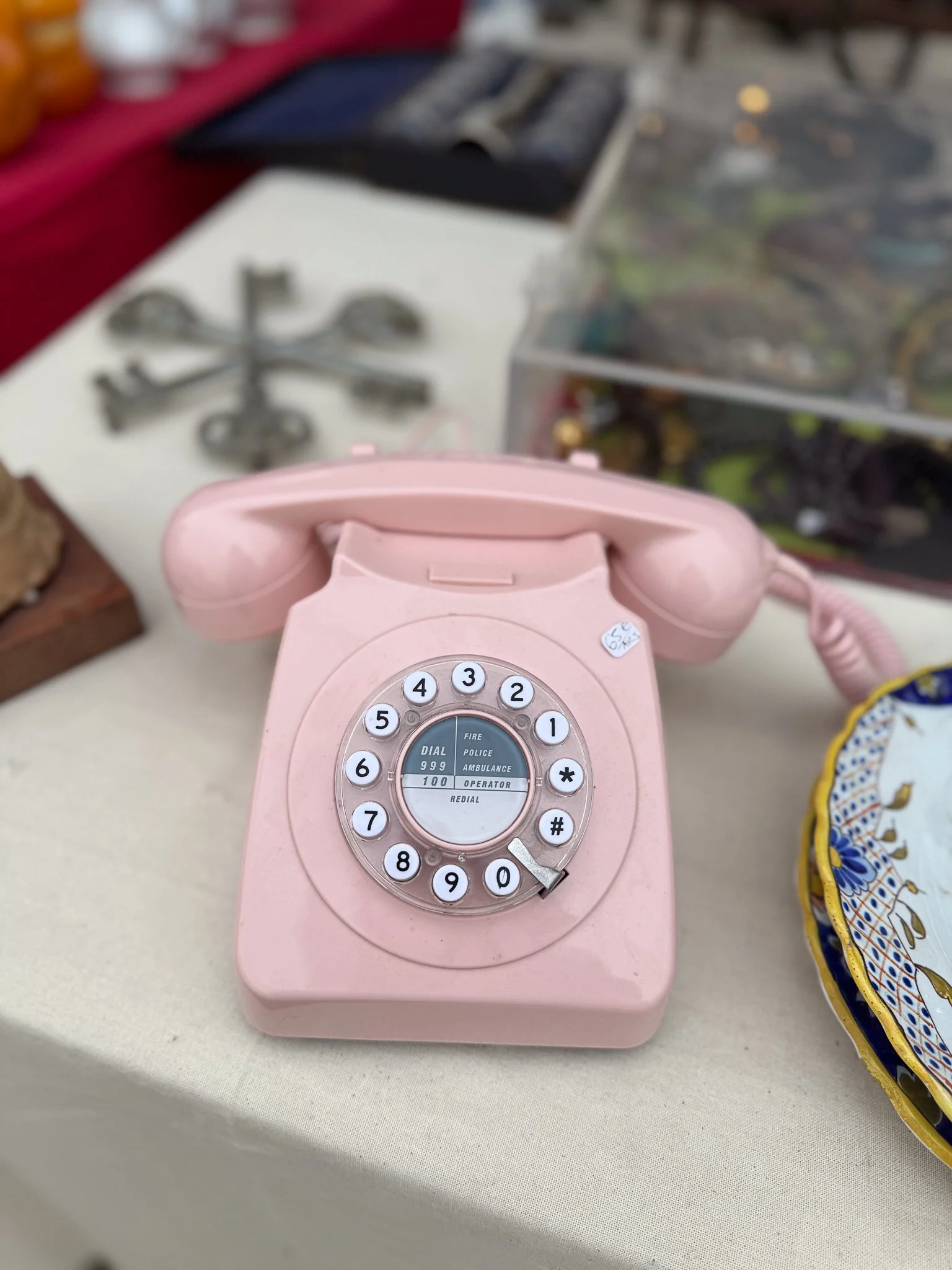
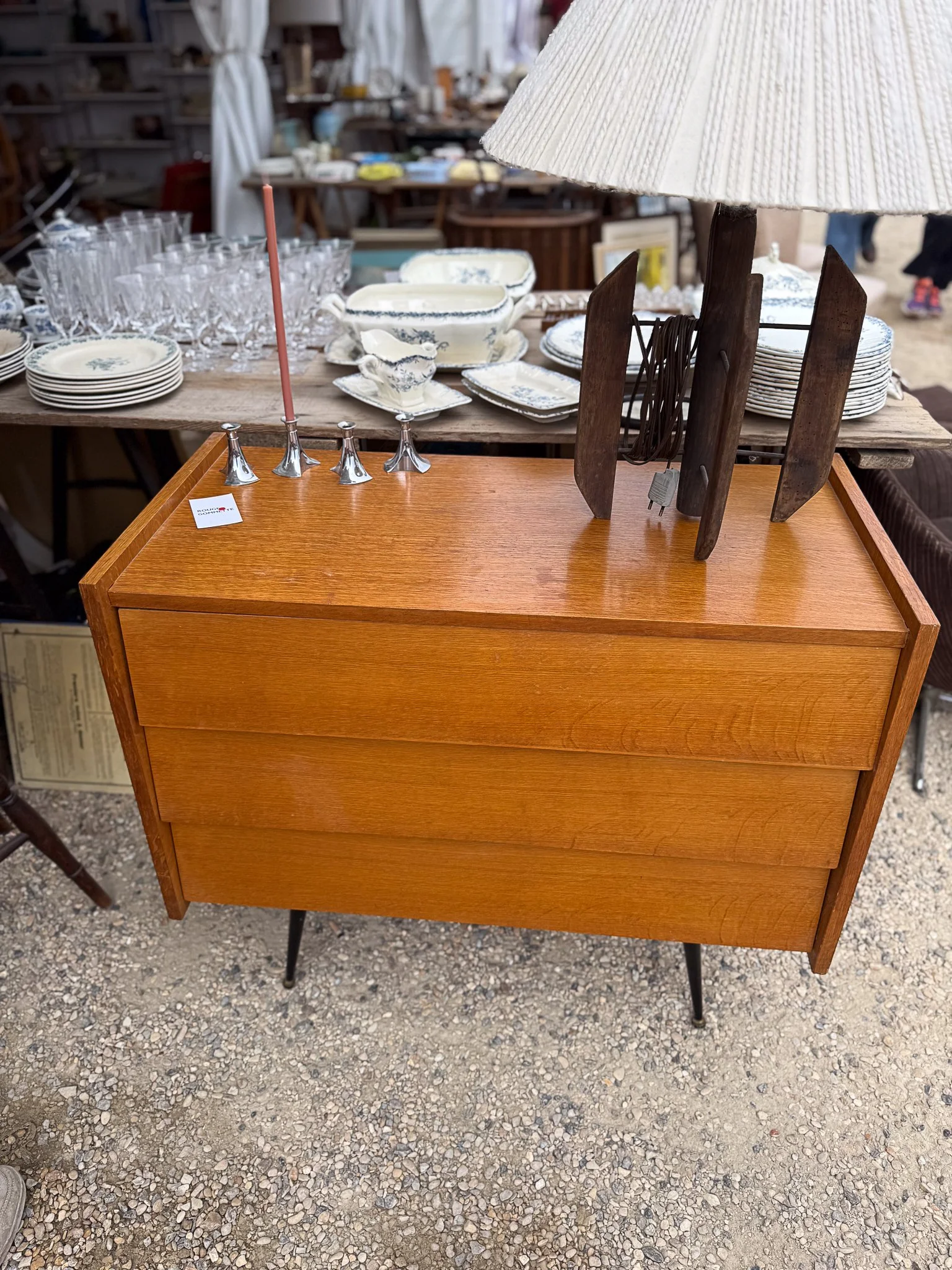
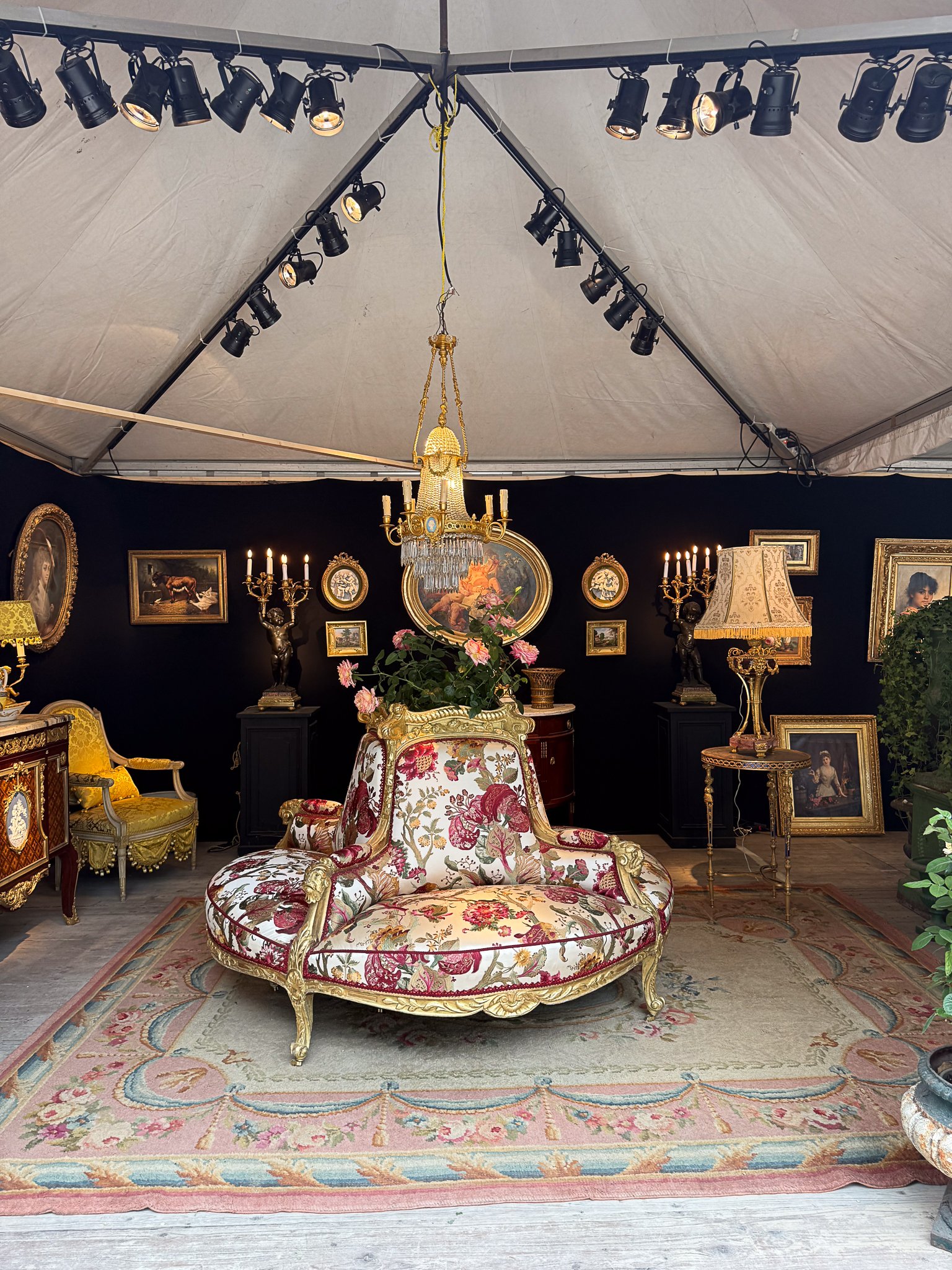
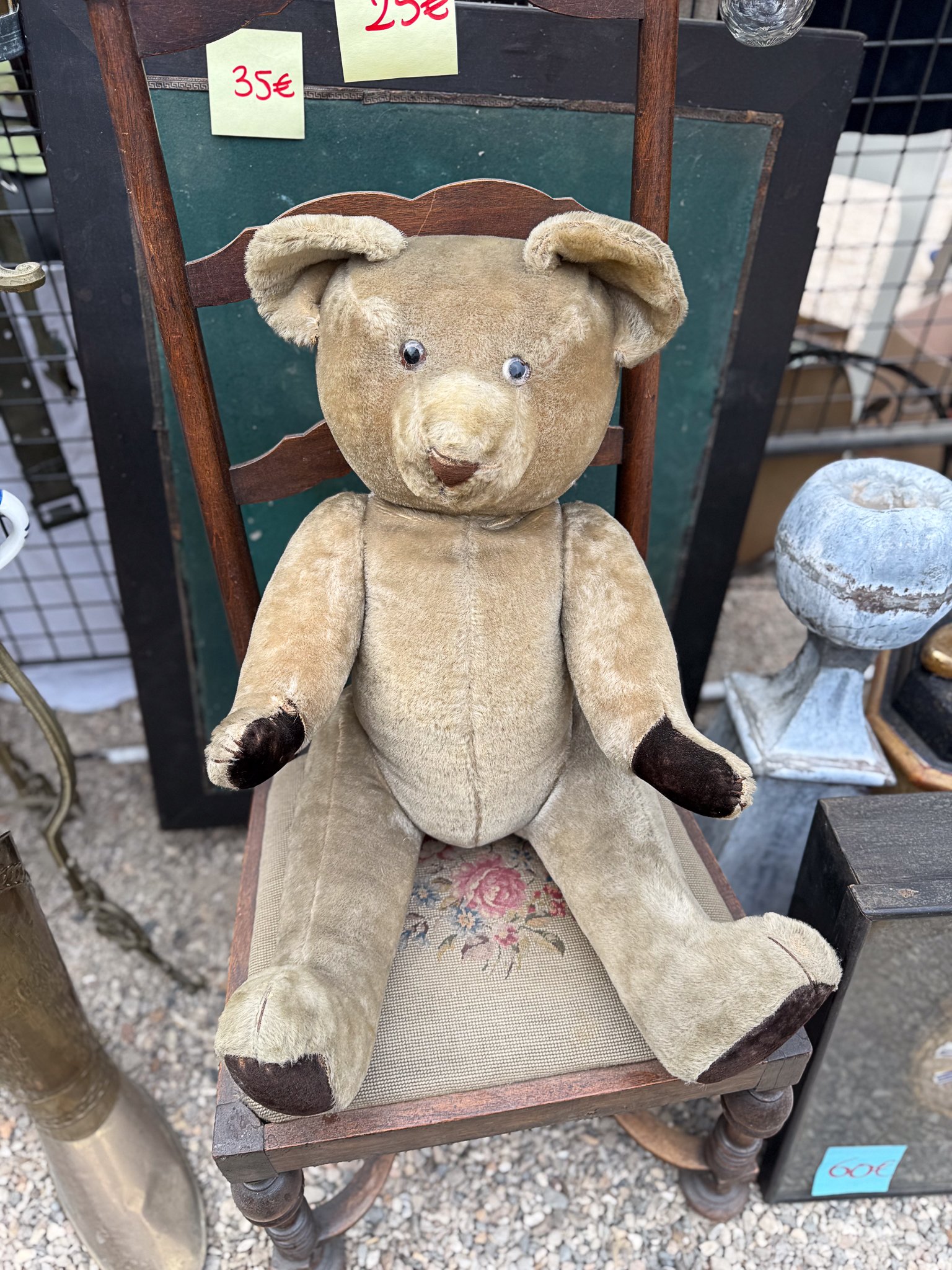
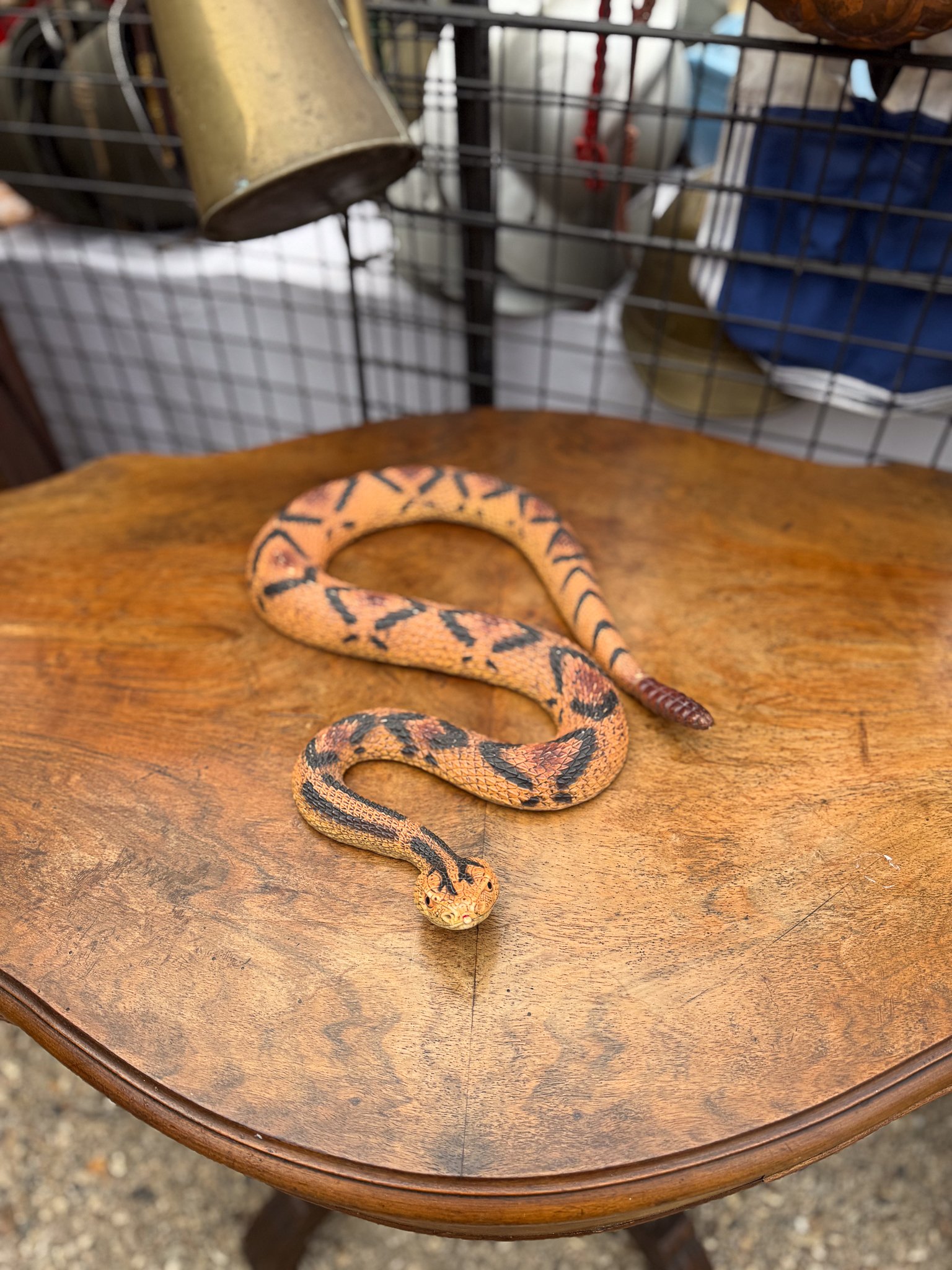
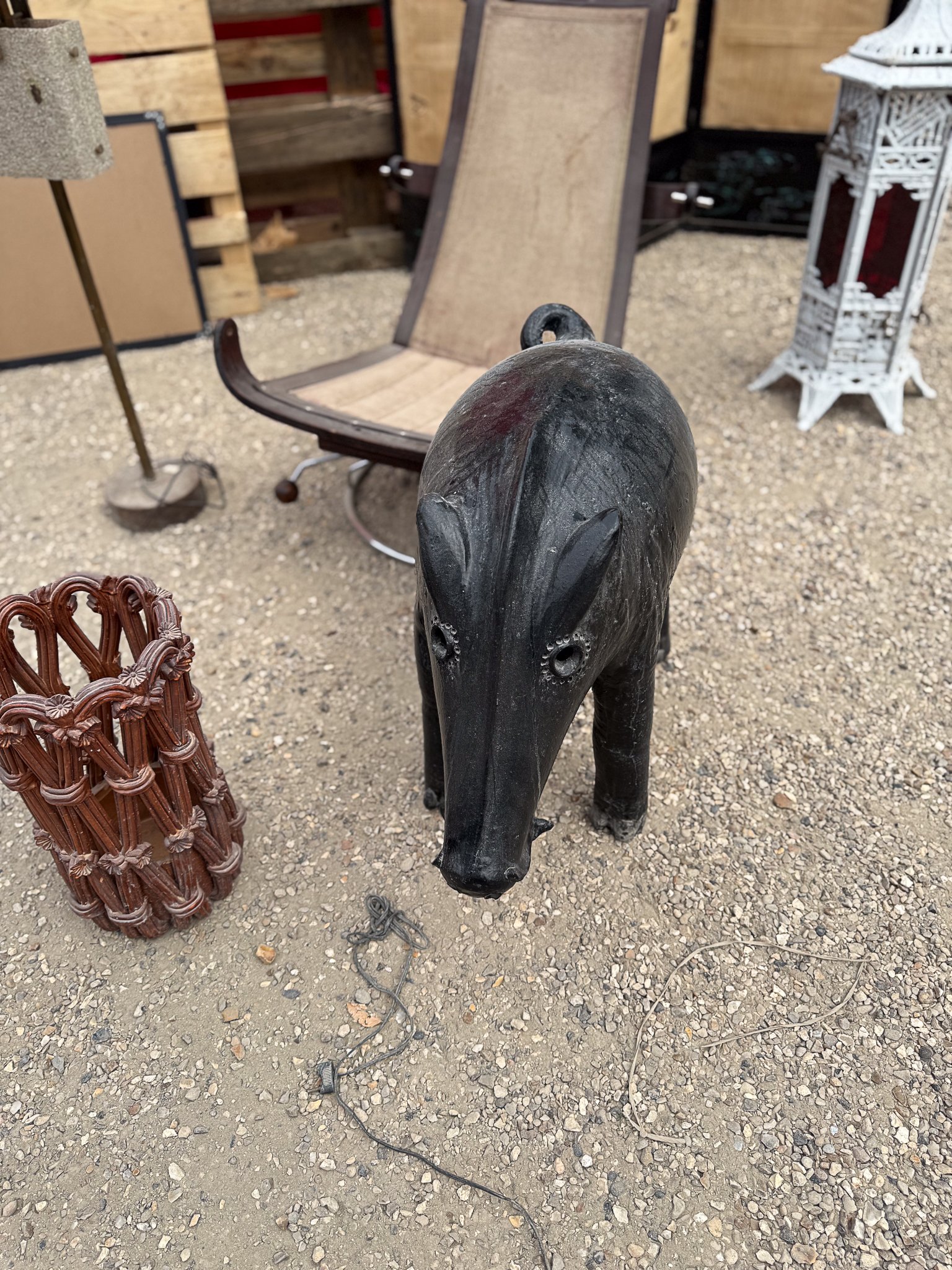
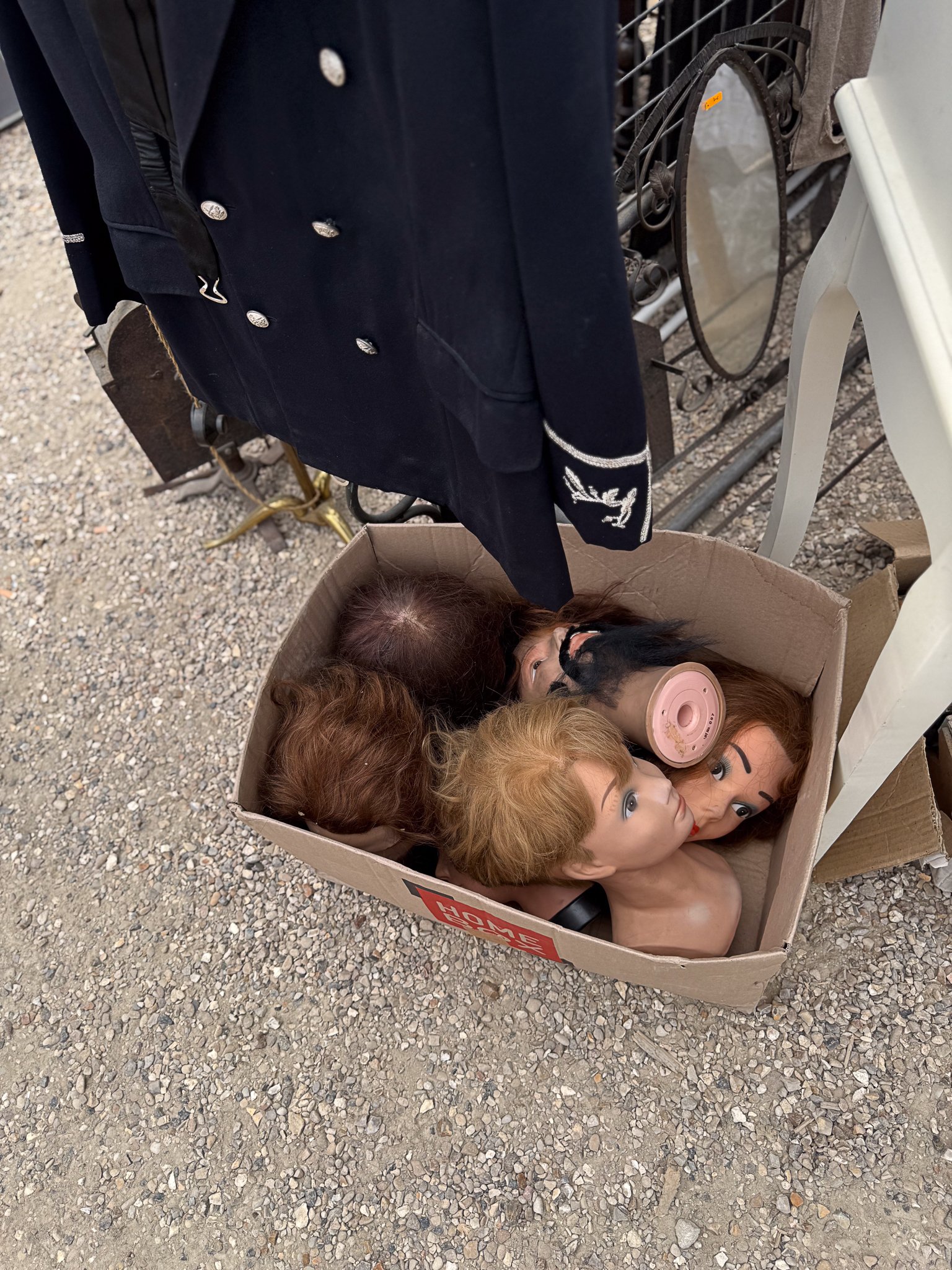
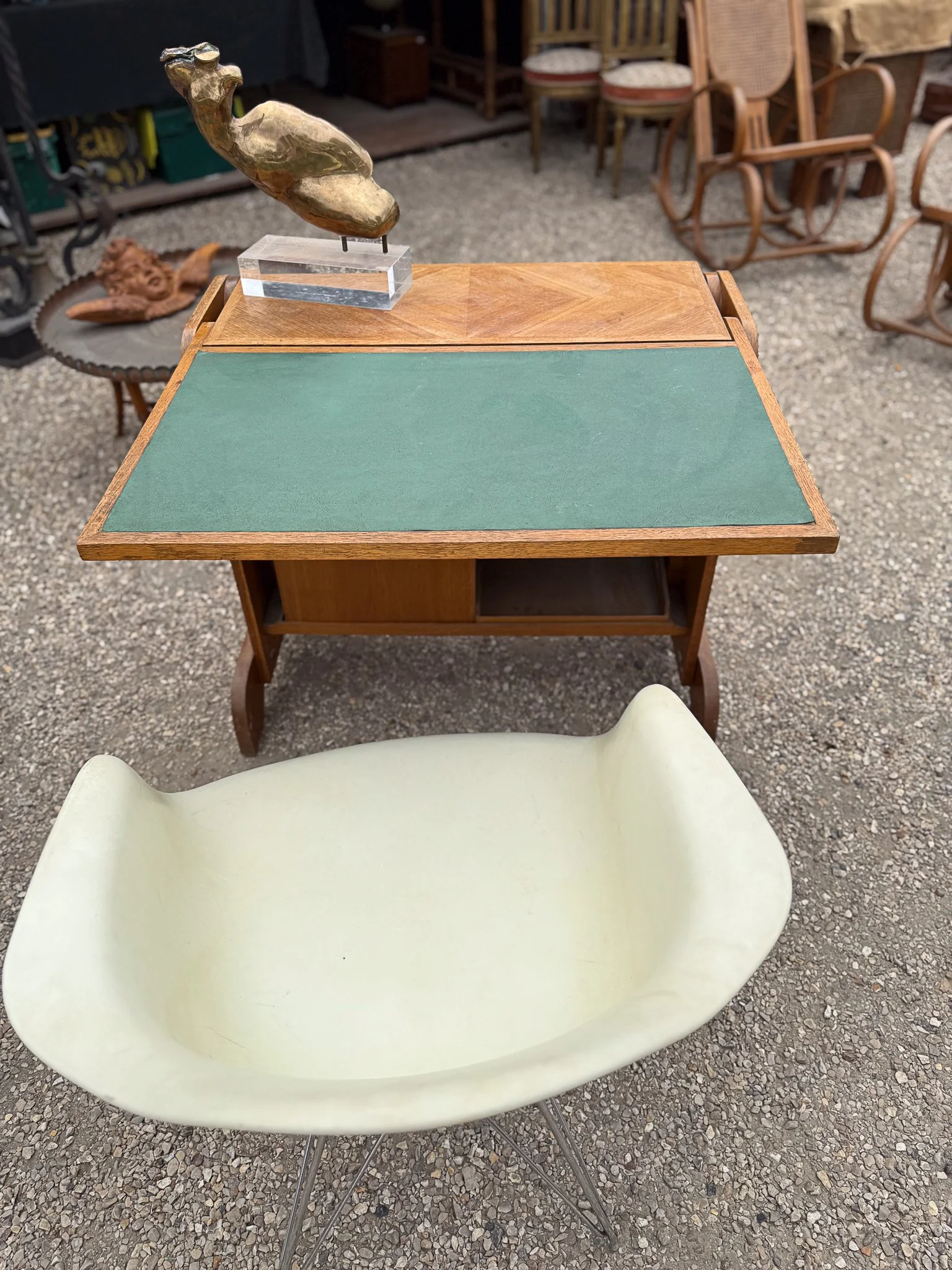
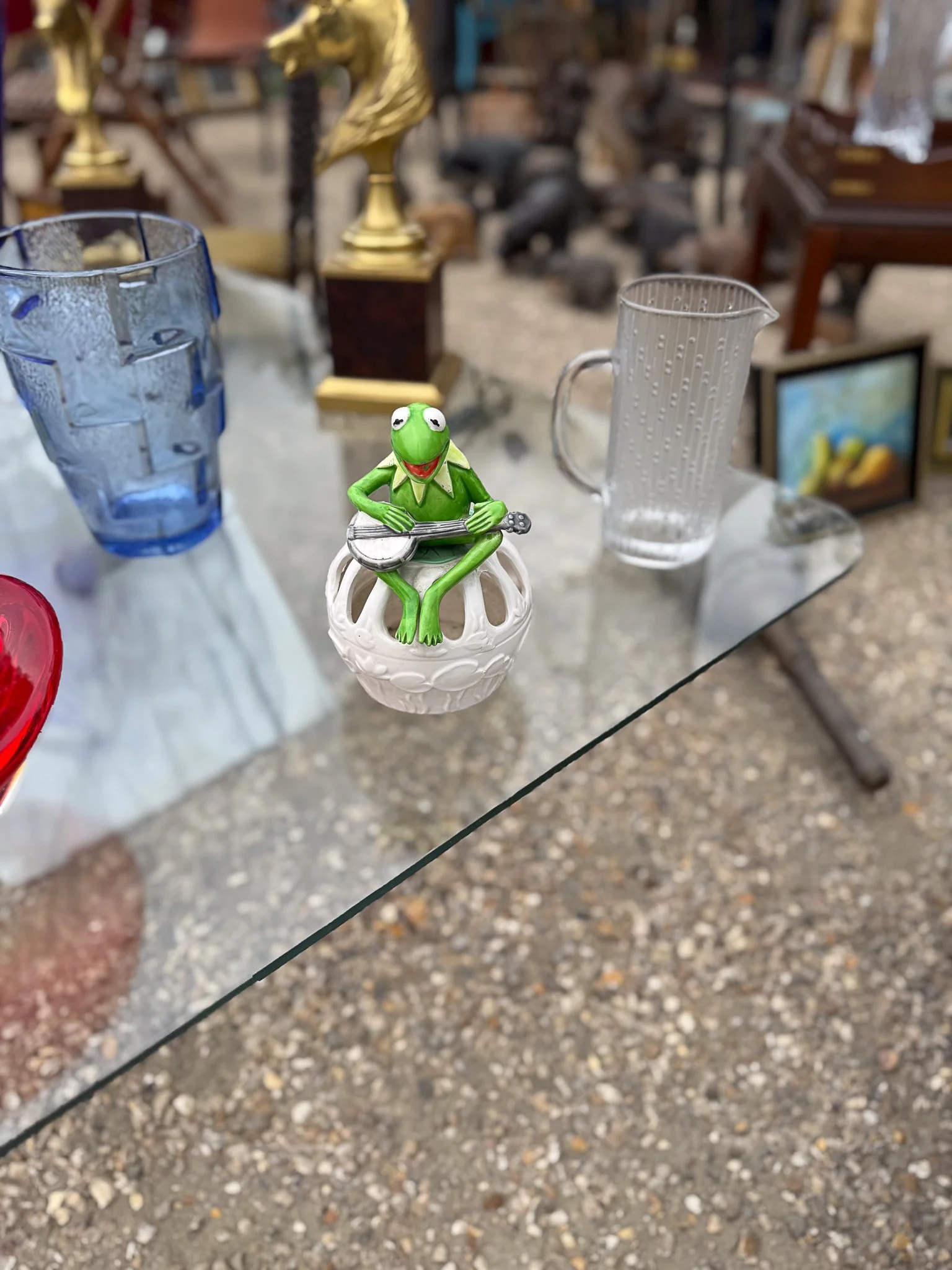
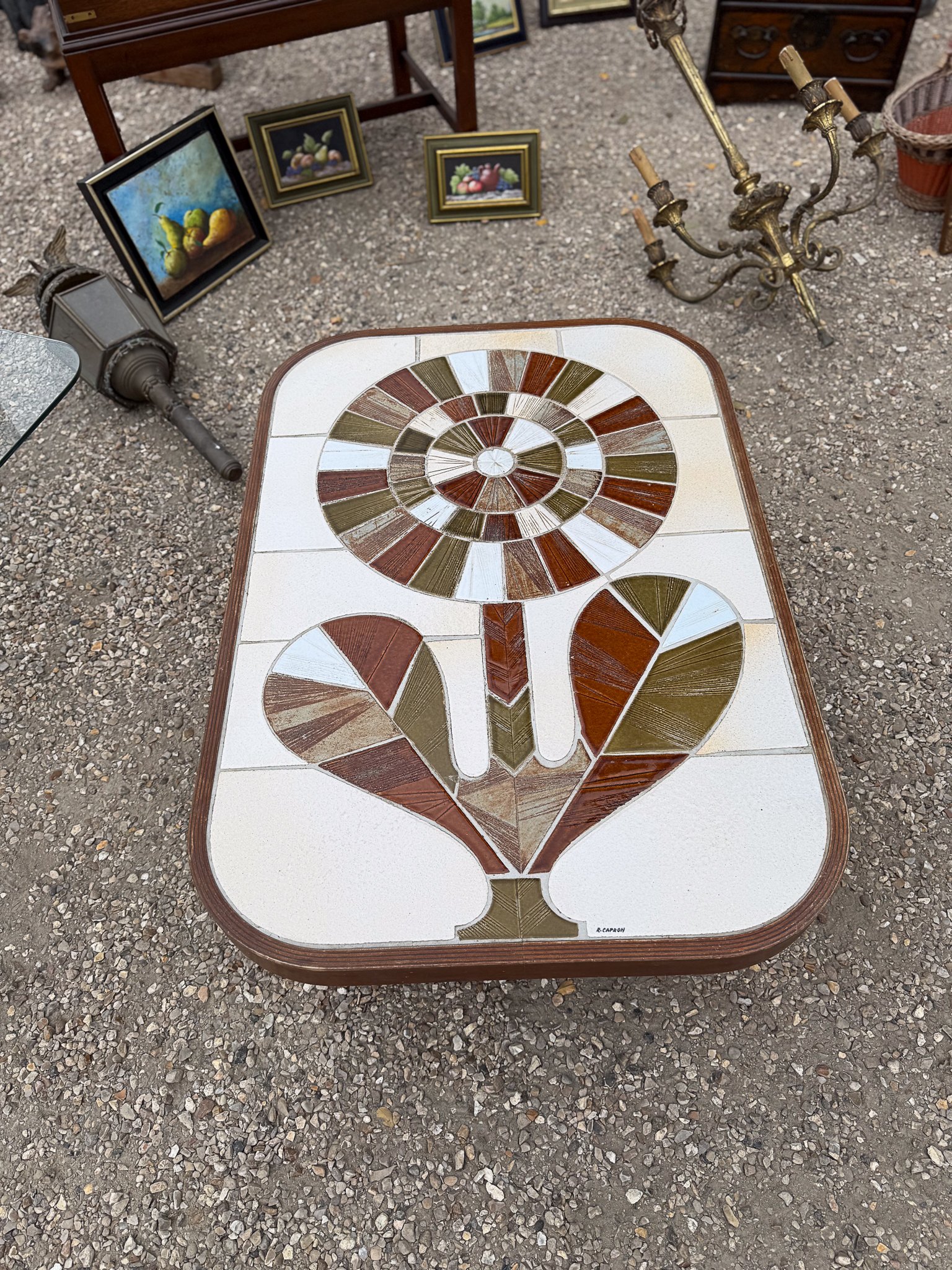
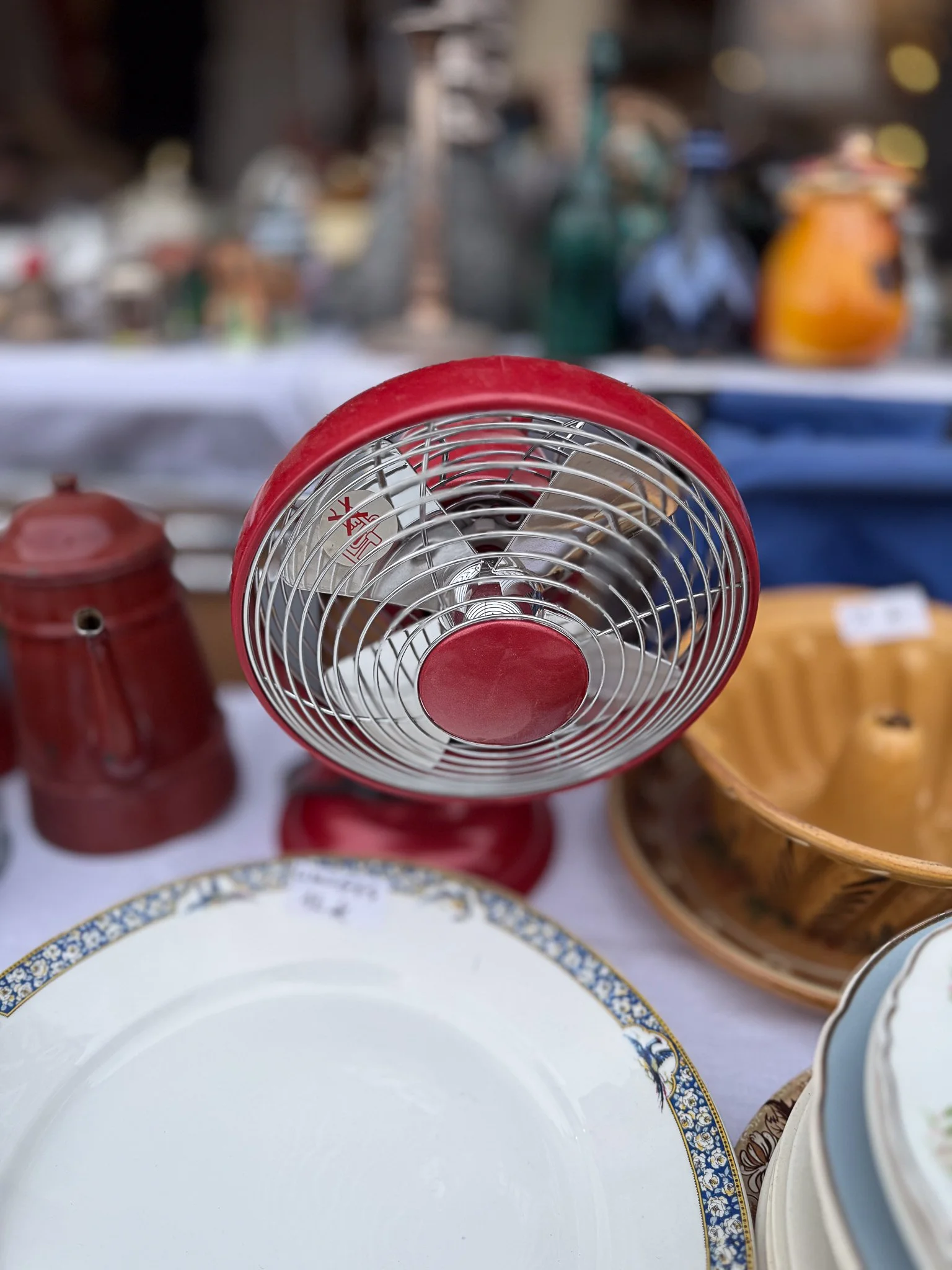
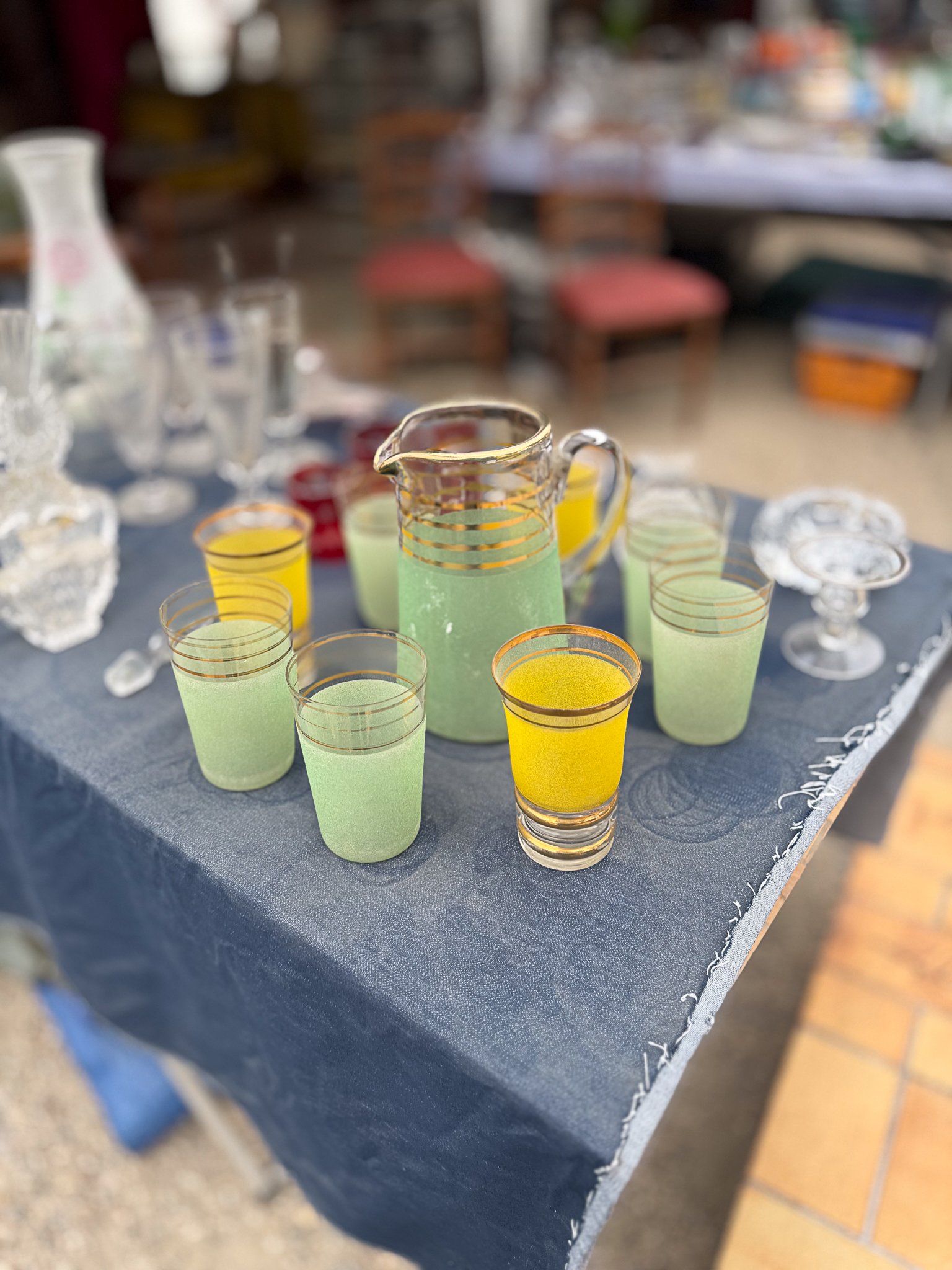
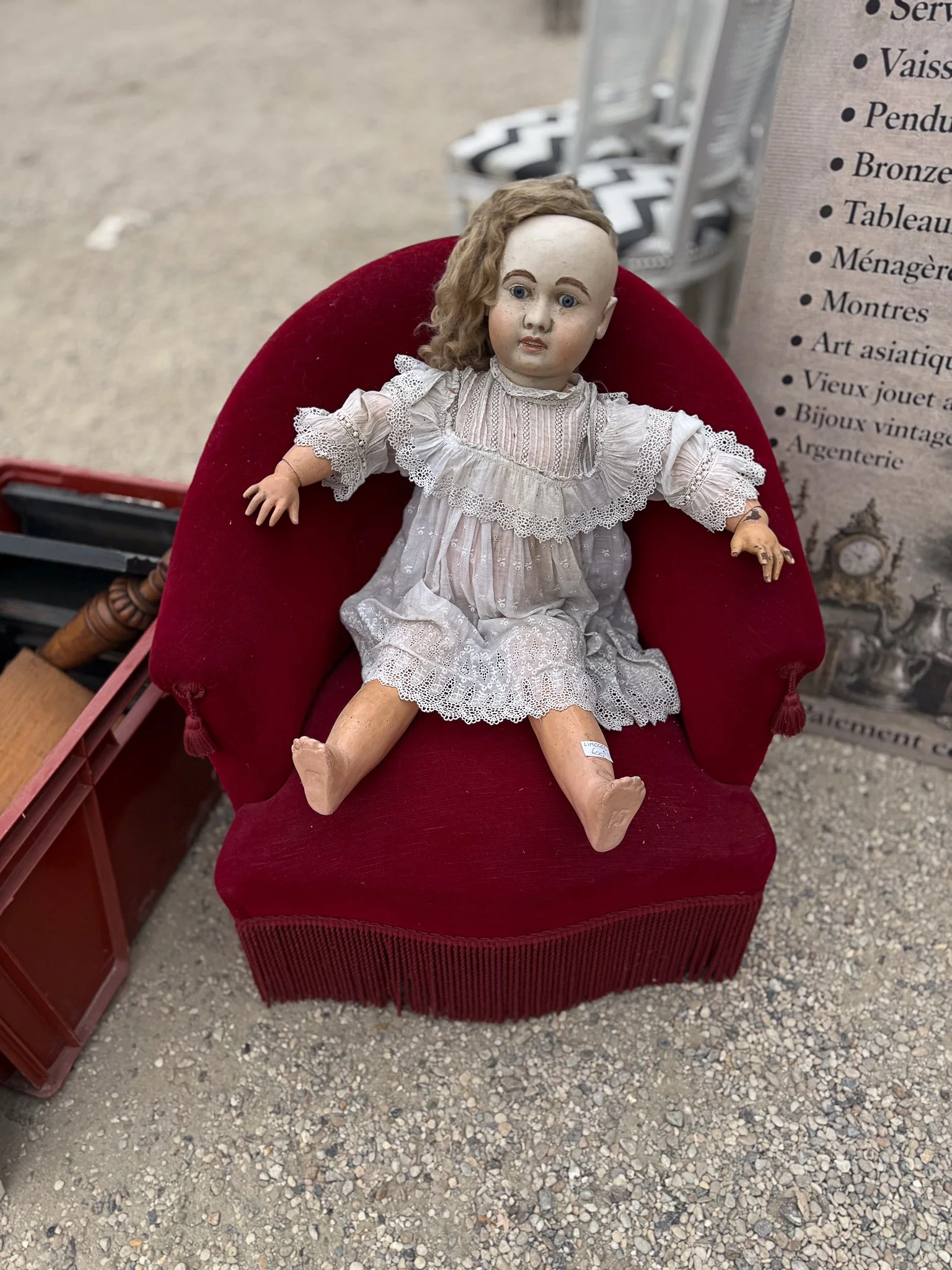
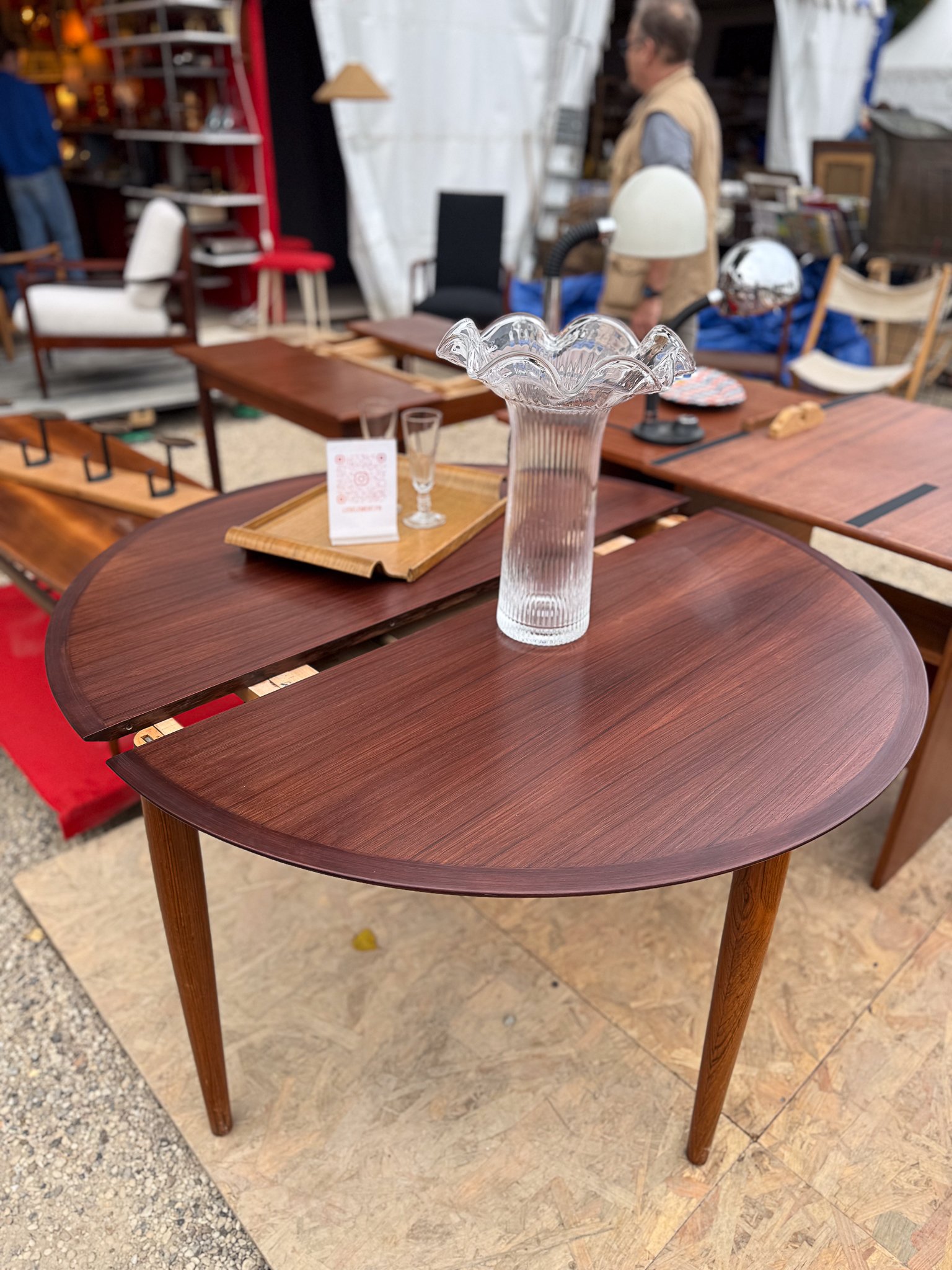
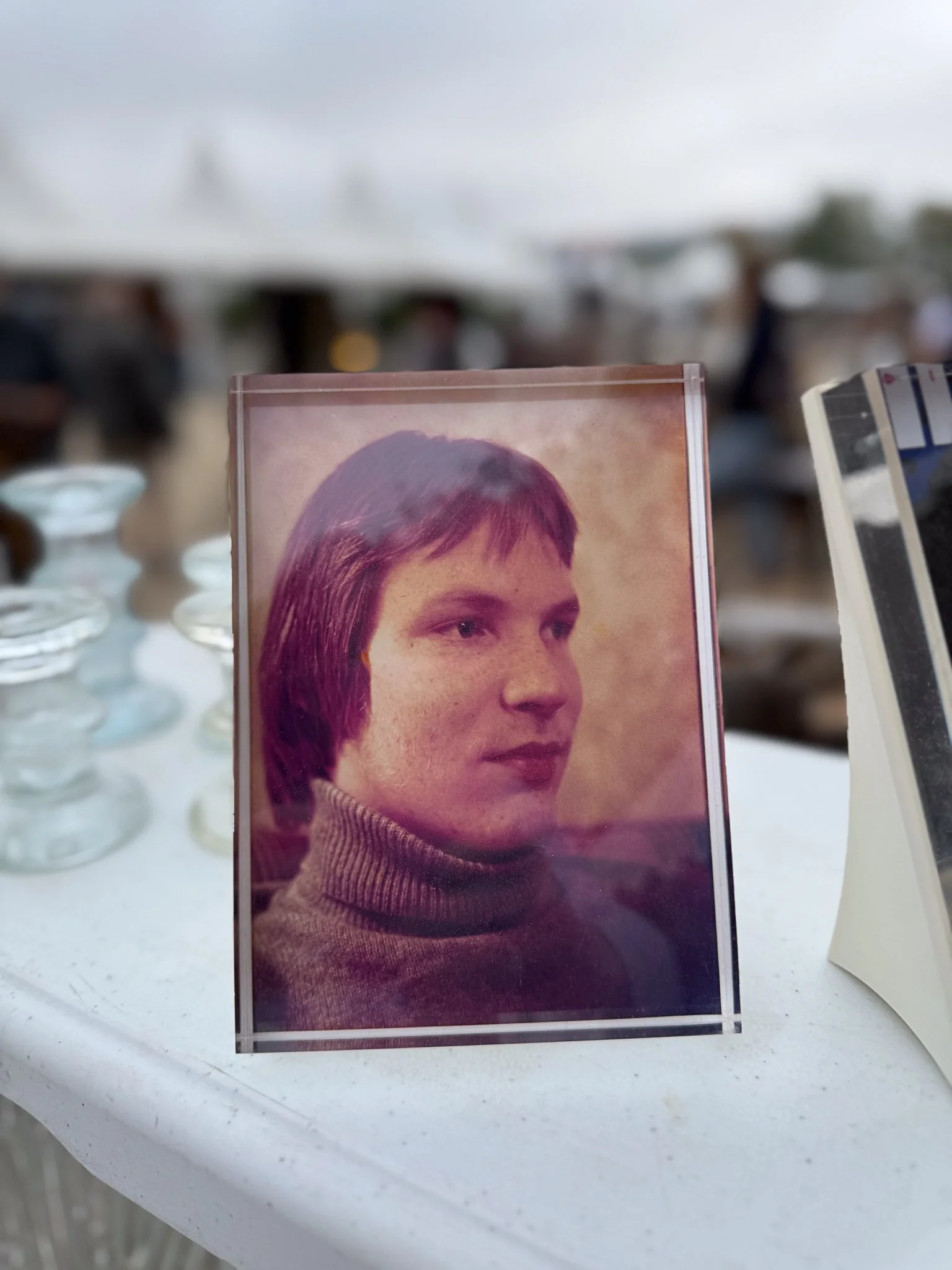
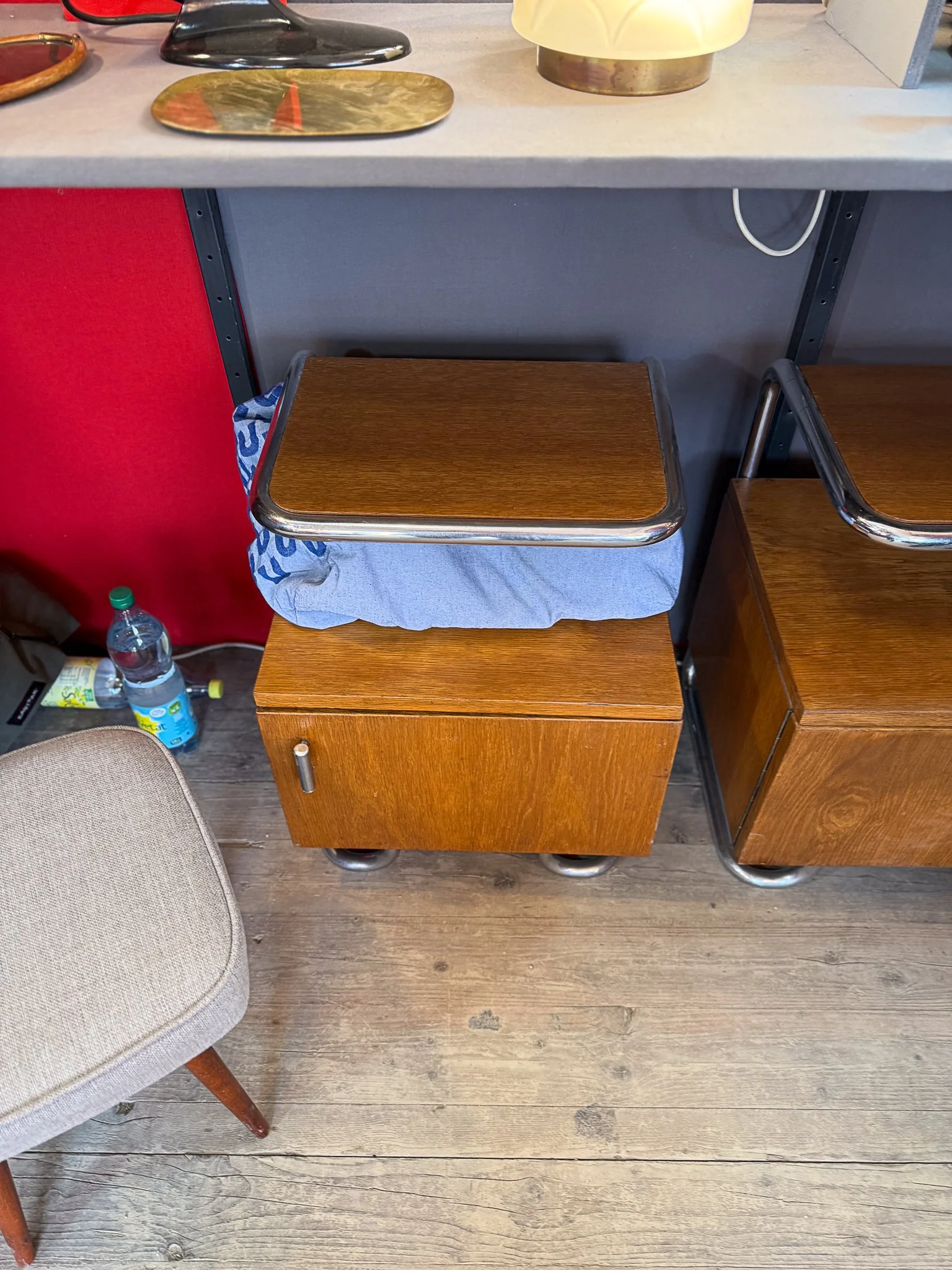
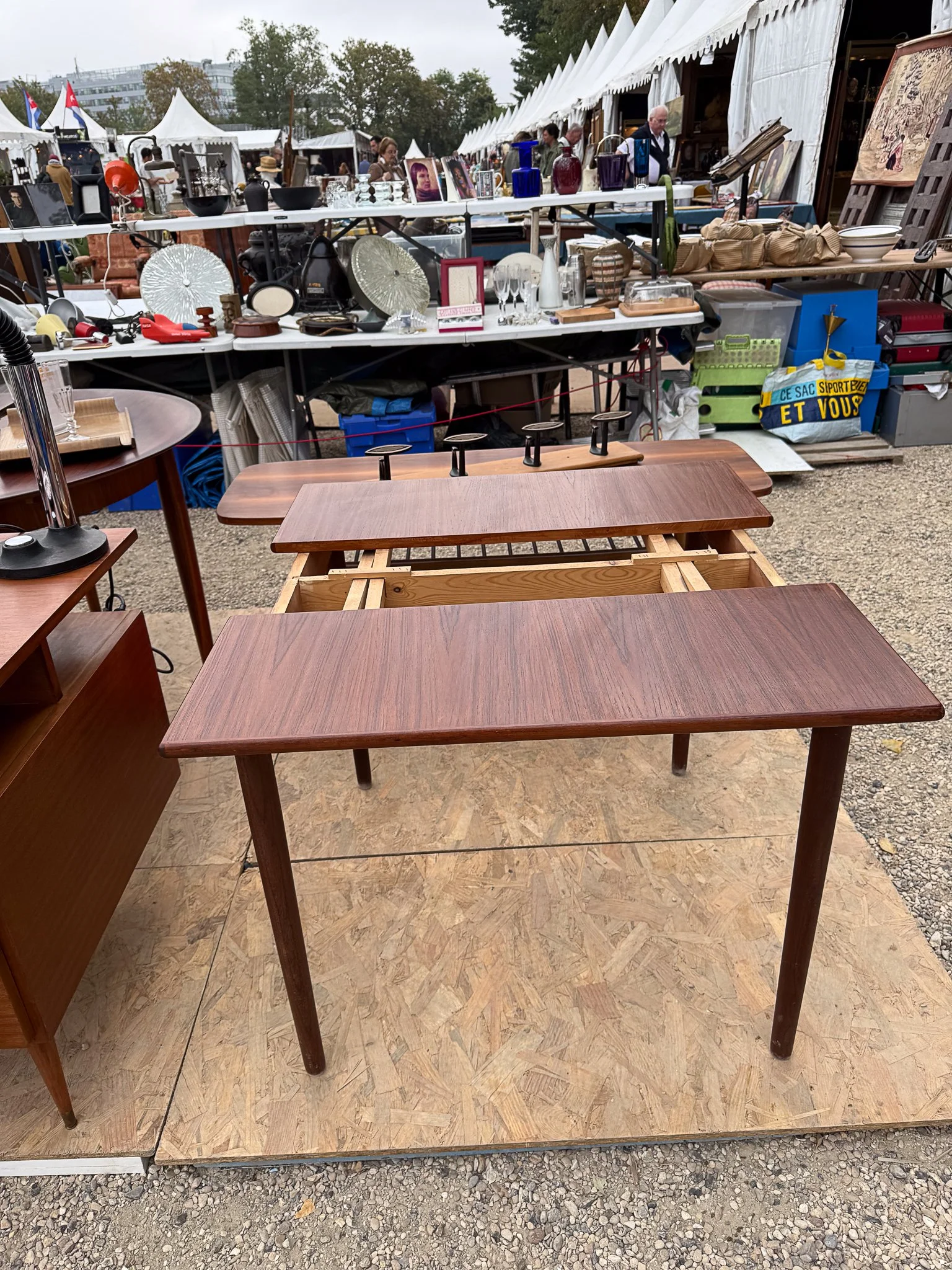
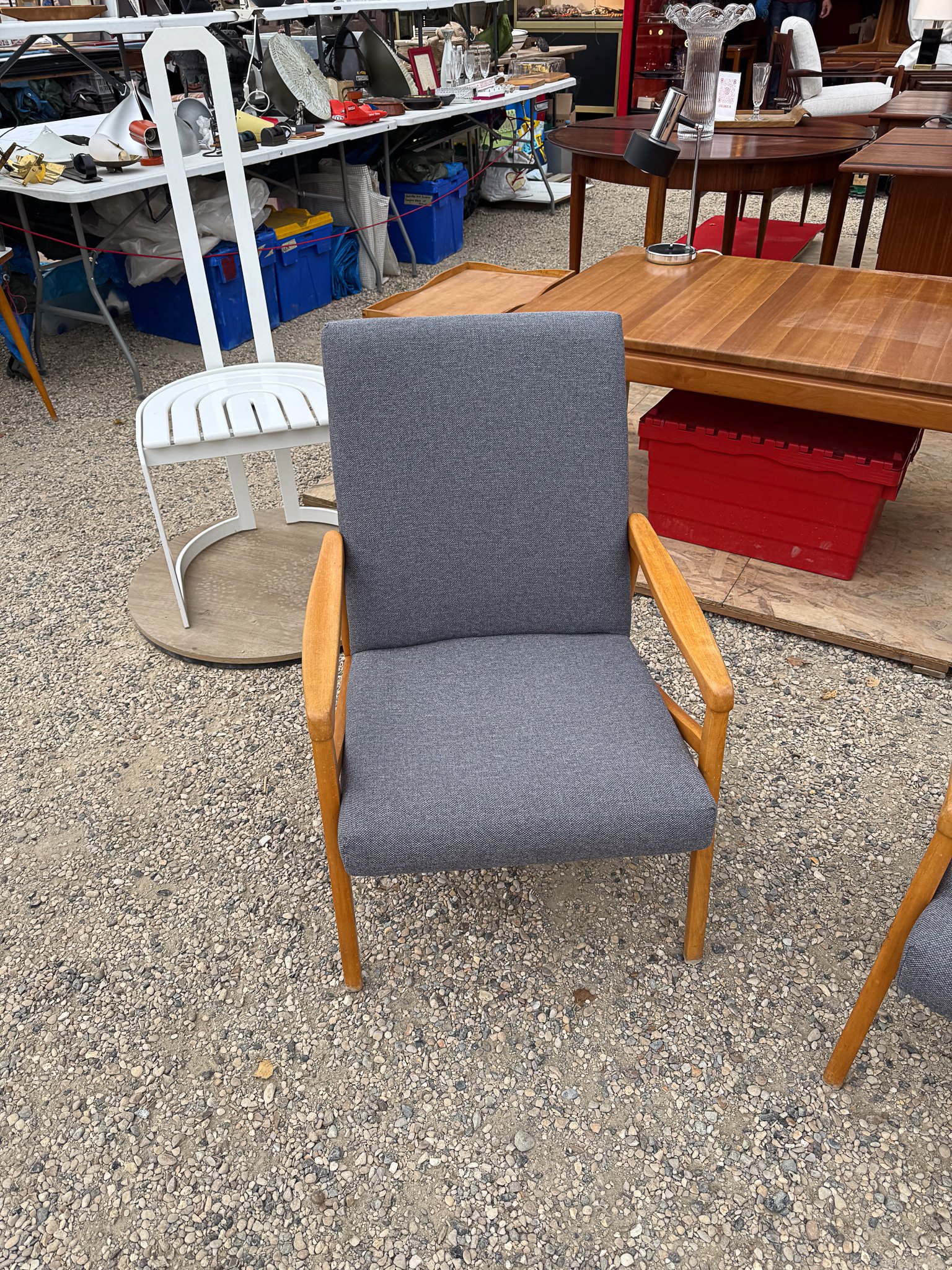
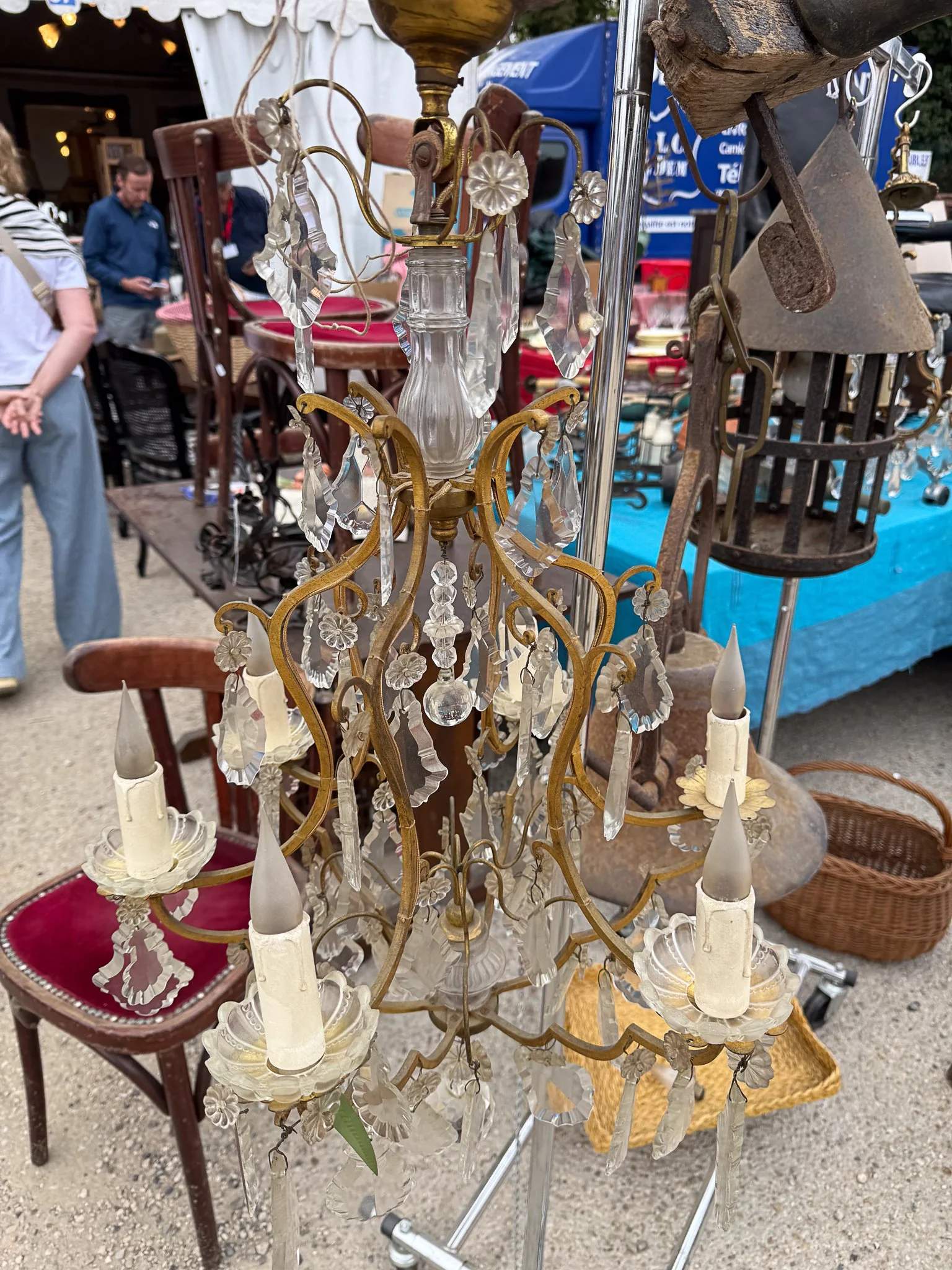
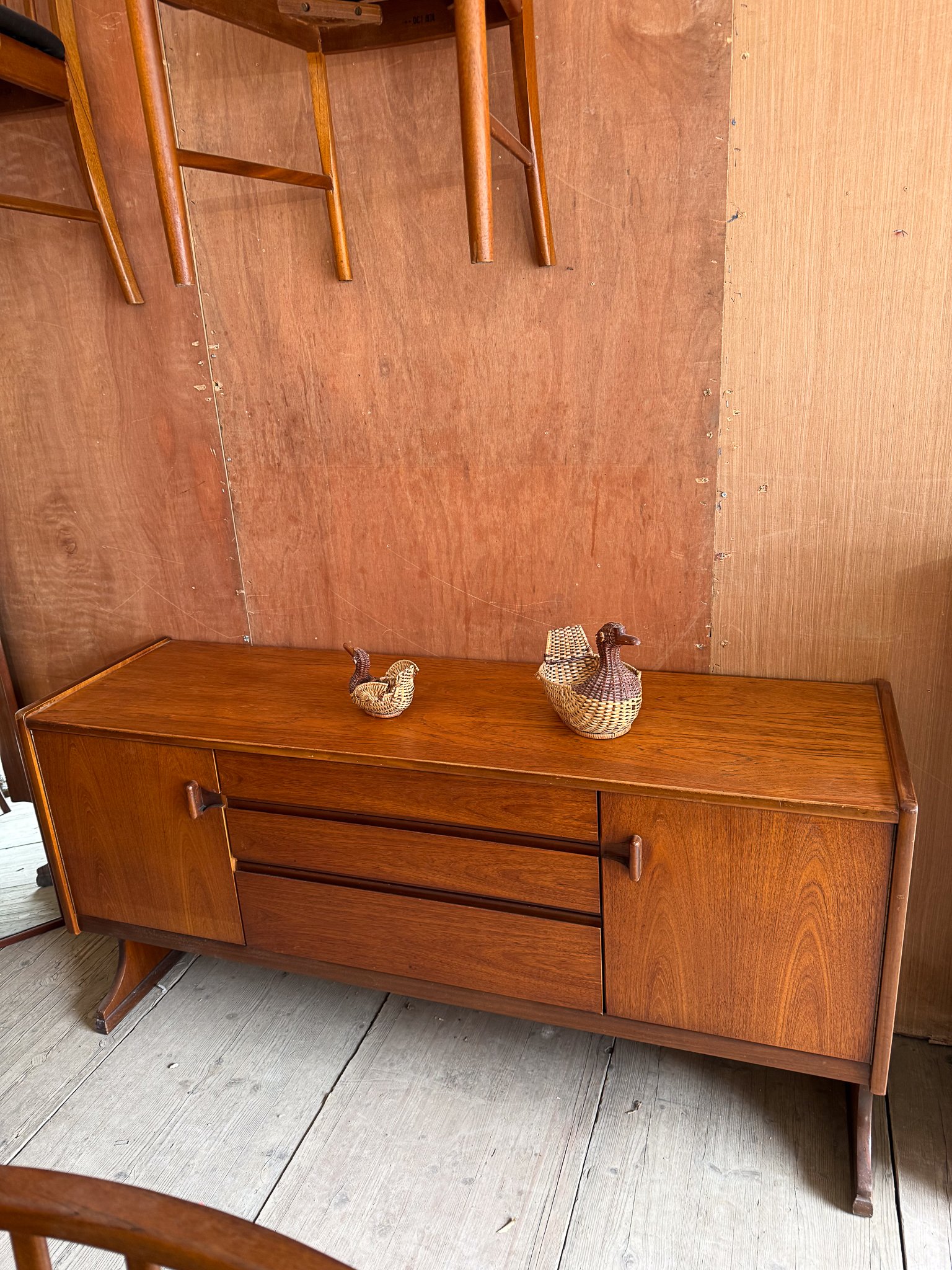
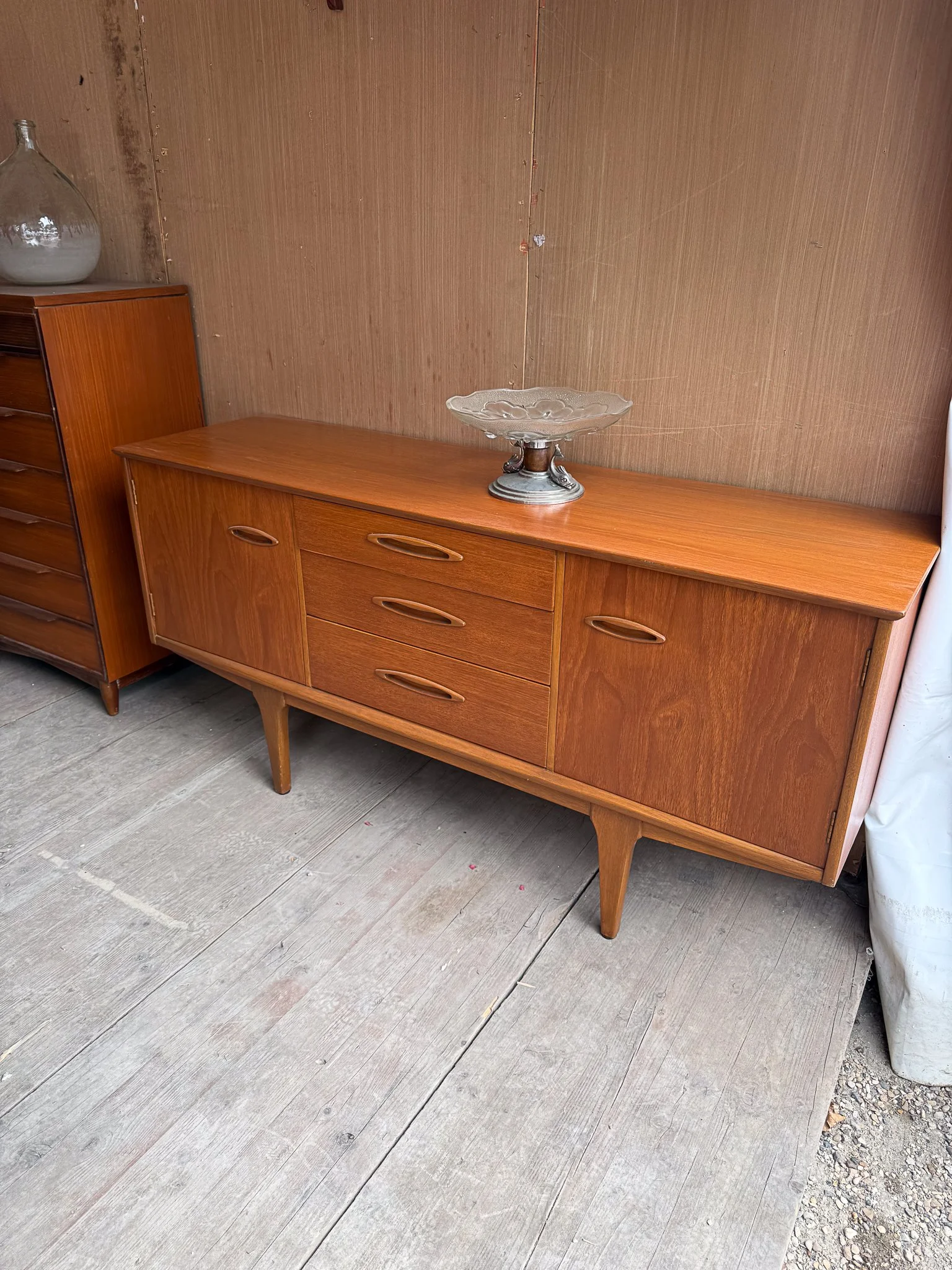
I started photographing the things that caught my attention at Chatou. Moving through the aisles with a camera made me slow down and pay attention to what genuinely caught my eye rather than what I thought I was supposed to like. Looking at those photographs afterwards, I realised they were telling me something. Seeing the images together, removed from the distraction of the market, helped clarify my instincts.
A visual pattern was emerging.
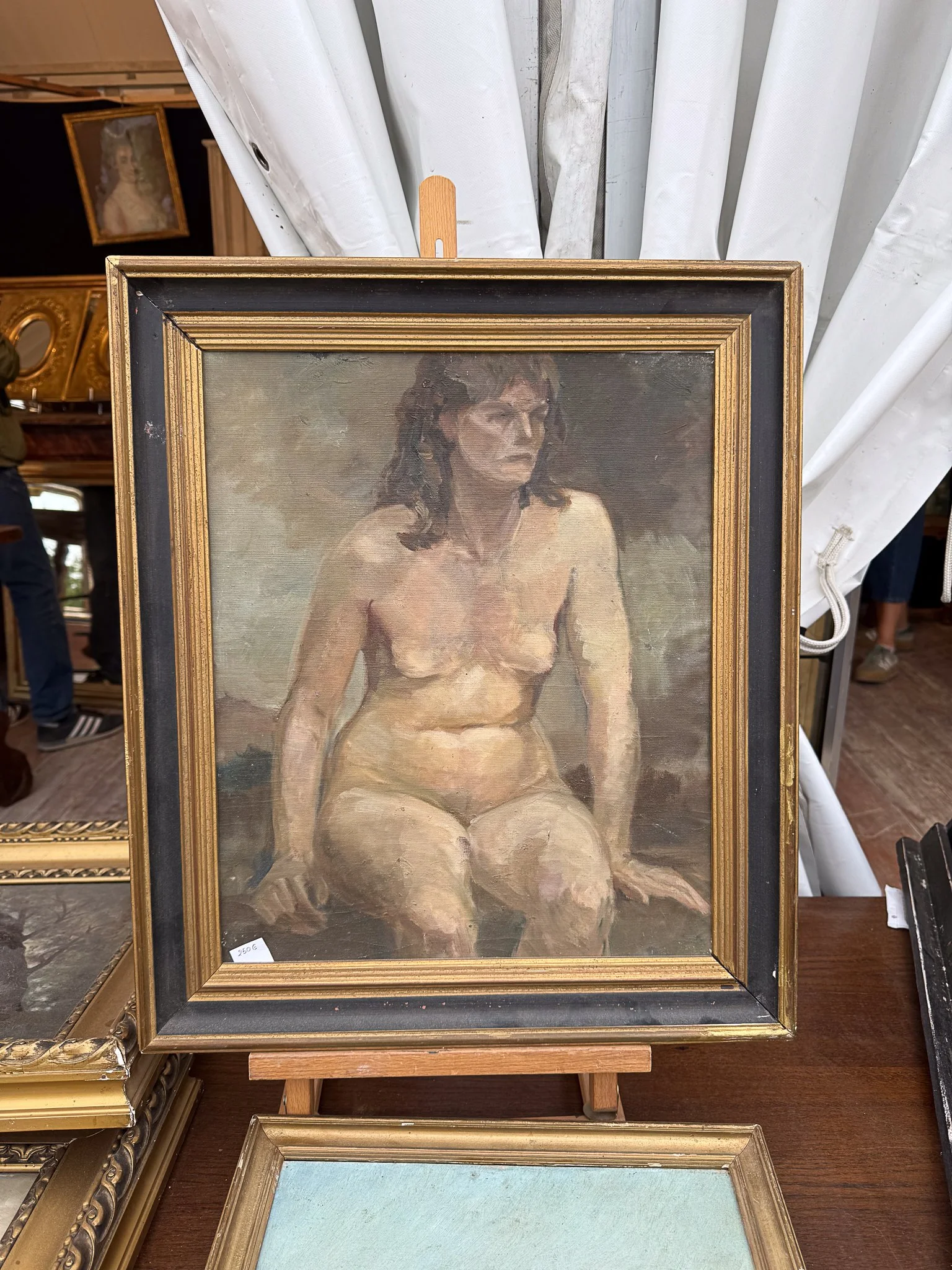
My taste is darker than I had imagined. More textural. More 1970s. More European modernism. More artist's studio. Less decorated. I kept returning to shapes, materials and objects without consciously deciding to do so. Photographing them became a way of reflecting on my own impulses and desires.
That interests me far more than choosing a prescribed aesthetic and then shopping for the objects required to achieve it. Chatou became less an exercise in buying things for my apartment and more an exercise in discovering what my eye does when nobody tells it what it is supposed to like.
There is tenderness underneath this impulse too. For all my combativeness, I care enormously. About people. Injustice. My work. Ideas. Beautiful things. My home. My past. Indifference has always been considerably harder for me than anger.
Perhaps objects become caught up in all of that. A photograph isn't simply a photograph. A chair isn't necessarily just a chair. An artwork can contain another decade. A battered object found at a market can carry evidence of the hands that touched it before mine. Something brought from Australia can suddenly seem to contain an entire country when placed in a room in France.
The things we live among become repositories for memory. Eventually, without intending it, we construct a material autobiography.
One piece I have acquired since arriving in France is a limited-edition print of a stunning original 1970s artwork. I know exactly where I want it: in the bedroom, above the long wooden shelf that will function almost as a bedhead.
This is increasingly how I want to make decisions about the apartment. Rather than designing a room and then searching for something to fill the empty wall, I want objects themselves to help determine what happens around them.
The artwork shouldn't have to match the bedroom. The bedroom should be able to hold the artwork.
That distinction matters to me.
I also don't want to erase the fact that this is the home of someone who makes things. There will be a photography workspace. Originally, I wondered whether I should conceal the working parts of my life. Now I think the opposite. Photography equipment, prints, papers, books and works in progress can be extraordinarily beautiful. My photographic practice can become part of the apartment's visual language.
My writing practice is another matter. Writing is aesthetically appalling. Nobody needs to see twelve books, seventeen pieces of paper, a laptop charger and a half-drunk cup of coffee masquerading as creative practice. That can have a proper desk.
Photography deserves an atelier.
I want a high worktable where I can stand over photographs, move prints around and physically work with images rather than always sitting at a conventional desk. A tall stool can sit beside it for the moments when I do want to sit. Instead of disguising that function, I want to make it beautiful.
It says something important about the apartment: someone makes things here.
Perhaps the biggest shift in my thinking has been realising that renovation doesn't necessarily mean replacement. The apartment already has beautiful wooden floors. They're staying. I don't want new flooring pretending that the apartment was built yesterday. I would rather place rugs over the existing wood, allowing different textures, periods and colours to define spaces without destroying the continuity of what is already there.
The same question applies to the internal doors. Where something original can be repaired and made beautiful again, I am increasingly attracted to doing that rather than automatically replacing it. Then the genuinely new interventions can look new.
I love the idea of glazed metal or wooden folding doors separating the large living and working spaces. Rather than trying to disguise them, I want them to have architectural presence. Initially I wondered whether they should match the front door. Now I think I might want something darker and deeper. Bronze. Tobacco. Oxblood. Very dark brown.
Against warm wooden floors, glass, art, books and vintage furniture, those doors could become punctuation rather than decoration.
I am also thinking differently about lighting. Not simply lamps, but pools of light. Strip lighting concealed within shelving. A soft line of light above the corner sofa. Lamps positioned at different heights rather than one ceiling fixture announcing that the room is now illuminated.
I want light to reveal things. Books. Objects. Photographs. The grain of wood. An artwork encountered differently at night.
Perhaps this comes from being a photographer. Light isn't merely functional. Light decides what we notice.
Increasingly, I wonder whether the apartment itself is becoming another form of photographic practice. I am selecting, framing and juxtaposing. I am deciding what sits inside the frame and what remains outside it. I am thinking about light, negative space, relationships between objects and the meanings created when two things are placed beside one another. An object changes according to its surroundings just as an image does.
Perhaps I thought I was learning how I wanted to decorate. What I was actually discovering was that I approach a room much as I approach a photograph.
There is, of course, a certain irony in maintaining multiple Pinterest boards for an apartment that I insist doesn't look like Pinterest. But perhaps the boards are useful precisely because I don't want to reproduce any single image from them.
I don't want somebody to walk through my front door and immediately identify the references. Parisian chic. Mid-century modern. Seventies revival. Contemporary French.
I want it to be slightly harder to explain.
The architecture can remain French. The wooden floors can remain French. The apartment's history doesn't need erasing. But what enters it will come from elsewhere. Photography. Books. Art. Market finds. Things I already own. Things I haven't found yet. Objects from different countries and different decades. Glass and metal beside old wood. Something sophisticated beside something strange.
The coherence shouldn't come from everything matching. It should come from the fact that I chose it.
Perhaps the greatest temptation when renovating an apartment is to finish it. I'm beginning to think mine should never be finished. I want to leave room for the thing I haven't encountered yet.
Another market. Another photograph. A ridiculous chair. A painting by someone I've never heard of. A lamp I absolutely do not need. Something found on a Sunday morning that suddenly reorganises an entire corner of the room.
My tastes have already changed more than once since arriving here, and perhaps that's the point. I don't want a home preserved at the moment of its renovation. I want one capable of changing as I do.
The homes I love most don't look as though someone ordered their contents at the same time. They look accumulated. Their objects have different ages and origins. Some things are expensive, and others are worth almost nothing. Some pieces are inherited, travelled with, discovered, made, given and rescued.
Over time, those things begin to describe their owner.
Maybe that's what I'm actually making in Paris. Not an interior-design project. Not my interpretation of a French apartment.
A three-dimensional archive of a life.
A home where Australia can sit beside France, where the 1970s can sit beside the present, where photography can spill into living space, and where the objects I haven't discovered yet are as important as the ones I already own.
And if wandering through the Foire de Chatou—an event that has itself travelled from medieval food sellers to scrap dealers, antiquaires and collectors—has taught me anything, it is that objects can have surprisingly long lives.
We don't necessarily own them forever. Sometimes we're simply the next person to take them home.
And perhaps that is the kind of home I want: collected, not decorated.
Notes
1. Foire de Chatou, “Histoire,” Foire de Chatou. The fair traces its origins to medieval Paris and the trade in salted meats around Easter; historical material published by the fair identifies a charter of 1222 authorising merchants of salted meats to sell before Easter.
2. Foire de Chatou, “Histoire.” The fair disappeared during the French Revolution and was revived by imperial decree in 1804. It moved several times before reaching Boulevard Bourdon in 1840, where dealers in bric-a-brac, used clothing and scrap metal increasingly joined the charcutiers, giving rise to the Foire à la Ferraille.
3. Foire de Chatou, “Histoire.” The two fairs moved to Boulevard Richard-Lenoir in 1869. Following their removal from Paris, the fair was established at Chatou on the Île des Impressionnistes in 1970.
4. Ville de Chatou, “À la source de l’impressionnisme,” Promenades à Chatou. The opening of the Paris Saint-Lazare–Le Pecq railway in 1837 helped bring artists and visitors to the Seine west of Paris. The city identifies Renoir, Manet, Monet and Caillebotte among the artists associated with Chatou and its changing landscape, boating, bathing and guinguettes.
5. Ville de Chatou, “La Maison Fournaise,” Promenades à Chatou; Anne Galloyer, “La maison Fournaise, l’histoire d’un phénix,” Ville de Chatou. Renoir frequented the Restaurant Fournaise from 1868 to 1884 and produced numerous works associated with Chatou, including Luncheon of the Boating Party (1880–81). Maupassant was also closely associated with the Maison Fournaise and boating culture at Chatou.
References
Foire de Chatou. “Histoire.” Foire de Chatou.
https://www.foiredechatou.com/histoire/
Foire de Chatou. Dossier de presse: La Foire de Chatou.
https://www.foiredechatou.com/
Galloyer, Anne. La Maison Fournaise – Renoir à Chatou. Musée Fournaise, 2018.
Galloyer, Anne. “La maison Fournaise, l’histoire d’un phénix.” Ville de Chatou, 13 April 2022.
https://www.chatou.fr/mes-loisirs/culture/la-maison-fournaise-lhistoire-dun-phenix/
Ville de Chatou. “À la source de l’impressionnisme.” Promenades à Chatou.
https://promenades.chatou.fr/a-la-source-de-l-impressionnisme/
Ville de Chatou. “La Maison Fournaise.” Promenades à Chatou.
https://promenades.chatou.fr/itineraire-d-art-et-d-histoire/la-maison-fournaise/