Lost in the Mist
Fujiko Nakaya at the Bourse de Commerce
I am not usually a fan of interactive art.
I like going to galleries by myself. There is something deeply pleasurable about moving through an exhibition alone, at my own pace, without having to explain what I am looking at, discuss whether I like it, or negotiate someone else's attention span. Gallery-going, for me, is a solitary activity. I prefer solitude to participation, looking to doing.
Give me a photograph, a painting, an object in a vitrine and enough space to stand quietly in front of it. I am quite happy being the observer. I don't particularly need an artwork to respond to me, envelop me, ask me to press something, walk through something, lie down, wave my arms about or become part of the experience.
I like looking.
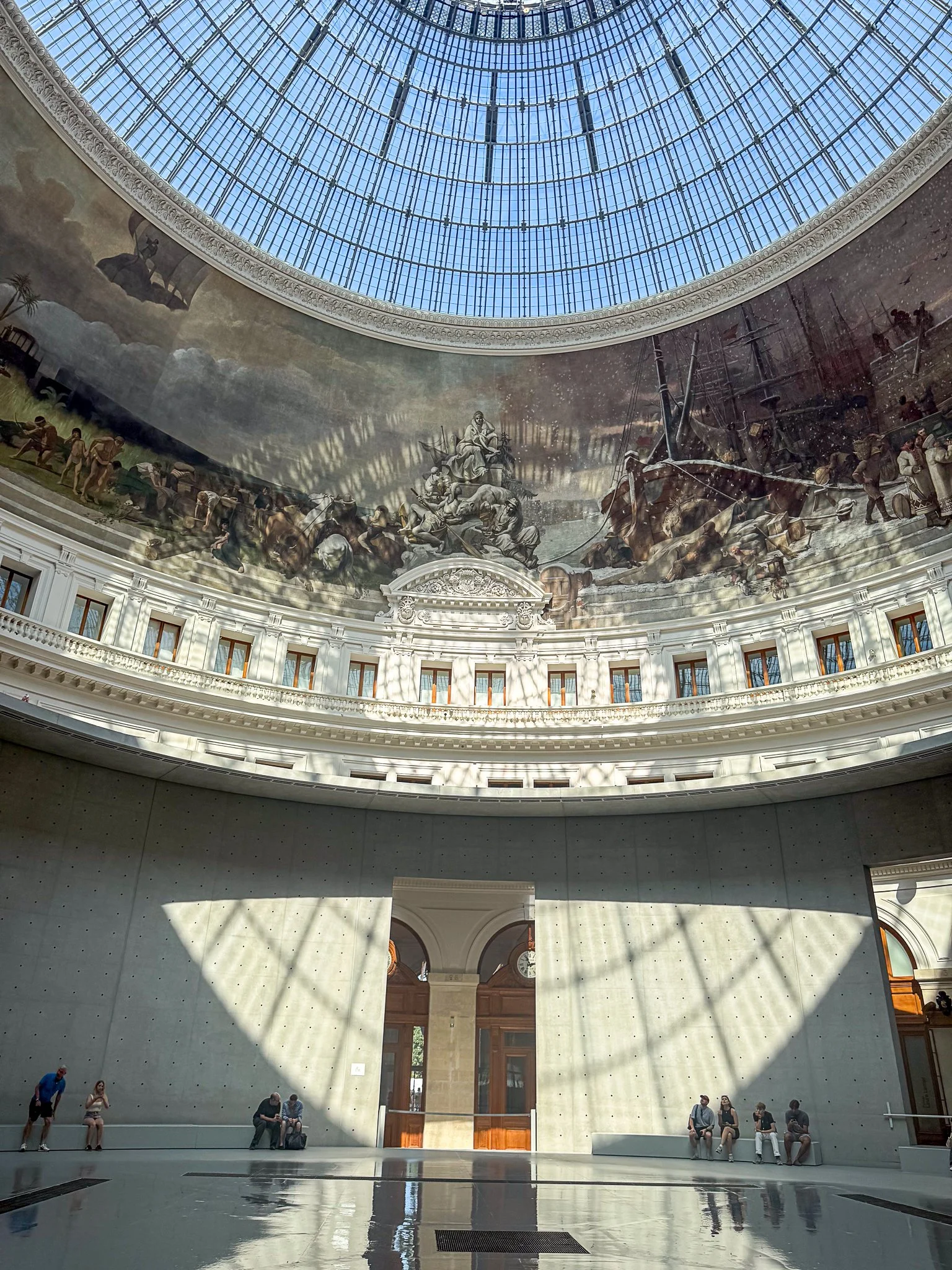
So I approached Fujiko Nakaya's Cloud #07156, occupying the Rotunda of the Bourse de Commerce in Paris as part of Clair-obscur, with a certain amount of scepticism.
And then I walked into the mist.
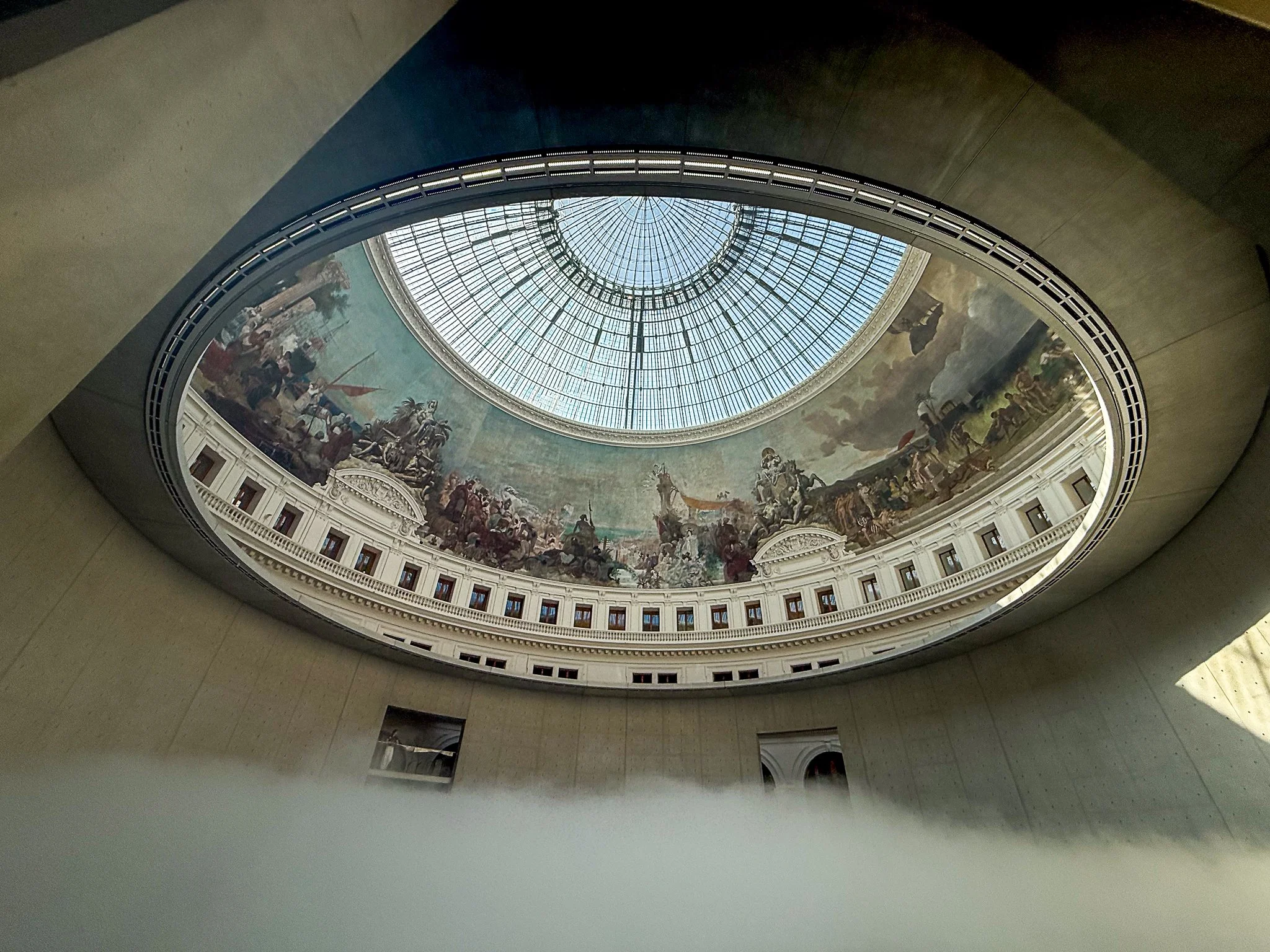
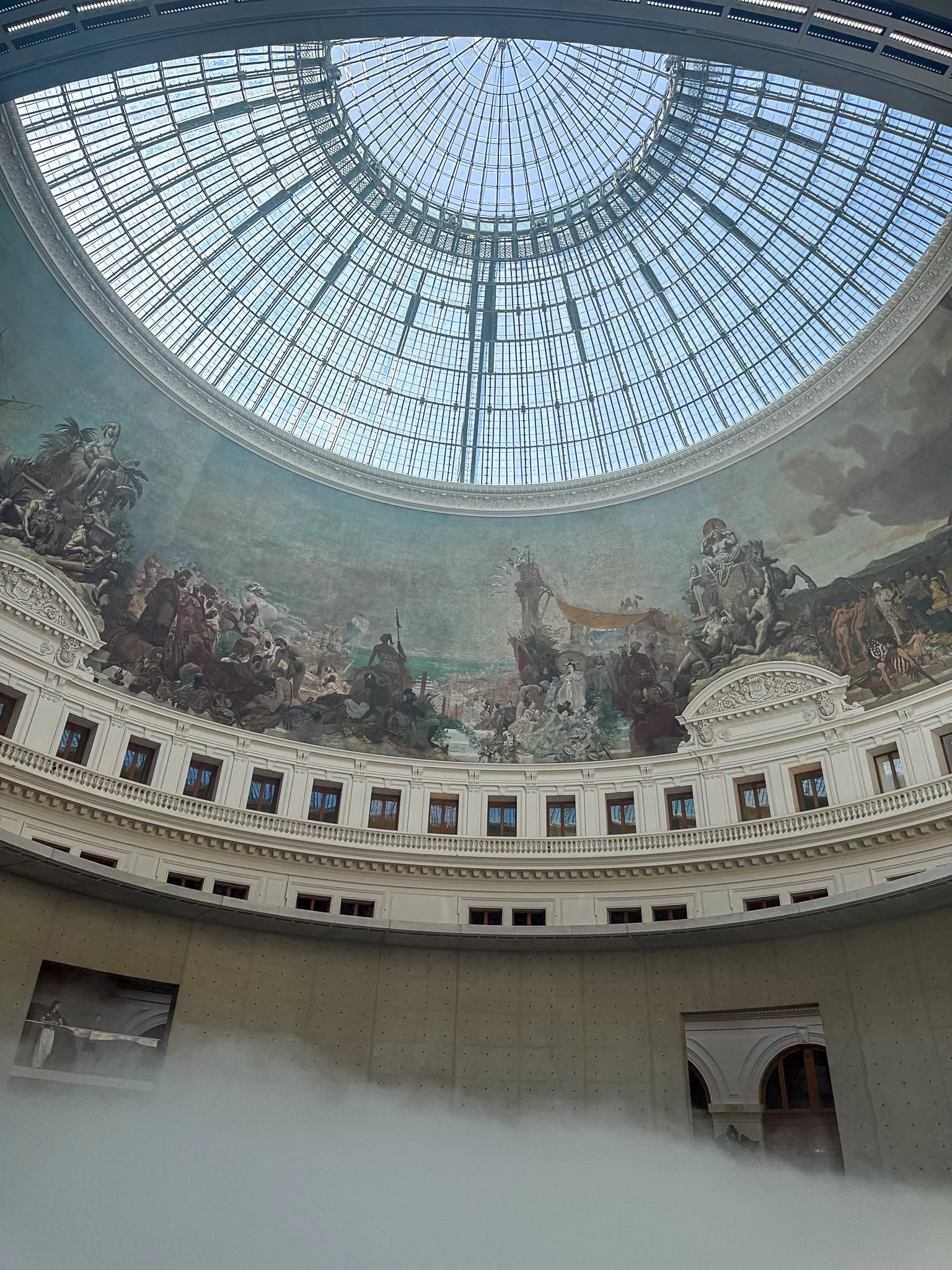
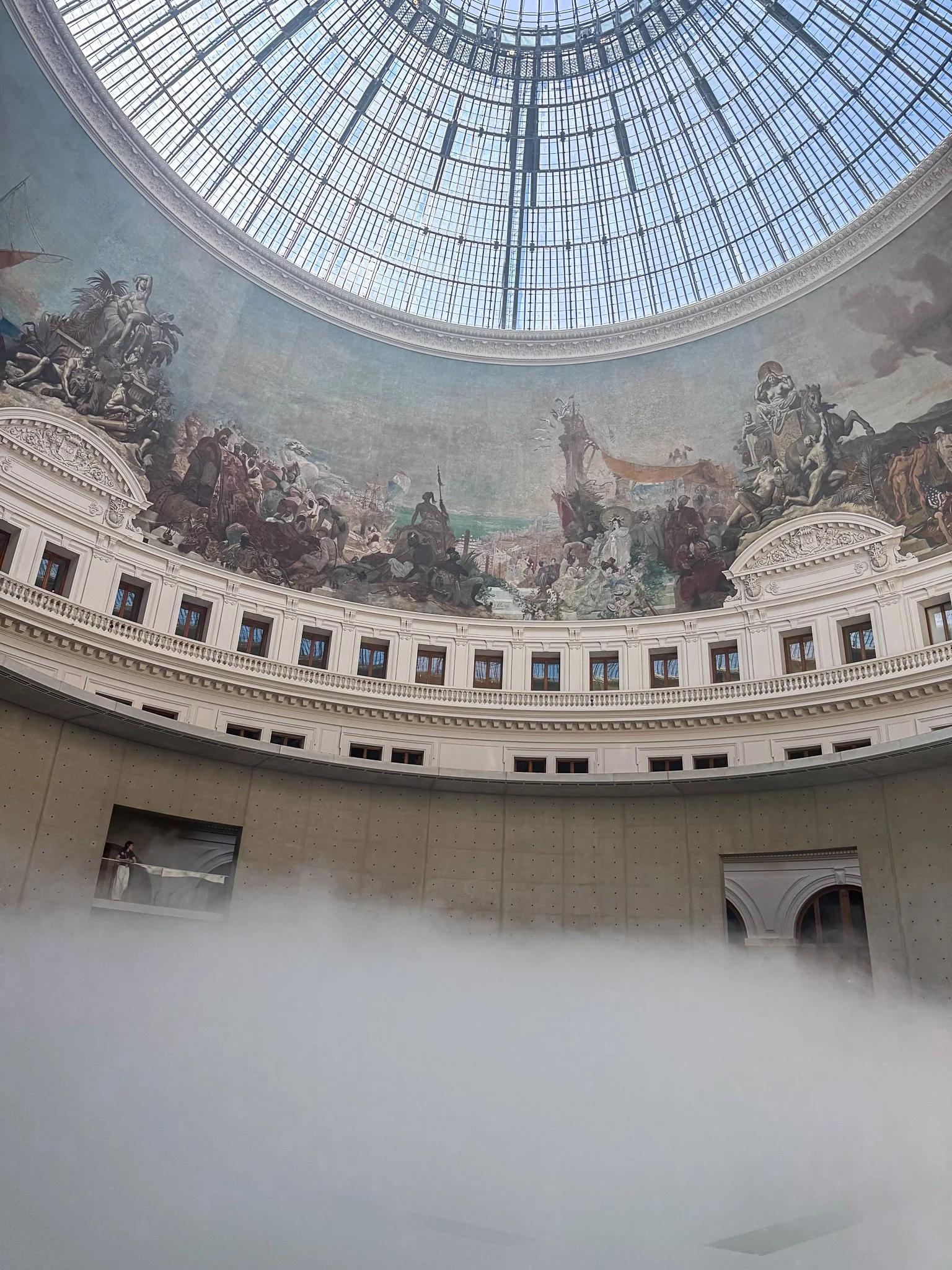
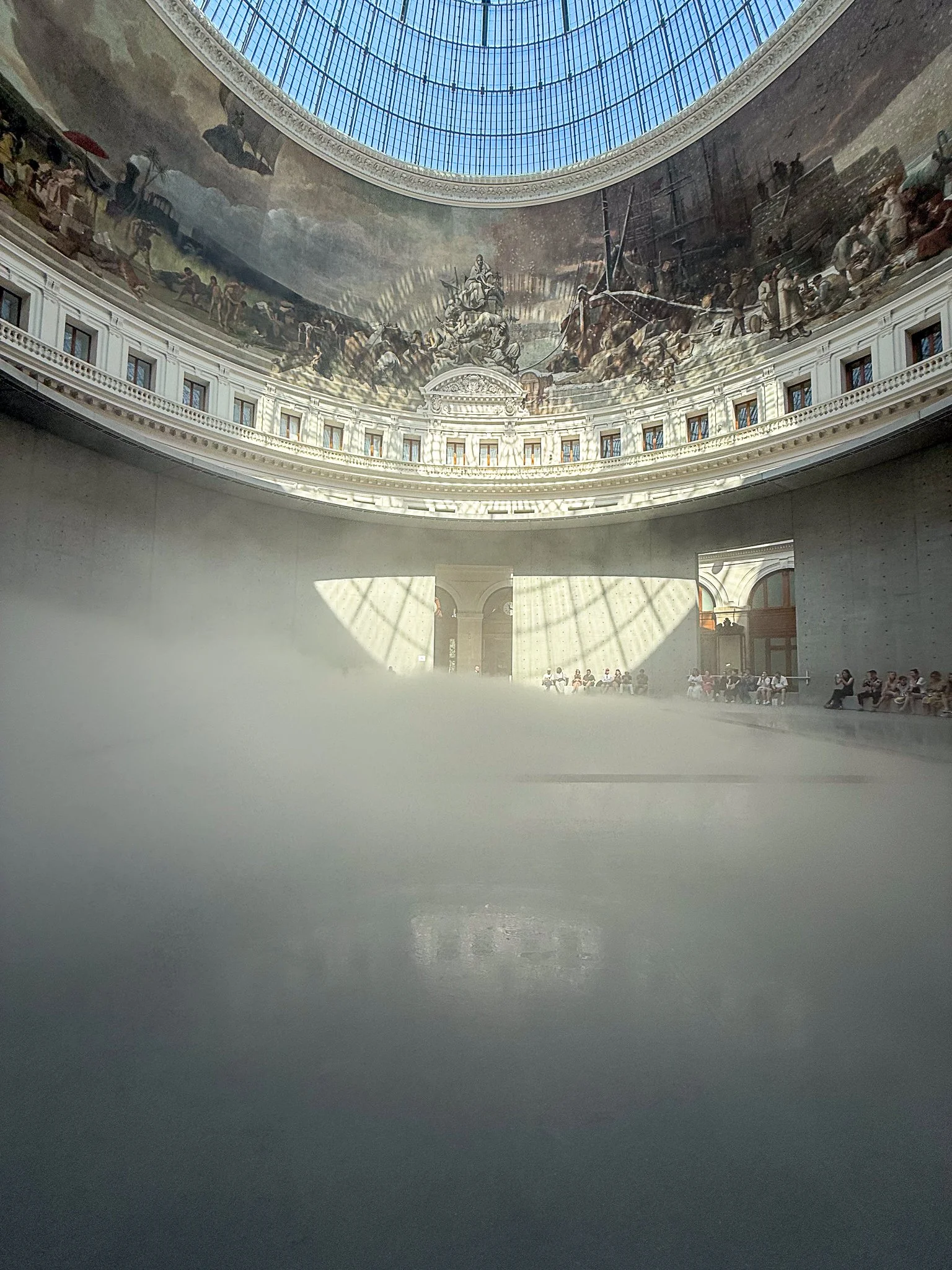
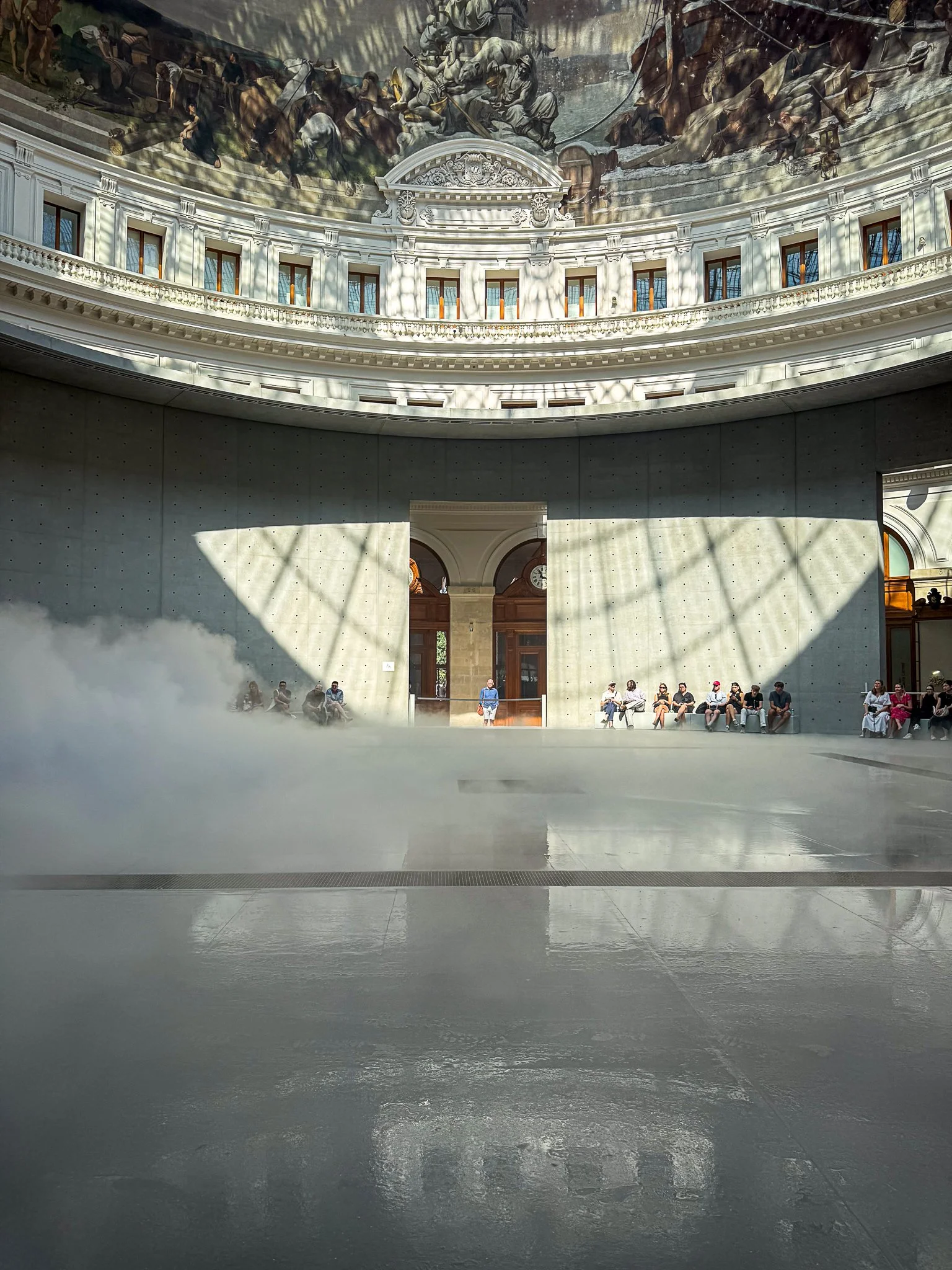
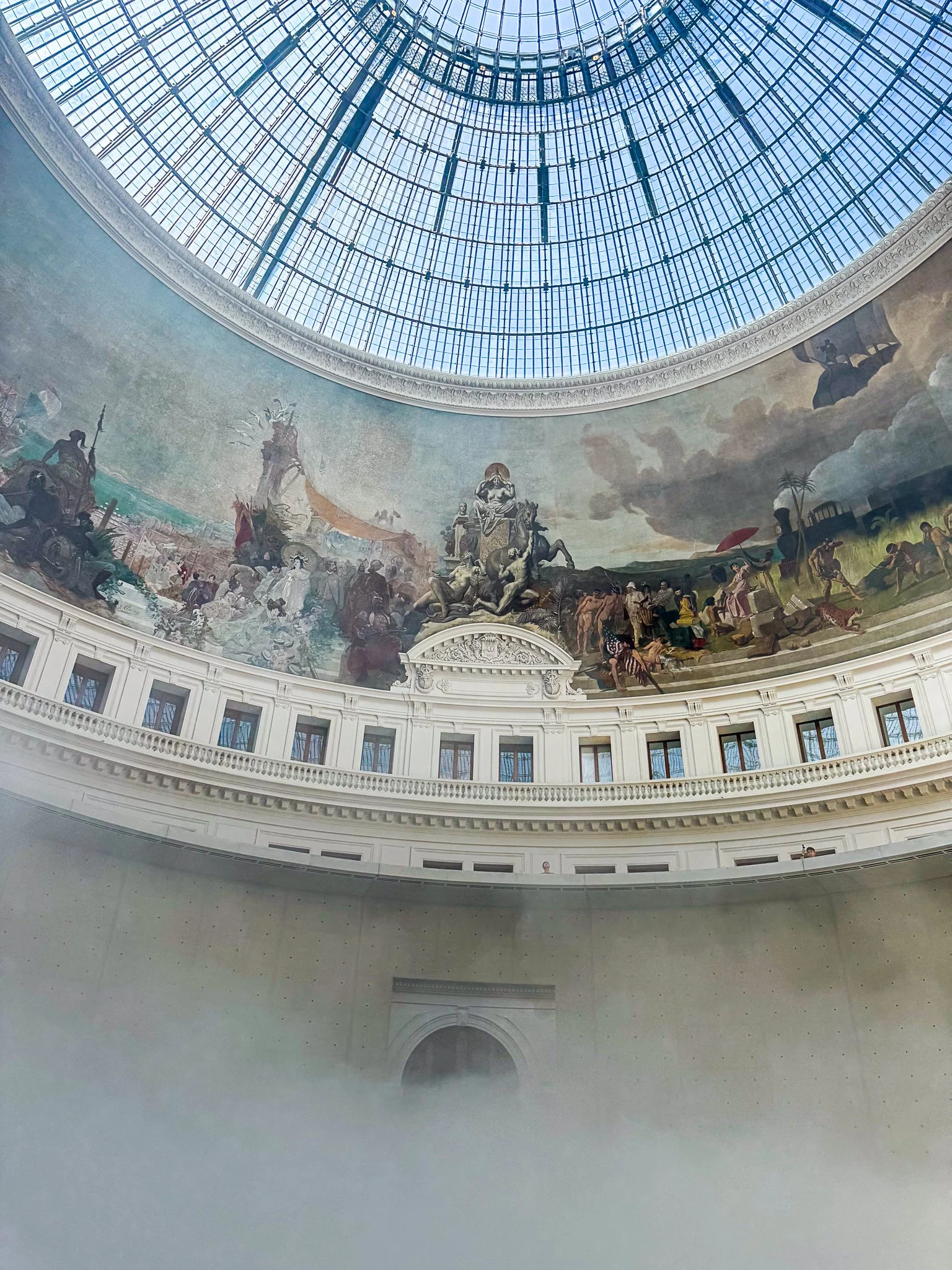
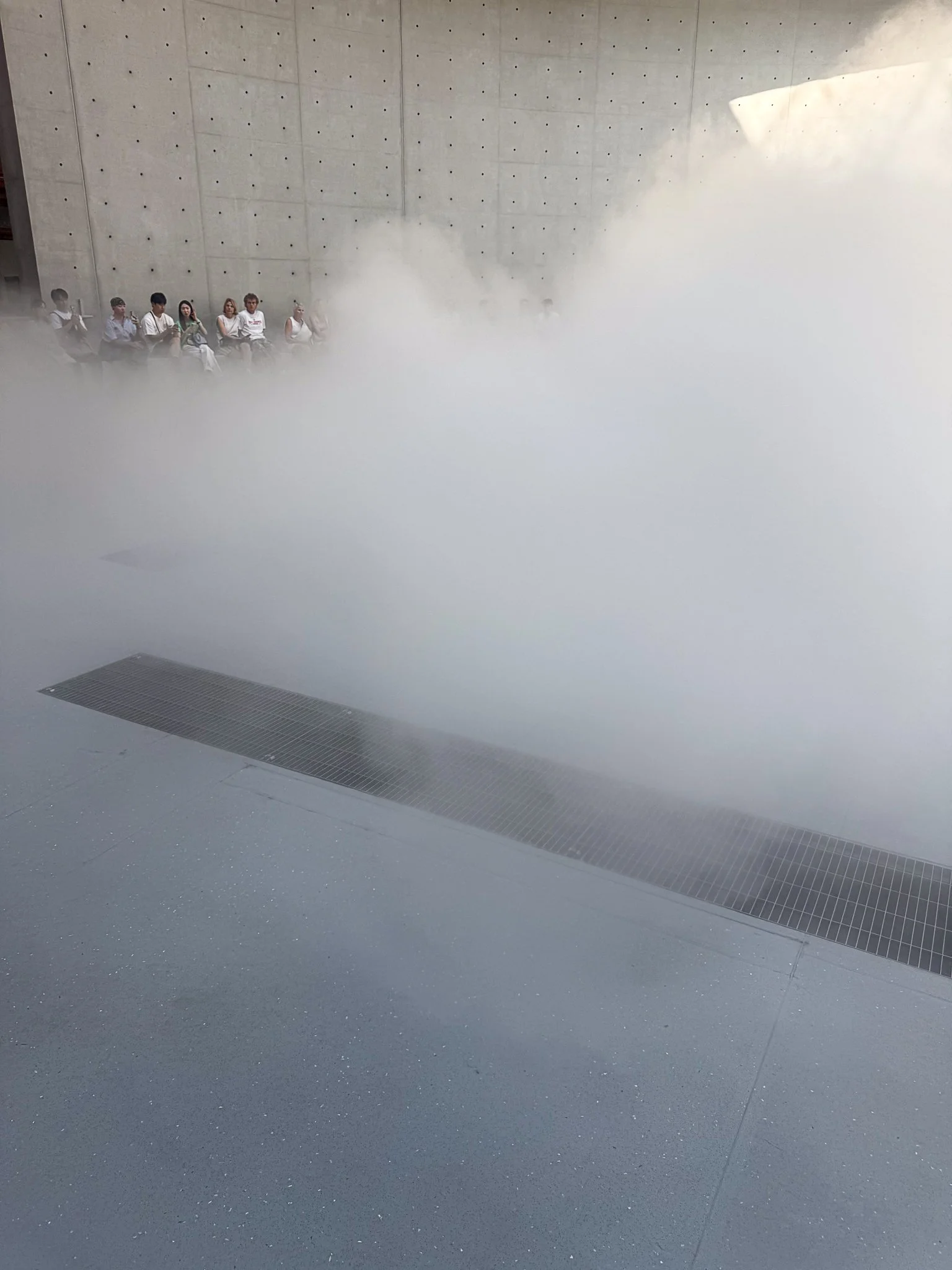
I had arrived for the 11am show and, before being invited to sit down, we were allowed to walk into and through the mist itself floating about the halls. There was something slightly disorientating about that first encounter. One moment I was standing inside the monumental architecture of the Bourse de Commerce; the next, I was walking into whiteness.
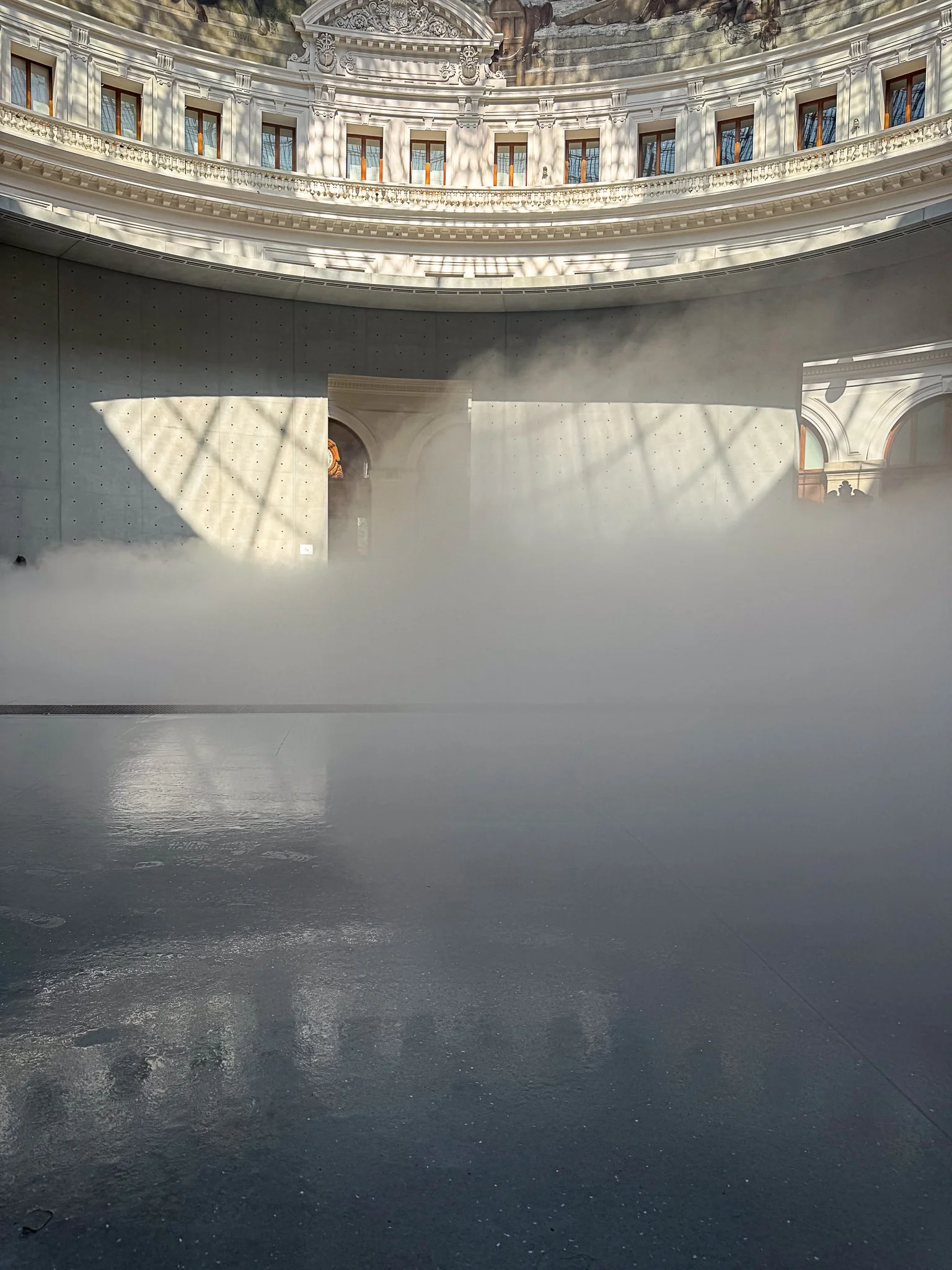
The walls began to disappear.
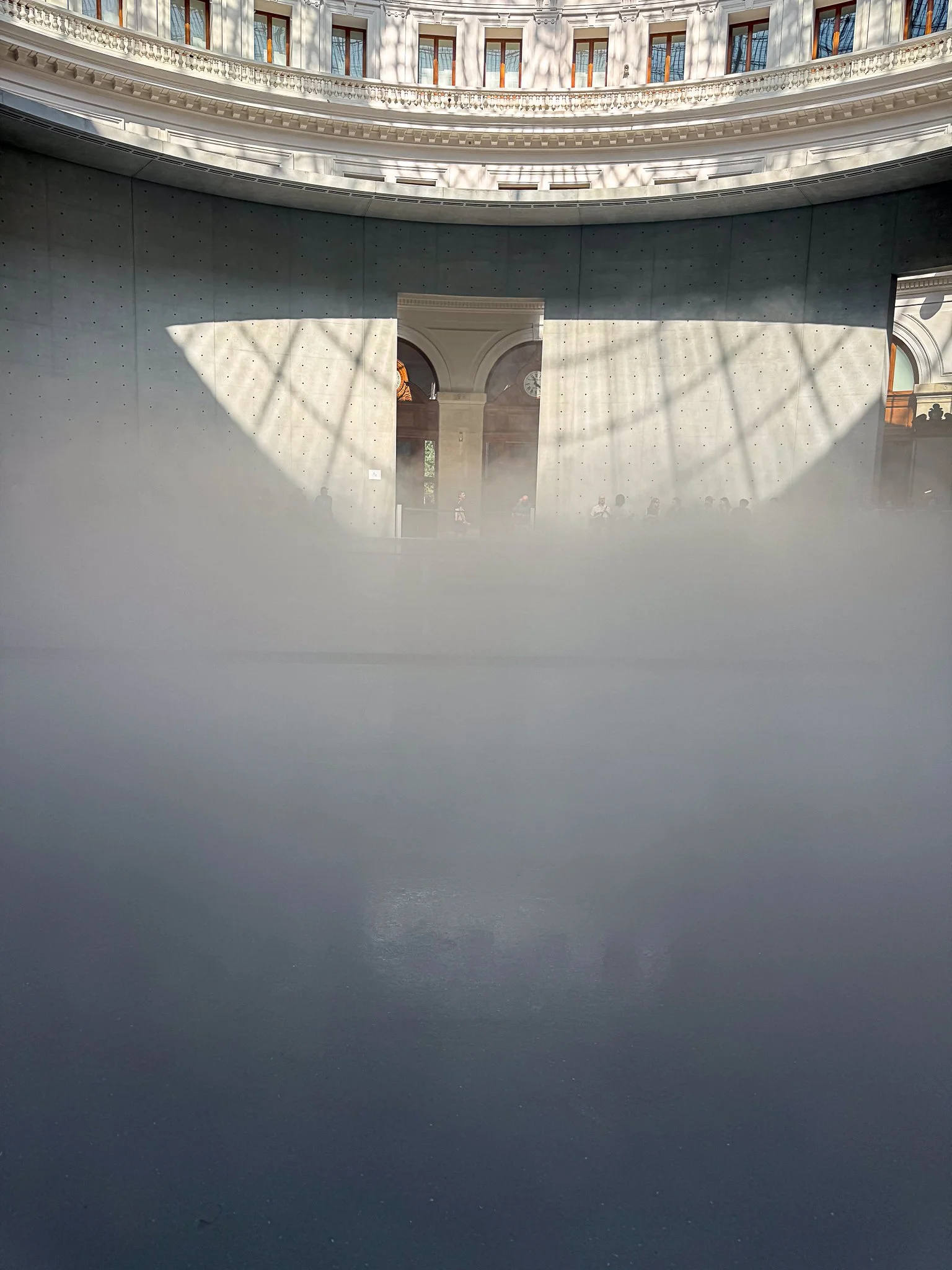
So did the people around me.
Then we were invited to sit.
There is something almost counterintuitive about being seated in front of a work made from something as impossible to contain as fog. You wait for the performance to begin, but the material itself refuses the conventions of performance. It drifts. It thickens. It disperses. It moves according to air, temperature, humidity and bodies.
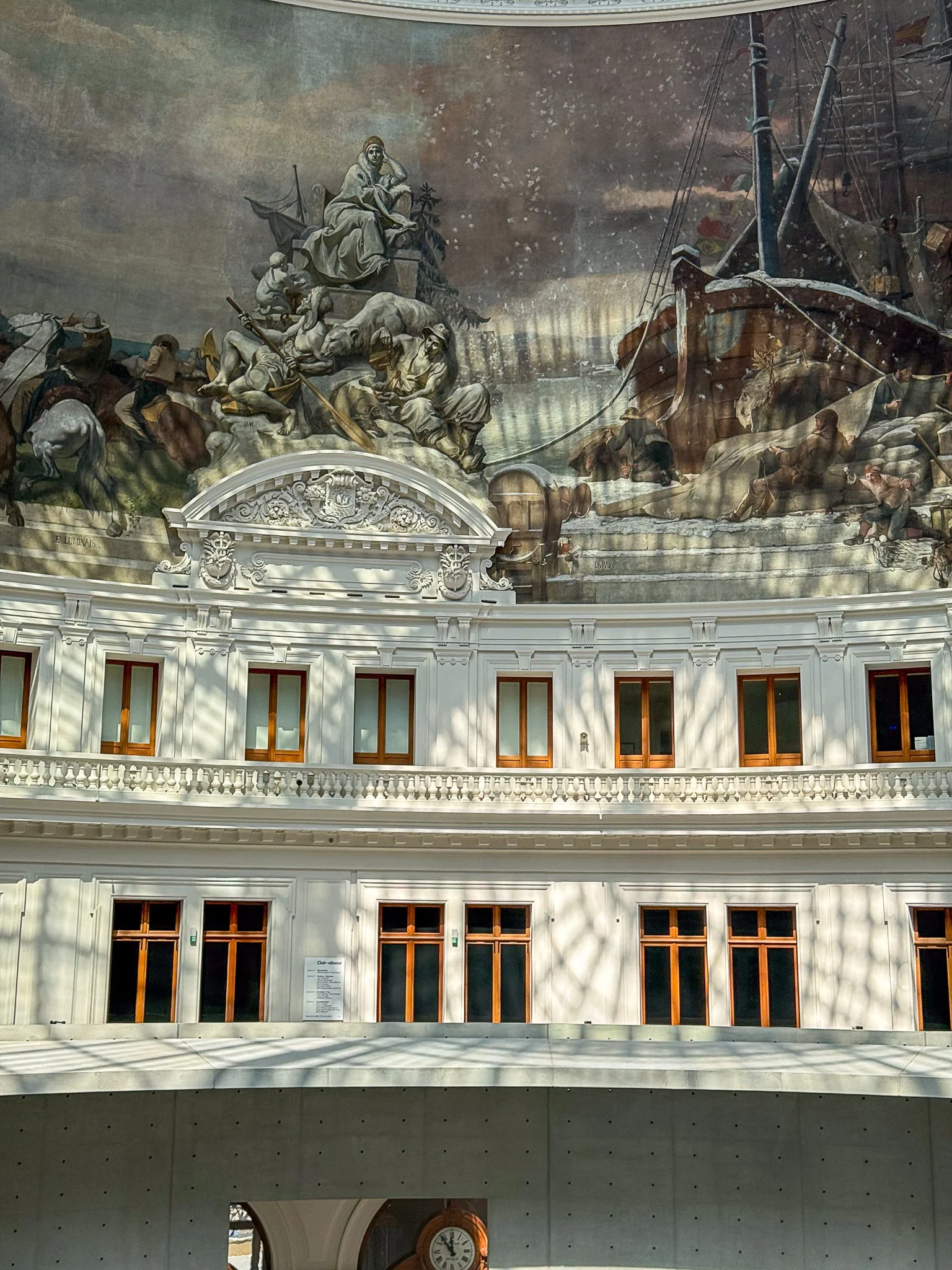
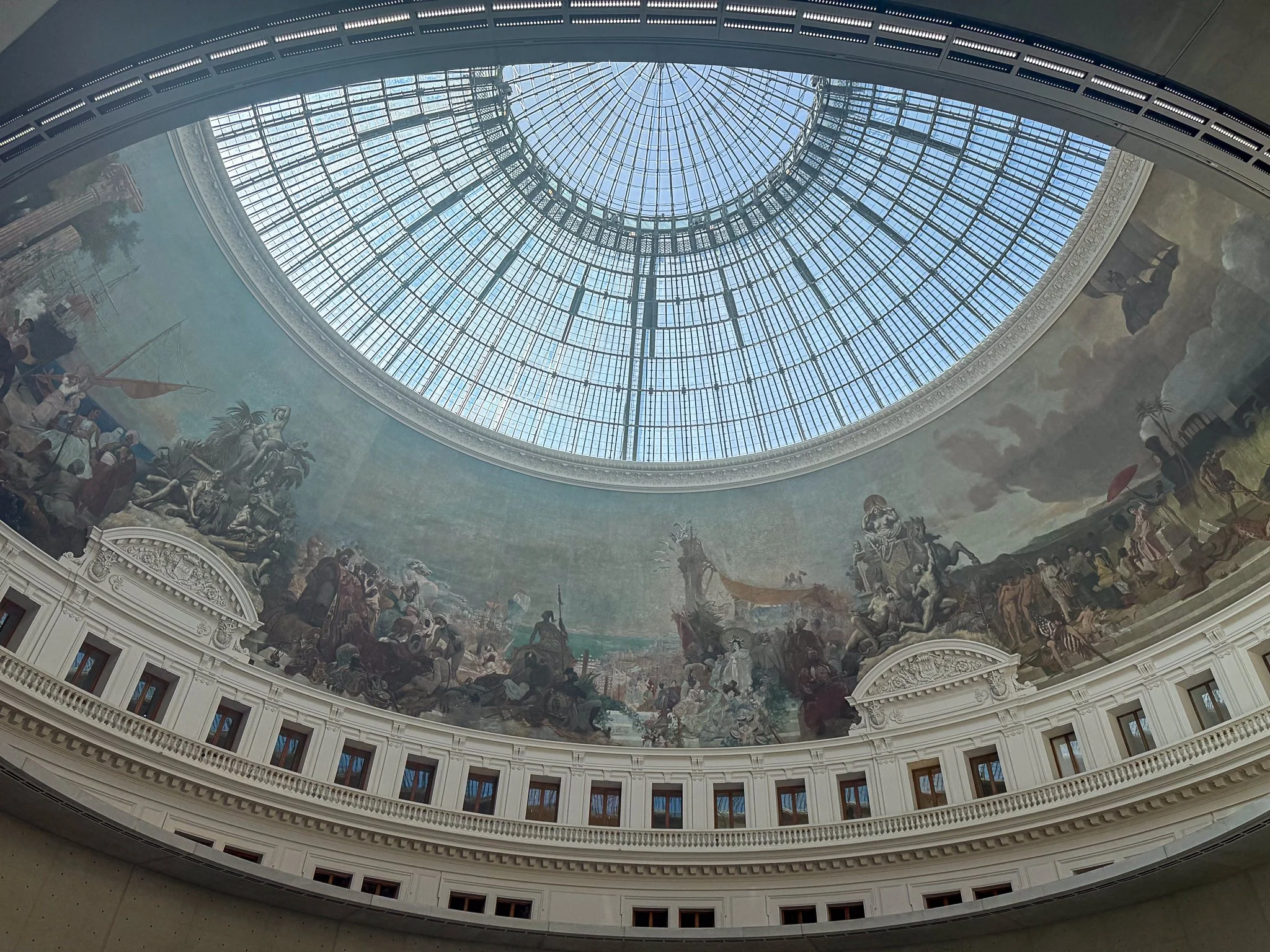
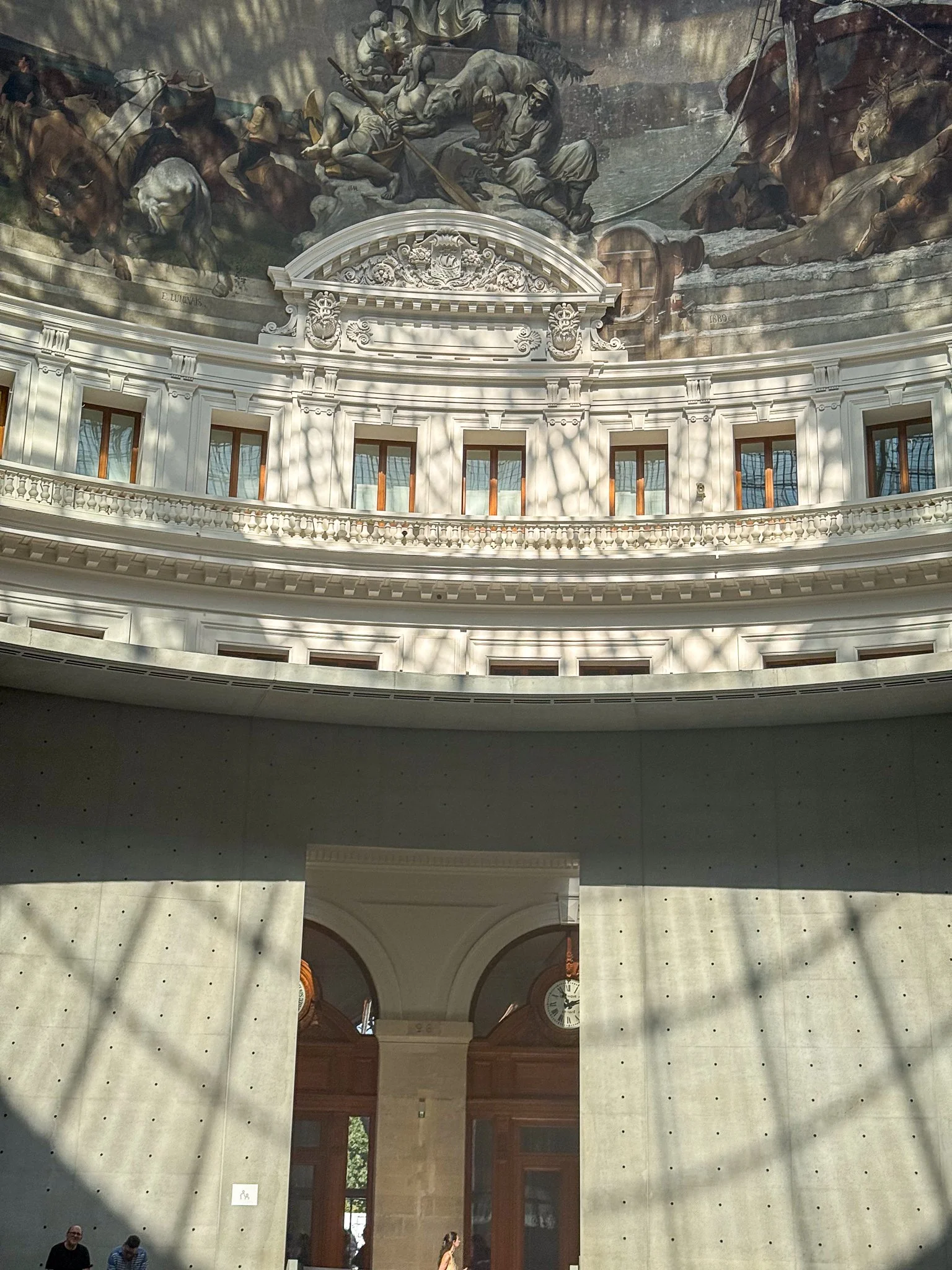
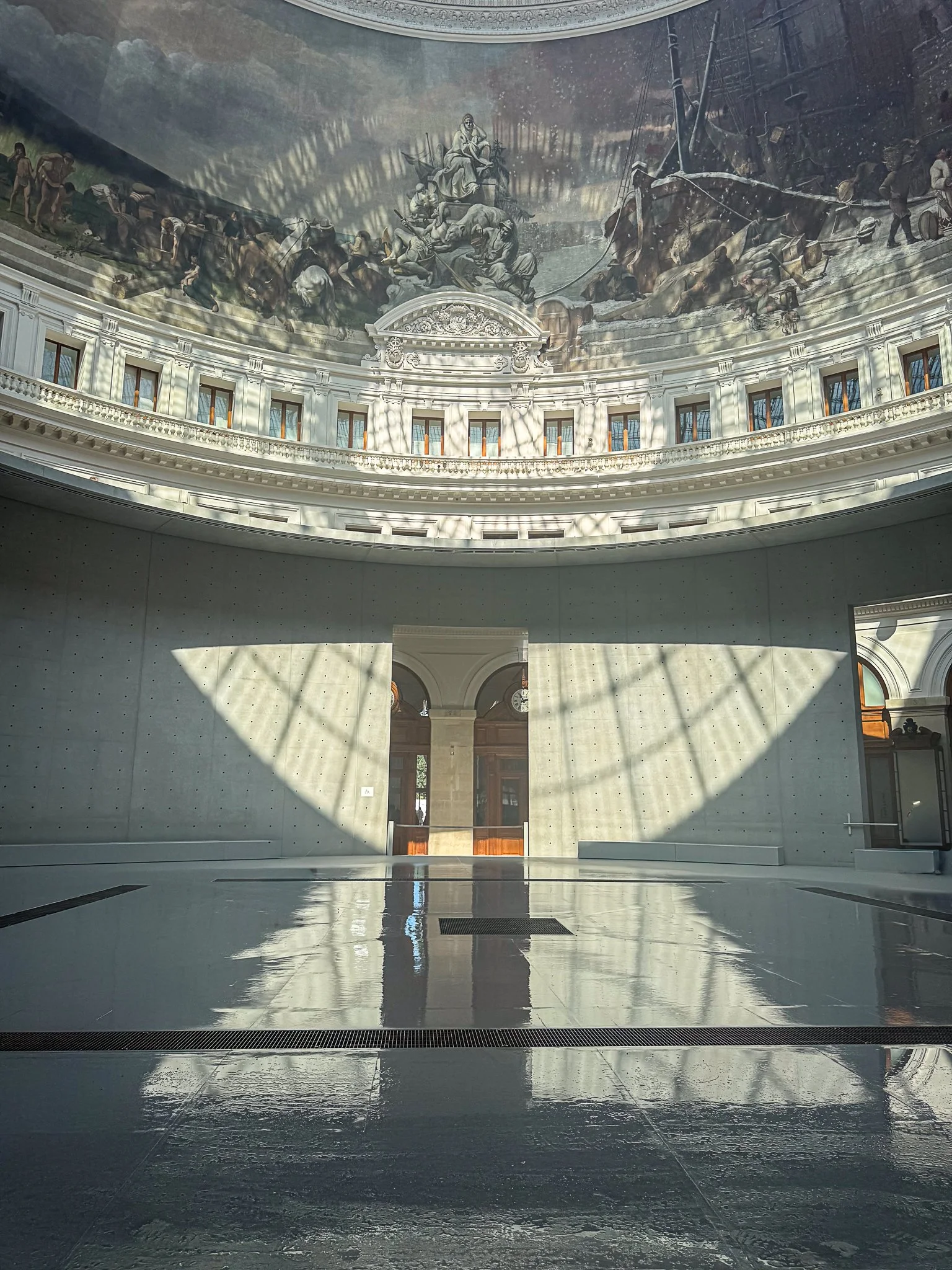
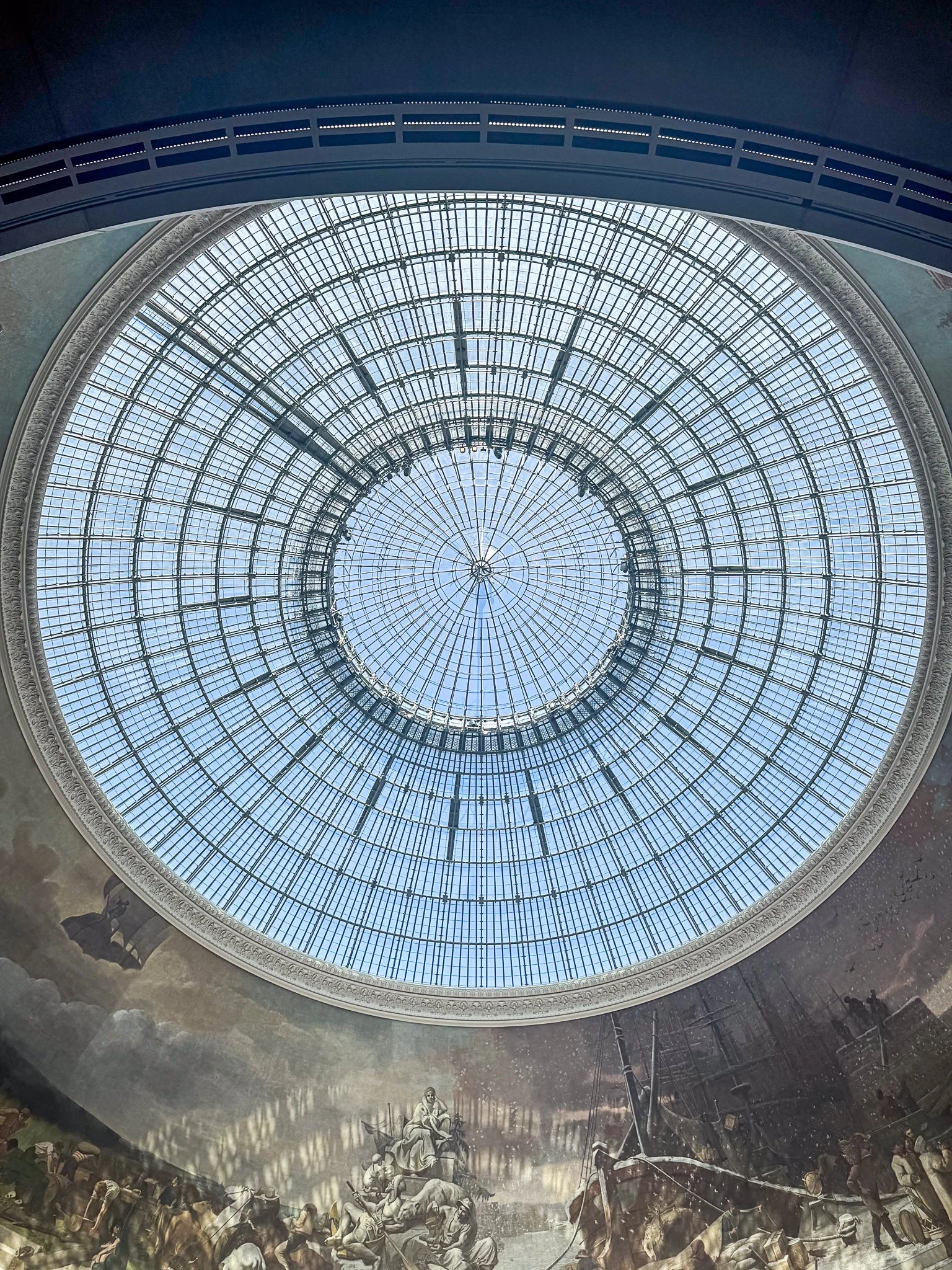
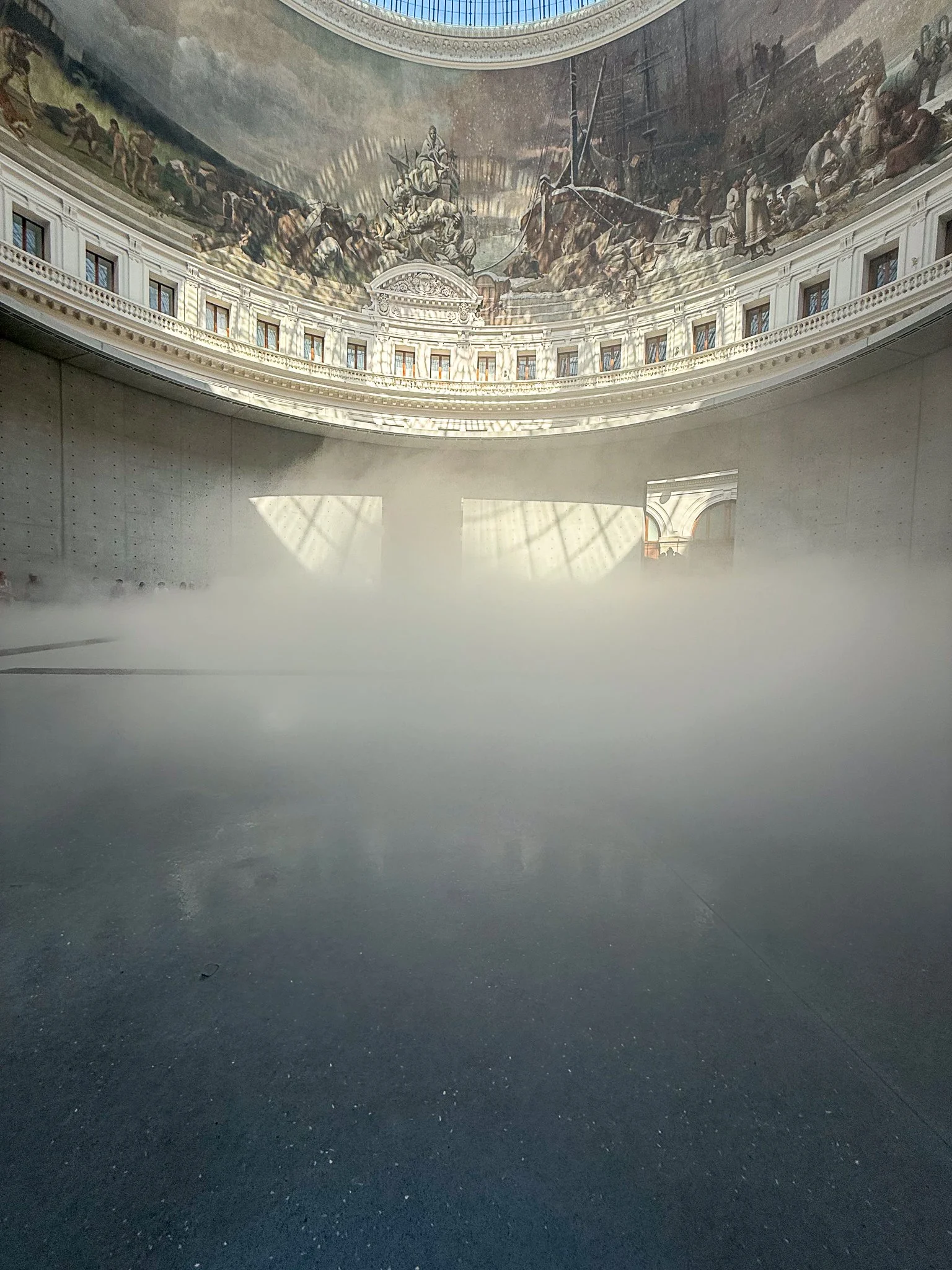
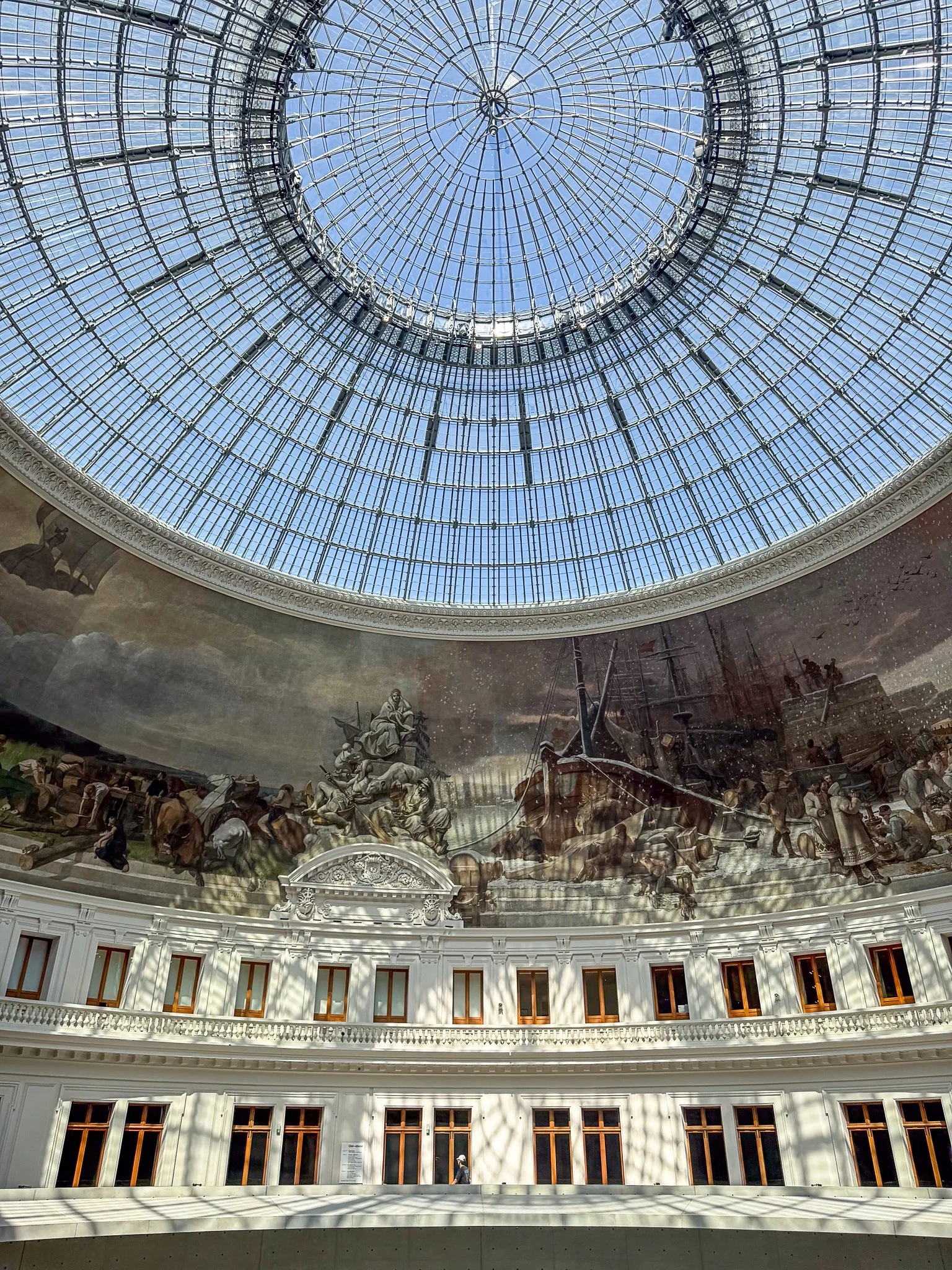
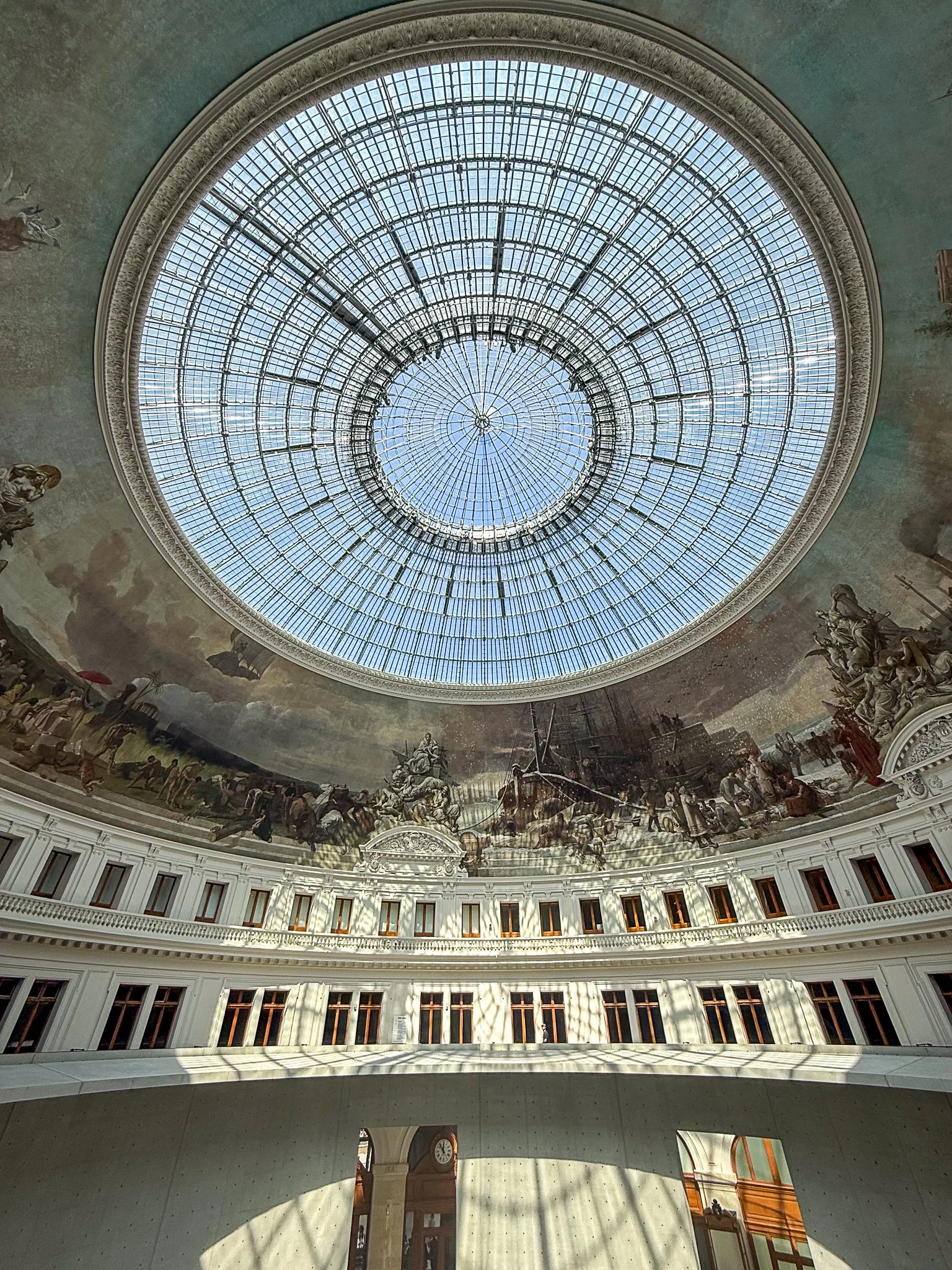
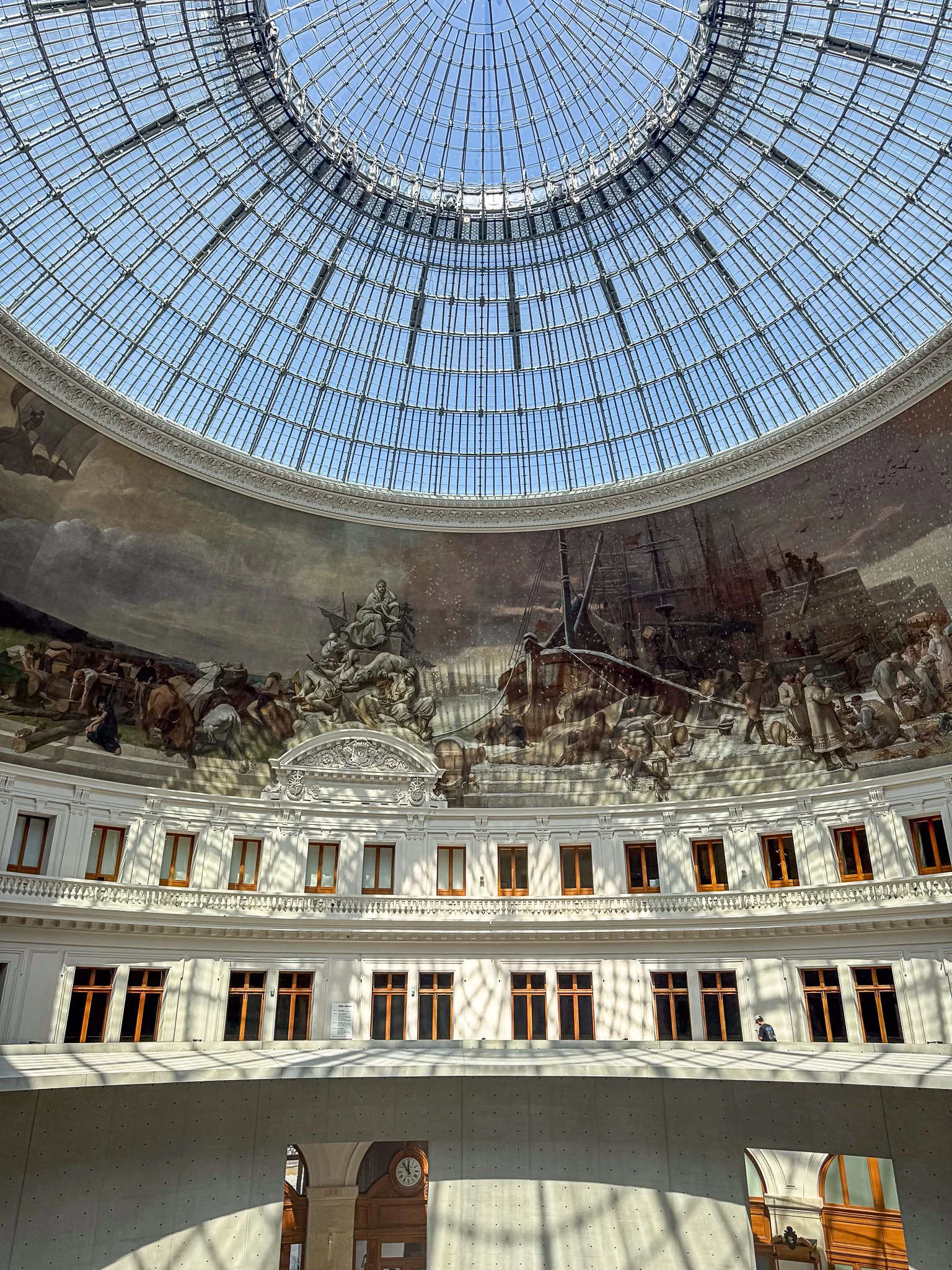
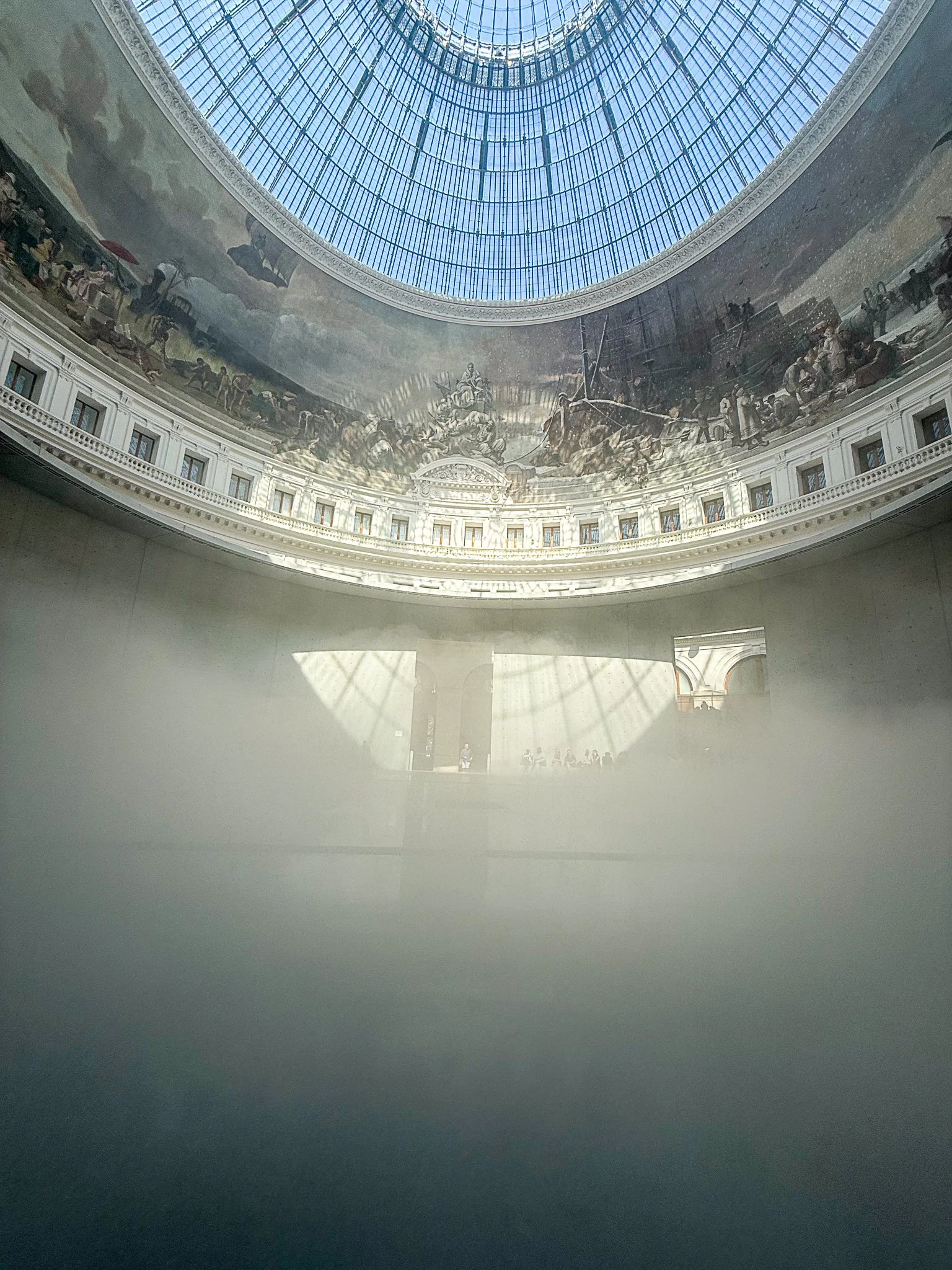
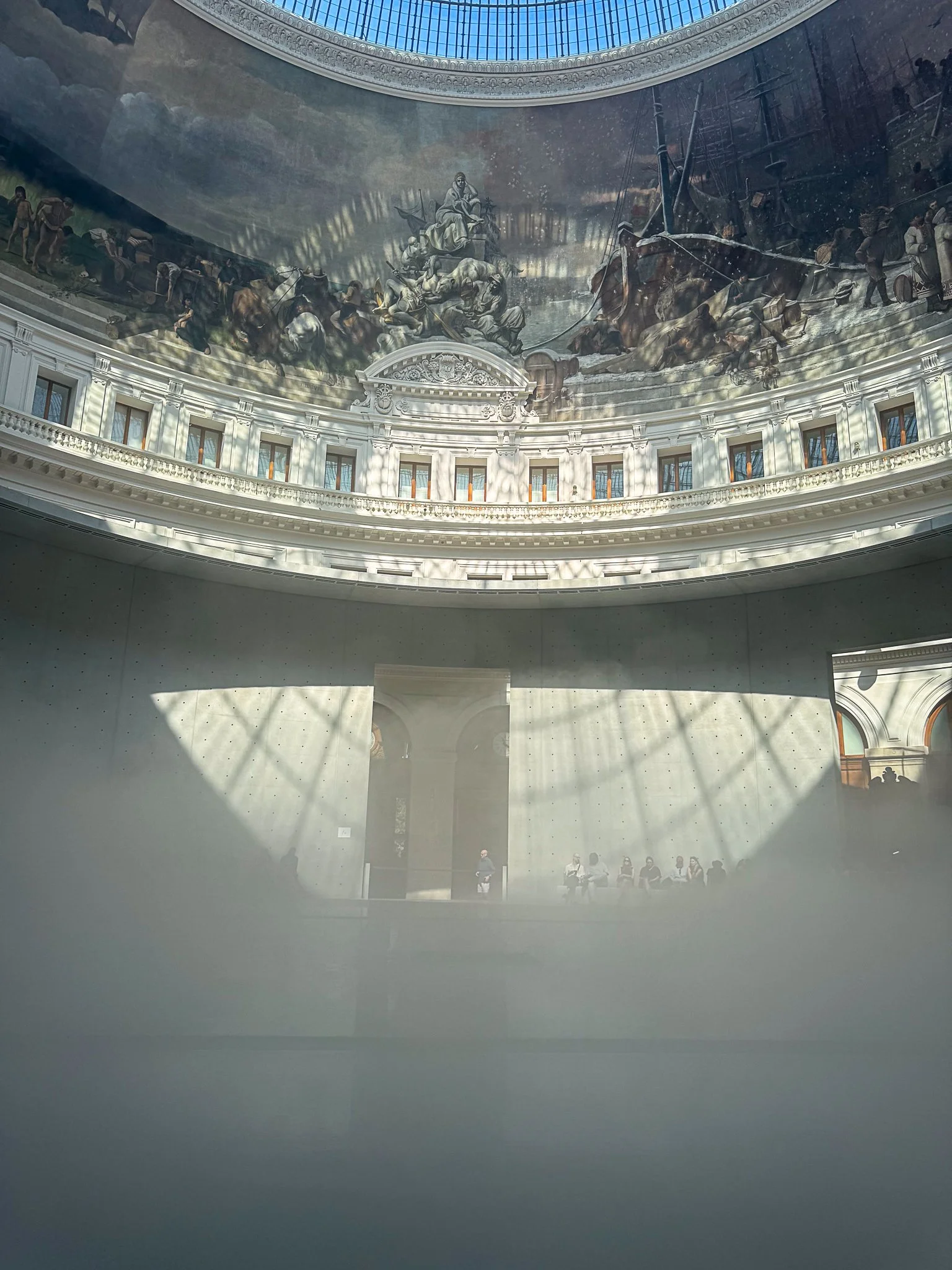
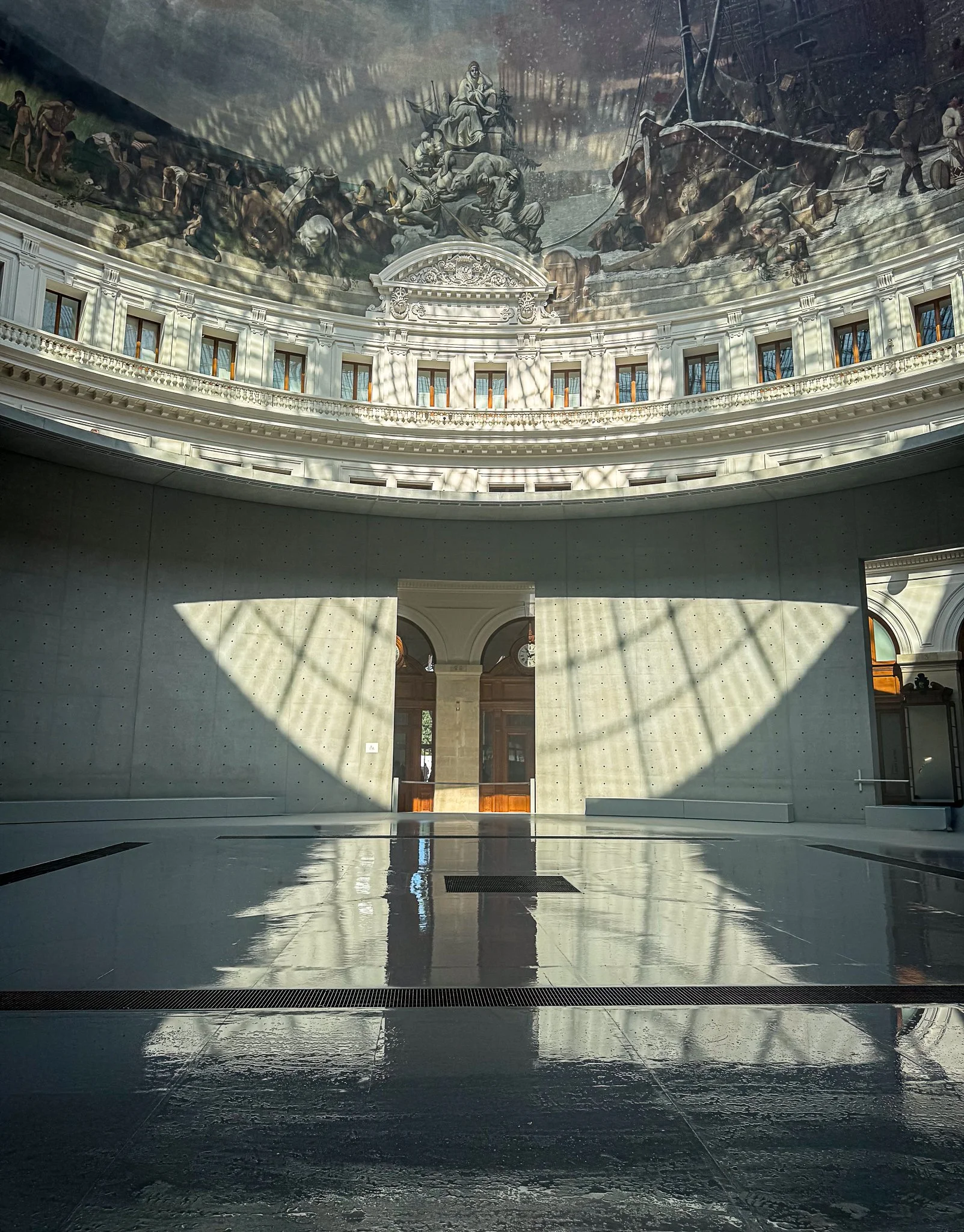
Nakaya has been working with fog as a sculptural material for decades. Here, water vapour fills the vast circular architecture of the Bourse de Commerce, turning one of Paris's most extraordinary interior spaces into something unstable and temporarily unknowable. Architecture disappears. People disappear. Then, just as quickly, they emerge again.
The work is not simply something you look at.
Your body enters it.
Perhaps what surprised me most was how quickly I stopped resisting the participatory element.
I visited during the Paris heatwave, when the temperature outside had reached around 37 degrees mid morning. Paris in that kind of heat becomes physically exhausting: pavements radiate warmth, the air feels heavy, and simply moving through the city requires effort.
Then suddenly I was standing inside a cloud.
The mist touched my skin. The temperature seemed to fall. The monumental architecture around me dissolved into whiteness and, for brief moments, so did everyone else.
It was extraordinarily calming.
Serene, even. A child like wonderment.
Which is saying something, because there were hordes of people.
There is, of course, something wonderfully contradictory about trying to experience an artwork concerned with atmosphere, disappearance and sensory contemplation while surrounded by visitors apparently incapable of following the relatively simple instructions about where they were supposed to walk, stand and/or sit. At times the experience was less solitary communion with an ephemeral artwork and more negotiating a particularly damp Parisian pedestrian crossing.
And yet the work survived us.
Perhaps that is part of what makes Nakaya's fog so compelling. It cannot really be possessed by the audience. We can enter it, disturb it and alter its movement, but we cannot hold it still.
Photography cannot quite possess it either.
That interests me.
Photography has always been preoccupied with fixing things: the fraction of a second, the face, the body, the evidence that something was there. Nakaya's sculpture seems to operate in the opposite direction. It makes the visible unstable. It obscures rather than reveals. It allows things to disappear directly in front of us.
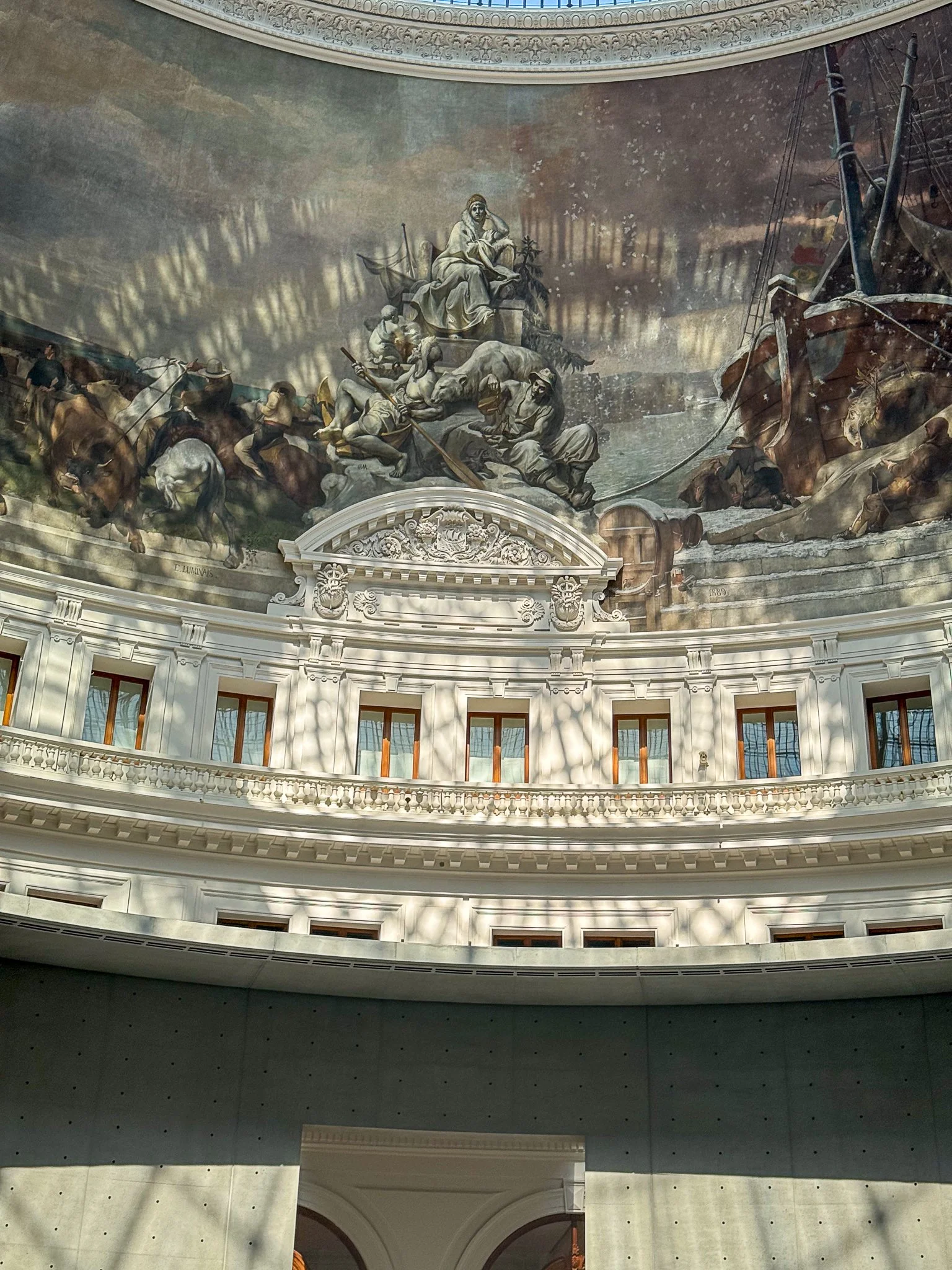
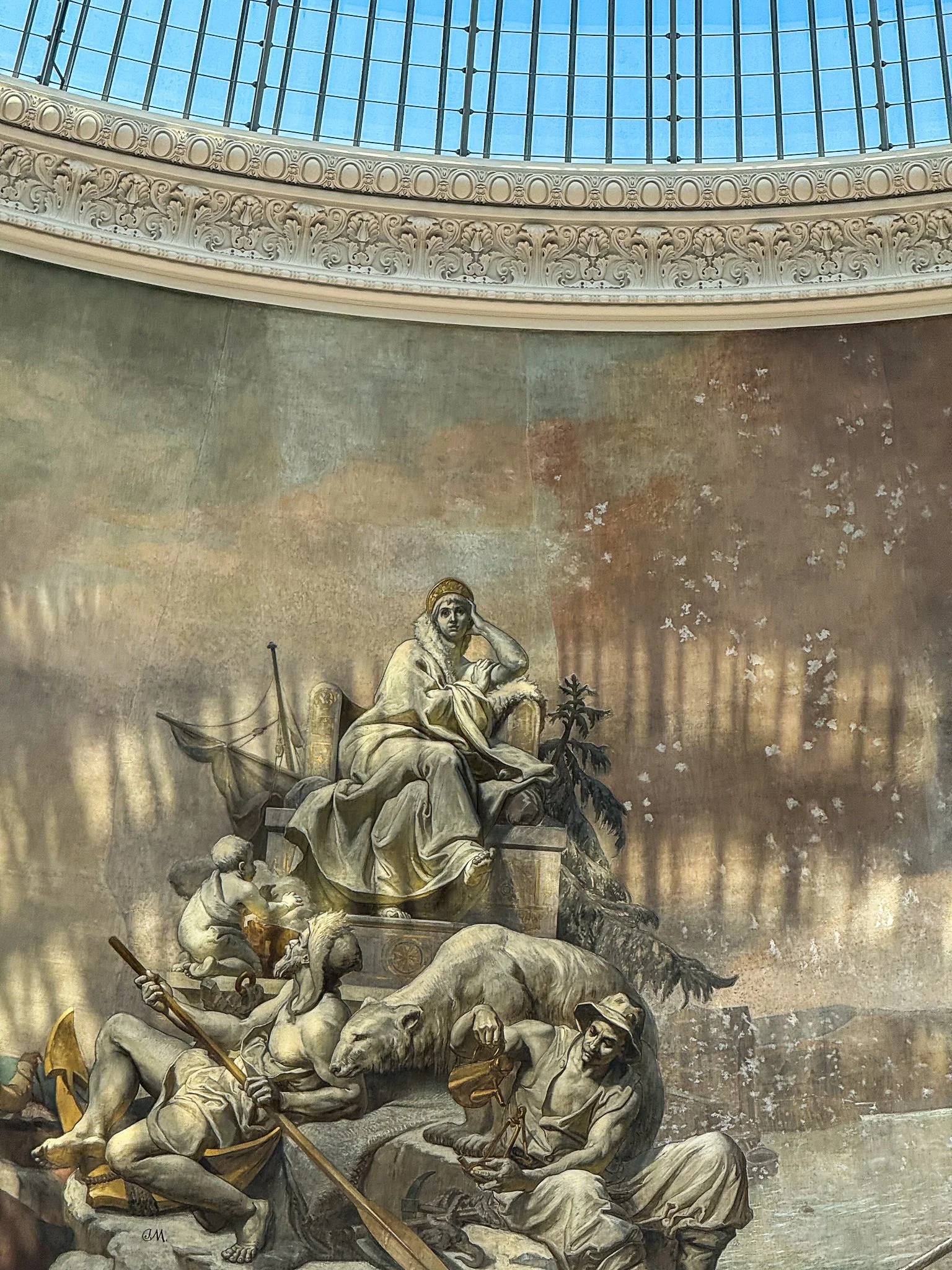
The Bourse de Commerce itself becomes particularly important in this regard. The Rotunda is usually an architecture that demands to be looked at: circular, monumental, spectacular. Nakaya temporarily takes that certainty away. Walls recede. Distances become difficult to judge. Other visitors become ghostly figures. The building is still there, obviously, but our ability to see and understand it is interrupted.
For someone who usually prefers looking over participating, this may be why the work ultimately won me over.
It did not demand performance from me.
It simply altered the conditions under which I could look.
And strangely, despite being surrounded by people, I found something resembling the solitude I usually seek in galleries. Inside the densest fog, other visitors disappeared. The crowd became sound rather than spectacle: footsteps, voices, bodies passing somewhere beyond the limits of what I could see.
For moments at a time, I could almost imagine I was there alone.
In a city being baked by 37-degree heat, there was also something wonderfully elemental about it.
Water. Air. Light. Bodies.For a few minutes, Paris disappeared.
So did the crowds. Well, almost.
And I found myself doing something I rarely do in an interactive artwork: not wondering when I could politely leave, but lingering.
Standing in the mist.Looking at almost nothing.And rather unexpectedly loving it.
More information here
Fujiko Nakaya, Cloud #07156
Bourse de Commerce — Pinault Collection, Paris
Presented as part of Clair-obscur. Nakaya's fog sculpture has occupied the Rotunda since 4 June 2026.